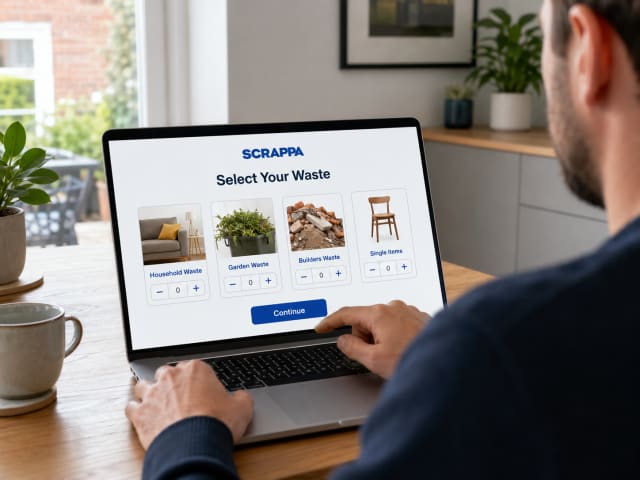
Household bags and clutter
Describe bag numbers, boxes and loose items. Mention unknown contents, wet waste and anything especially heavy so the collection is assessed properly.
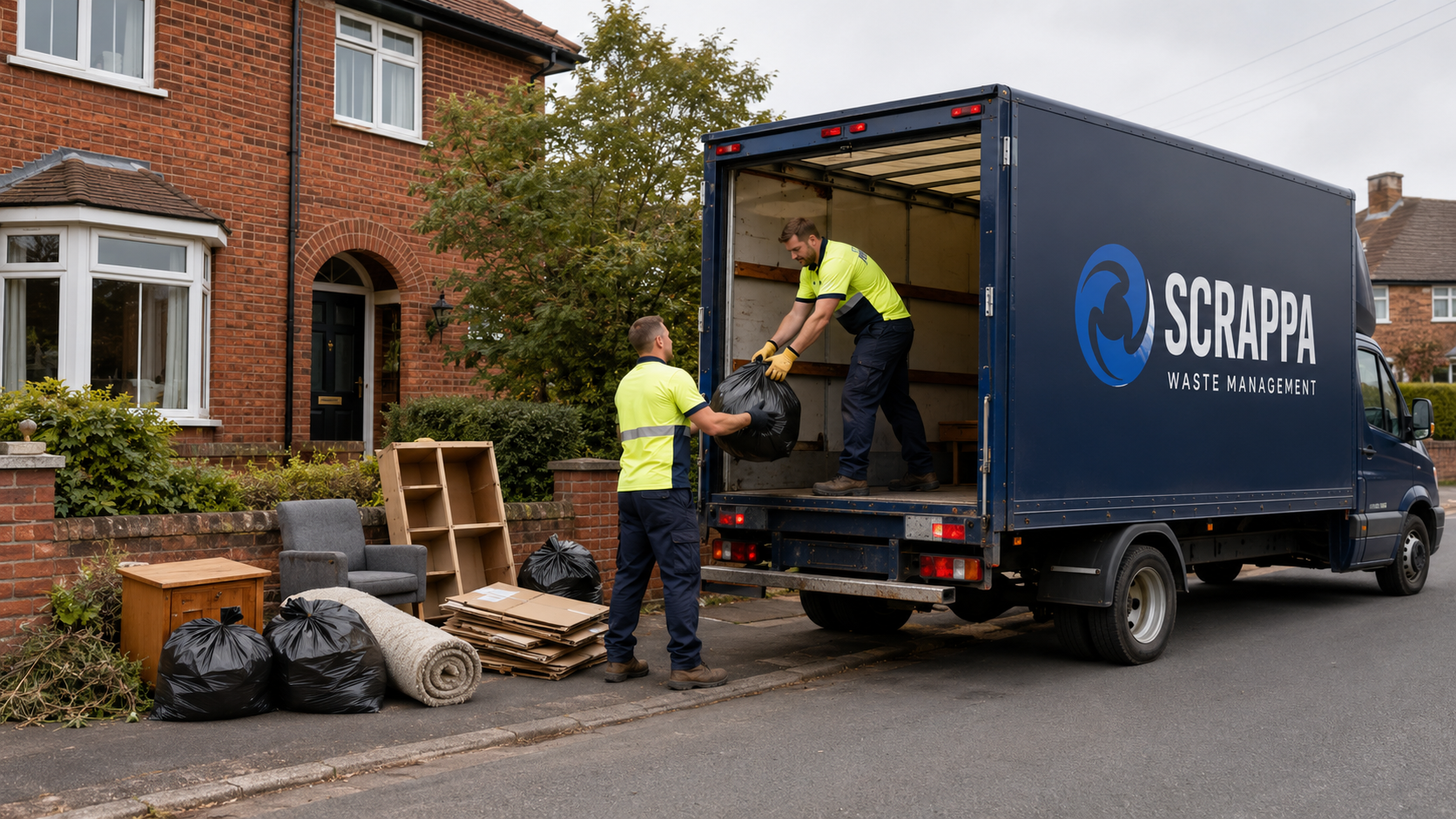
SCRAPPA • LANCASTER WASTE COLLECTION
Clear household clutter, bulky items or an agreed mixed load with a collection that accounts for the materials, access and work involved. Tell us what needs to go, review your full price and book an available slot.
Start your Lancaster collection quoteDescribe bag numbers, boxes and loose items. Mention unknown contents, wet waste and anything especially heavy so the collection is assessed properly.
List sofas, beds, wardrobes and other large pieces individually. Include dimensions, floors and whether dismantling is needed before they can leave the property.
Separate branches and cuttings from soil, turf, fencing and mixed shed contents. These materials have different weights and handling requirements.
Provide an inventory for office items or light renovation waste. Identify plasterboard, dense rubble and electrical equipment separately; acceptance and limits must be confirmed.
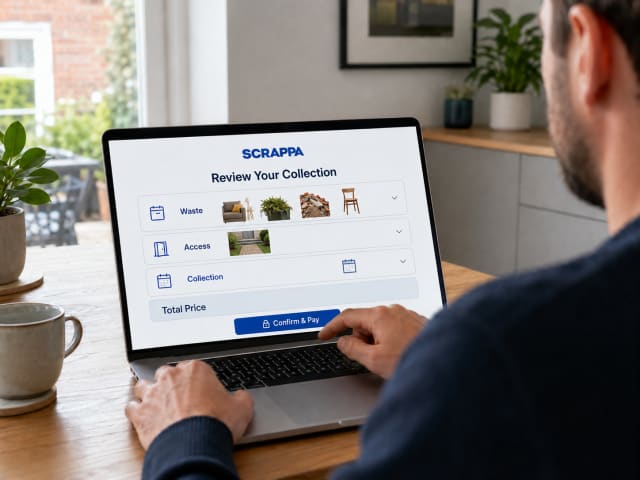
Review the breakdown for the declared waste, access and selected extras before confirming your booking.
Describe the route and any lifting or dismantling requirements so the collection can be planned safely.
Keep your confirmation and digital Waste Transfer Note after completion for a record of the agreed removal.
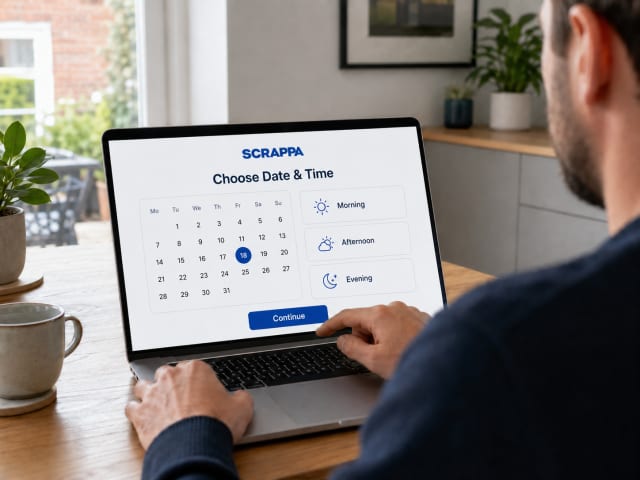
Choose from the slots offered for your booking. Urgent requests depend on capacity rather than a blanket arrival promise.
Start with the collection location, then work through the details in order. Include the full load and access requirements so your booking reflects the collection you need.
For properties in Bowerham, Scotforth, Greaves, Ryelands or the city centre, give the full address and the entrance the crew should use. A postcode alone does not show which side of a building has access, whether a rear gate is locked or where loading can take place.
Near Williamson Park, specify the actual street and entrance rather than the landmark alone. Quernmore Road and Wyresdale Road approach different park entrances, illustrating why exact directions matter. For any collection, explain slopes, steps and the distance between the waste and a suitable loading point.
Check parking and building restrictions with the person responsible for the property. A wait-and-load service still needs lawful vehicle access; the booking does not grant permission to stop anywhere. Availability for surrounding addresses is checked using the collection postcode.
Start with what the pile contains: household bags, wooden furniture, garden cuttings or renovation debris. Then add quantities and approximate dimensions. A photograph from the front can hide another pile behind it, so include wider views and mention waste in sheds or upstairs rooms. If you cannot identify the contents of a container, say so rather than labelling it ordinary household rubbish.
Volume describes space, while weight affects the load a vehicle can carry. Soil, turf, tiles and rubble need their own description even when mixed with light items. Tell us if carpets, textiles or bags are wet. Avoid filling large sacks so heavily that they become unsafe to move; describe existing heavy bags and let us assess the appropriate handling.
Measure the narrowest doorway for large furniture and tell us about bends, steps and changes in floor level. A short path on a map may involve a long walk around a building. Keep hallways clear, arrange lift access if needed and check that a keyholder can open shared doors. Do not assume a crew can lift an item over a wall or through a window.
For a room, garage or outbuilding, separate items staying from items going. Mark retained possessions and check drawers, cupboards and boxes for documents or valuables. Landlords and agents should confirm their authority to remove contents. A clearance booking covers the agreed waste and work; it should not be taken to include cleaning, building work or secure document destruction.
Give the appliance type and quantity, including integrated units and refrigeration equipment. Any disconnection must be completed safely by a suitable person; do not assume gas, hardwired electrical or plumbing work is included. Tell us about batteries, chemicals, sharps, gas cylinders or suspected asbestos before booking. These require assessment and may need a specialist service rather than a standard collection.
Keep the agreed loading route available and tell us promptly if the pile grows or access changes. Additional waste, different materials or extra work may require a revised arrangement. If the job must finish before a tenancy handover, explain the deadline in advance instead of booking against the last possible minute. Keep a contact reachable during the collection window.
Check the provider details, keep your booking confirmation and retain the digital Waste Transfer Note after the work is complete. Scrappa’s waste carrier registration is CBDU613703. Ask questions about the proposed handling of unusual waste before agreeing the collection. Responsible removal involves an appropriate disposal route and useful records, rather than an unsupported claim that every item will be reused.
Useful when several types of unwanted items have accumulated. Provide the whole list so the booking covers the complete agreed pile.
Identify retained items, arrange key access and explain the handover date. Check authority to dispose of any belongings left behind.
Give a workplace inventory and site contact. Explain stairs, goods lifts, loading bays and any restrictions on collection hours.
Describe the project materials separately. Confirm any heavy-waste limits and specialist exclusions before choosing a household load option.
A collection can suit a defined pile when you want loading included within the agreed work and do not need a container left on site. A skip may be more practical for a project that produces waste over several days, provided the accepted materials, weight allowance, space and any placement permissions are suitable.
Lancaster City Council also offers a bulky household item service. Compare its current accepted-item list and collection arrangements with your needs. Scrappa is a separate commercial provider; choose the option that matches your materials, access, timing and budget.
Yes, a mixed collection can include agreed household bags and named bulky items. List both rather than treating the furniture as an unmentioned extra. Appliances and upholstered seating may require separate handling and pricing.
No. Tell us where the items are and provide a safe route for the agreed collection. Do not block a pavement or move heavy objects outside yourself. Indoor collection, stairs and carry distance must be described before booking.
The price depends on the material, amount, weight and work involved, together with access and any chosen extras. Enter the full collection details to see the breakdown before confirming. There is no single accurate price for every pile.
Describe these separately and confirm acceptance and limits before booking. Dense or waterlogged waste can be much heavier than its size suggests. A household mixed-waste allowance should not be used to estimate a heavy-material load.
No. Same-day requests depend on the postcode, material, collection size, access and remaining capacity. Only rely on a slot that has actually been confirmed; an enquiry alone does not reserve a vehicle.
No universal recycling or donation promise applies. Handling depends on the material, condition and available authorised facilities. Keep your collection paperwork, and ask about any item that needs a particular disposal arrangement.
Gather your item list, photographs and access details, then start with your postcode. Check the complete booking before payment and tell us if anything changes.
Start your Lancaster collection quoteOther areas: Waste removal Preston · Waste removal Blackpool