Full or partial scope
Explain which rooms are included and name the items going. One bedroom and a garage is different from the contents of an entire property.

SCRAPPA · LANCASTER
Clear a room, several rooms or the agreed contents of a property without losing sight of what needs to stay. Arrange a Lancaster house clearance with a room-by-room list, a responsible contact and the access details needed for an accurate quote.
Plan your Lancaster house clearanceExplain which rooms are included and name the items going. One bedroom and a garage is different from the contents of an entire property.
Identify possessions that must remain and separate them from the disposal list. The crew should not have to guess what is valuable or wanted.
Arrange someone authorised to identify the agreed contents, open the property and answer scope questions during the collection window.
Include floors, lofts, cellars, steps and carrying distances. Declare dismantling or other additional work before confirming.
Remove the unwanted contents once you have decided what is moving with you. Keep removal-to-disposal separate from transport to a new address.
Provide an authorised inventory and coordinate the keyholder. Identify retained fixtures and any other contractors working at the property.
Work from an agreed list of possessions going and staying, with one responsible contact who can give clear instructions.
A partial clearance can focus on the agreed rooms or items. It does not need to be described as a whole-house job if most contents remain.
List seating, tables, storage units and smaller contents. Identify sofas and large furniture separately with quantity and approximate size.
Name beds, mattresses, wardrobes and drawers as separate items. Explain assembled furniture and any room that still needs sorting.
Declare appliances, loose contents and preparation needs. Connected equipment and built-in fittings are not the same as ready-to-load household items.
Describe the contents and access, including dense materials, unknown containers or large objects. Shed demolition is a separate request, not assumed clearance work.

STEP 1
Provide the Lancaster collection address and a contact responsible for the clearance.

STEP 2
Describe rooms, quantities, bulky pieces and separate waste types. Make retained belongings clear.

STEP 3
Include floors, loft or cellar access, carry distance and any dismantling requested.

STEP 4
Give keyholder details and select an available option that the property can accommodate.
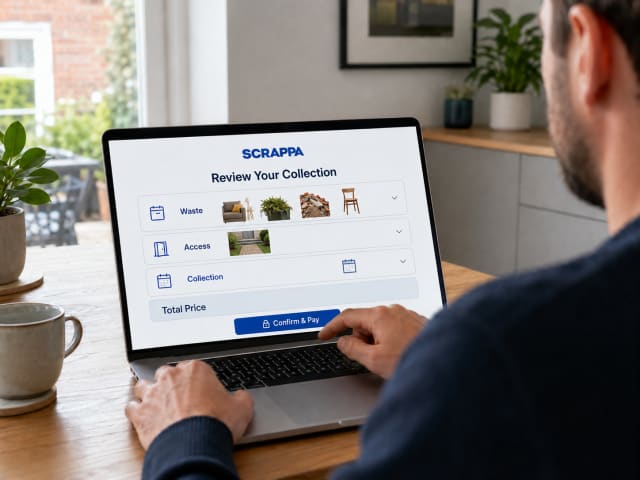
STEP 5
Check the inventory, final breakdown and collection details before confirming.
Bowerham and Greaves are useful area references, while Scotforth or Ryelands may help describe another part of the city. The clearance still needs the exact entrance, item locations and lawful loading route. Quernmore Road and Wyresdale Road provide context near Williamson Park; they do not establish vehicle access to an individual home. Give floors, narrow turns, gate arrangements and approximate carry distances for the property itself.
Area examples: Bowerham, Greaves, Scotforth and Ryelands. Postcode district: LA1. Enter the exact postcode to check the collection address.
Begin with the outcome: making a bedroom usable, preparing a rental handover or removing agreed contents before a move. Then specify the rooms and items included. “Clear the house” can mean very different things to different people, so a room list helps keep the quote and the collection focused on the same job.
Check drawers, wardrobes and storage boxes for documents, photographs and possessions you want to retain. Put them in a clearly marked safe area away from the agreed load. Do not rely on the collection crew to recognise important family items or to decide which contents should be kept. If sorting support is needed, discuss the work before booking.
A landlord, relative, agent or other contact may be organising the work without living at the property. Confirm who can authorise disposal and who will be available to identify the agreed items. For a sensitive family clearance, take time to resolve the retained-item list first. This is practical collection planning, not a determination of legal ownership.
A bed can involve a mattress, base, frame and headboard; a wardrobe may be assembled inside a room. List those details rather than using only broad room names. Ask about dismantling before collection if furniture cannot leave safely as it stands. Built-in joinery, fixed fittings and building alteration work require separate assessment.
For a terrace or upstairs room in Bowerham or Greaves, give the staircase and exit route. A property in Scotforth may have a garage or rear garden reached by a long path. Near the city centre, the loading point may be away from the entrance. Include these details and arrange gate keys or building access rather than assuming a map shows the whole job.
Mention heavy rubble, soil, unidentified containers, chemicals or suspect asbestos before including them. Name fridges, mattresses and upholstered seating separately. Loft and cellar contents need their own access description; do not assume a normal room clearance includes ladders, restricted spaces or structural work without assessment.
Collection of the agreed contents does not automatically include deep cleaning, repairs, decorating or a guarantee that every tenancy or sale condition is satisfied. Keep a separate handover checklist for any other work. Before the visit, confirm the inventory and keyholder and tell Scrappa if the load or access has changed.
Can suit an agreed property inventory where the quoted removal and loading work is needed. Describe each room and the access so the scope is assessable.
May suit a project spread over several days if you can load safely, arrange suitable placement and confirm the materials accepted.
Sorting personal effects, secure document destruction, cleaning and repairs may need separate arrangements. Include only the work actually agreed in the collection plan.
Yes, describe the rooms and items you want assessed and make clear what stays. A partial clearance should have a defined inventory rather than an instruction to remove everything.
Arrange a responsible contact or an agreed keyholder arrangement so the property can be accessed and the correct contents identified. Do not assume a locked or unattended property is ready for collection.
Only if their contents and access are declared and the work is agreed. Give safe access details and explain any ladder, low headroom or restricted route before booking.
Request it in advance and name the furniture involved. The work and any extra charge need agreement; built-in fittings and structural alterations are different from ordinary freestanding furniture.
Do not rely on the crew to value or sort personal effects. Identify retained belongings and authorise the disposal list before collection.
Collection removes the agreed items. Deep cleaning, repairs and other handover tasks are not automatic parts of the booking and should be arranged separately.
Enter the Lancaster property postcode and describe the contents going, access and keyholder arrangements. Review the scope, available dates and full price before confirming.
Plan your Lancaster house clearance