Bags and loose waste counted
Give the number and size of bags and describe loose contents. An accurate list is more useful than calling the job a small pile.
SCRAPPA · LANCASTER
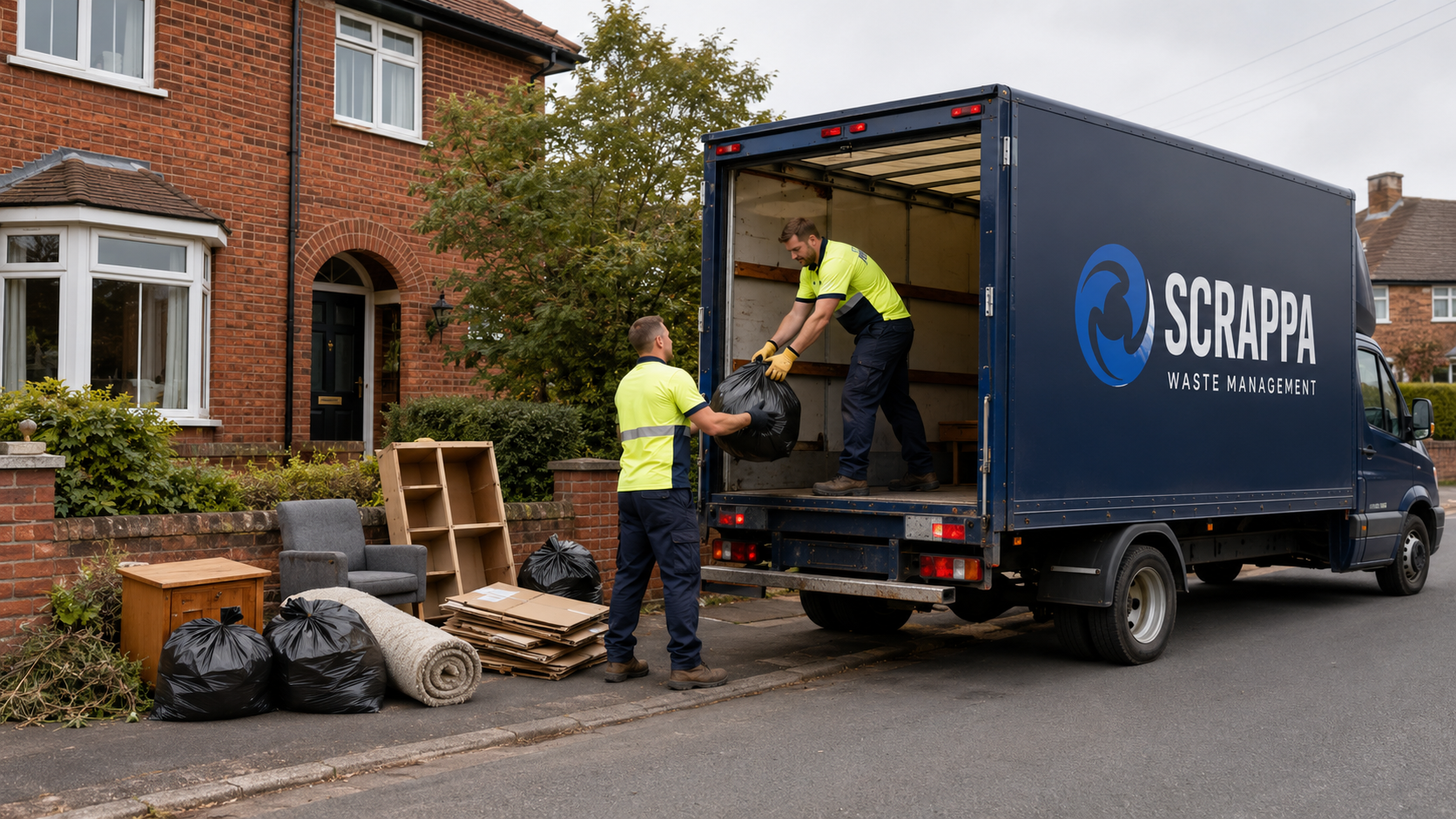
From the bags left after a clear-out to the clutter filling a spare room, arrange a rubbish collection around the load you actually have. Add your Lancaster address, describe the contents and access, and review the full quote before booking.
Get a Lancaster rubbish collection quoteGive the number and size of bags and describe loose contents. An accurate list is more useful than calling the job a small pile.
Books, wet carpet, soil and rubble behave differently from light packaging. Tell us what makes up the load, including anything hidden underneath.
Explain stairs, gates, shared passages and distance to loading. A collection from an upstairs room needs different details from one beside a driveway.
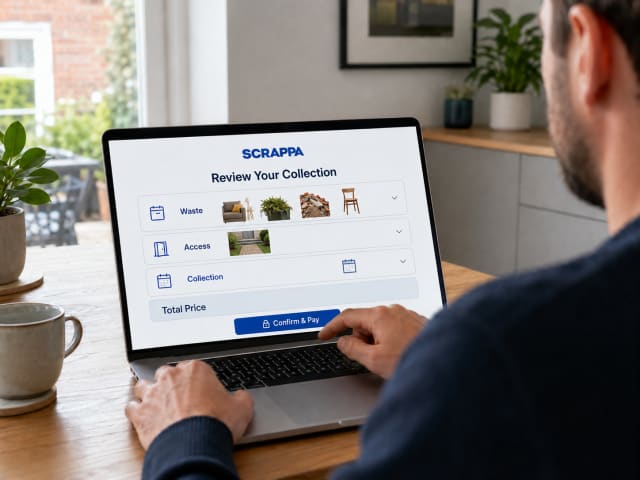
Check the waste description, access work, available window and final price together before confirming. Tell us if the job changes.
Count bags and describe their approximate size and contents. Do not leave unknown chemicals, sharp objects or dense building waste unmentioned.
Include boxes, packaging and small unwanted household items. Describe the whole area, including loose waste behind larger pieces.
Name any chair, sofa, mattress or cabinet separately. Quantities, sizes and special mechanisms help distinguish them from general bags.
Declare garden cuttings, timber, soil, plasterboard or rubble by material. A household rubbish description should not conceal heavy or specialist waste.

STEP 1
Enter your Lancaster address and contact details, rather than using a nearby landmark as the collection point.

STEP 2
Add the appropriate waste type or items, quantities and any material that needs separate handling.

STEP 3
Include floors, steps, passages, carry distance and any additional work you want assessed.
STEP 4
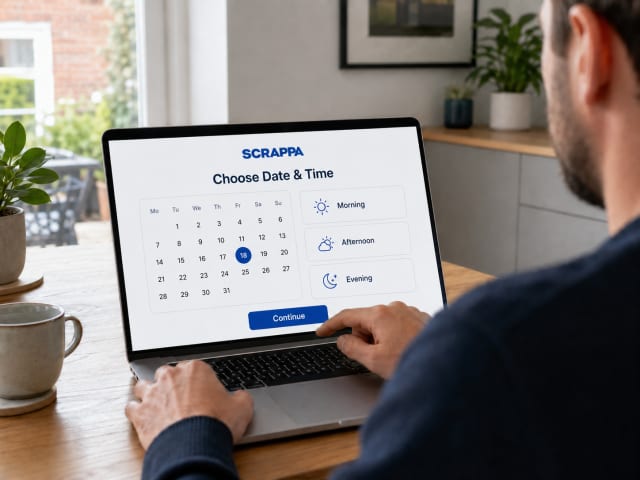
Provide the remaining information and choose an available date and time window.
STEP 5
Review the breakdown and scope before confirming so the booking matches the waste ready to go.
Start with all of the rubbish you want removed, not just the front of the pile. A garage can hold light packaging above dense bags, while a room clear-out may include furniture as well as loose items. Make a short list of the materials and count recognisable pieces. Keep possessions being retained clearly away from the collection group.
Ten small bags are a different load from ten large builder’s sacks. Describe approximate dimensions or the type of bag, and say whether the contents are wet or particularly dense. Avoid filling a bag beyond what it can safely hold. If the material cannot be identified, ask for assessment instead of guessing a standard household category.
Rubble, soil and tiles can reach a substantial weight in little space. Wet carpet and densely packed paper can also change the handling. Include these details before booking rather than relying on a volume estimate alone. A light-looking household load should not contain undeclared renovation material at the bottom.
For an upper-floor property in Bowerham or Greaves, describe the stairs and the route to the exit. Around Scotforth, a garden or garage load may involve steps or a long side passage. Near the city centre, tell us the correct entrance and lawful loading point. These are property-specific details, not assumptions about every street in the area.
A sofa bed, fridge or mattress needs its own description even when it is surrounded by bags. Declare its type, size and condition. Do not dismantle refrigeration components or strip foam from upholstered seating to make the load look smaller. Unidentified containers, suspect asbestos and other unusual materials need advice before they are included.
Rubbish removal does not automatically include sorting an untouched storage room, taking down a shed or dismantling large furniture. Tell Scrappa what work is needed to make the load ready and ask for it to be assessed. Where an item is assembled indoors, check the route and mention whether it can leave safely as it stands.
After confirmation, avoid adding more bags without telling Scrappa. If the contents, quantity or access change, the collection plan and quote may need reviewing. Arrange a contact who can identify the agreed rubbish and open any gate or shared entrance. Keep communal exits and the loading route clear.
Remove the agreed contents left after sorting a cupboard, spare room or garage. Separate the belongings you want to retain.
Arrange an authorised disposal list and a responsible contact. Do not assume all possessions left in a communal area can be thrown away.
Clear unwanted rubbish after deciding which items are moving with you. Declare furniture separately from small loose contents.
Describe the business waste, quantity and site access. Explain opening times and restrictions around customers or neighbouring occupants.
Bowerham, Greaves, Scotforth and the area around Ryelands Park offer useful context when describing a Lancaster address, but each property needs its own access information. Say whether waste is at the front, behind a locked gate or upstairs. Quernmore Road, Wyresdale Road and Bowerham Road can identify the locality; they do not confirm parking permission or the carrying distance. Landmarks such as Williamson Park and Ashton Memorial are orientation points, not collection depots or promised dispatch locations.
Area examples: Bowerham, Greaves, Scotforth and Ryelands. Postcode district: LA1. Enter the exact postcode to check the collection address.
A booked collection can suit rubbish that is ready to remove in one visit, with the agreed lifting and loading included in the quote.
If waste will accumulate over several days, consider whether a skip better suits the work. Check placement permission, safe loading and accepted materials with the provider.
Clarify contents, dense materials and unusual items before choosing either route. A cheap headline price is only useful if it covers the actual waste and access.
Give the approximate length, width and height of the pile and list its materials. Name furniture or appliances separately, and include anything stored behind or underneath the visible load.
Declare rubble and other dense material separately so weight and handling can be assessed. Do not treat it as ordinary light household waste simply because it is in bags.
Explain its current location, floor and removal route when booking. Agree the work included; do not move a load yourself if doing so would be unsafe.
List each item by type and quantity in the booking. These can have different handling or disposal requirements from loose household rubbish.
Do not assume a cleaning service or a completely cleaned property is included. Agree the collection scope and arrange any additional cleaning separately.
Contact Scrappa with the new quantity and material details before collection. The additional work and price need to be assessed rather than assumed to fit the original booking.
Enter your Lancaster postcode, describe the rubbish and access, then review the available collection options and full price. Keep the agreed load identifiable for collection day.
Get a Lancaster rubbish collection quote