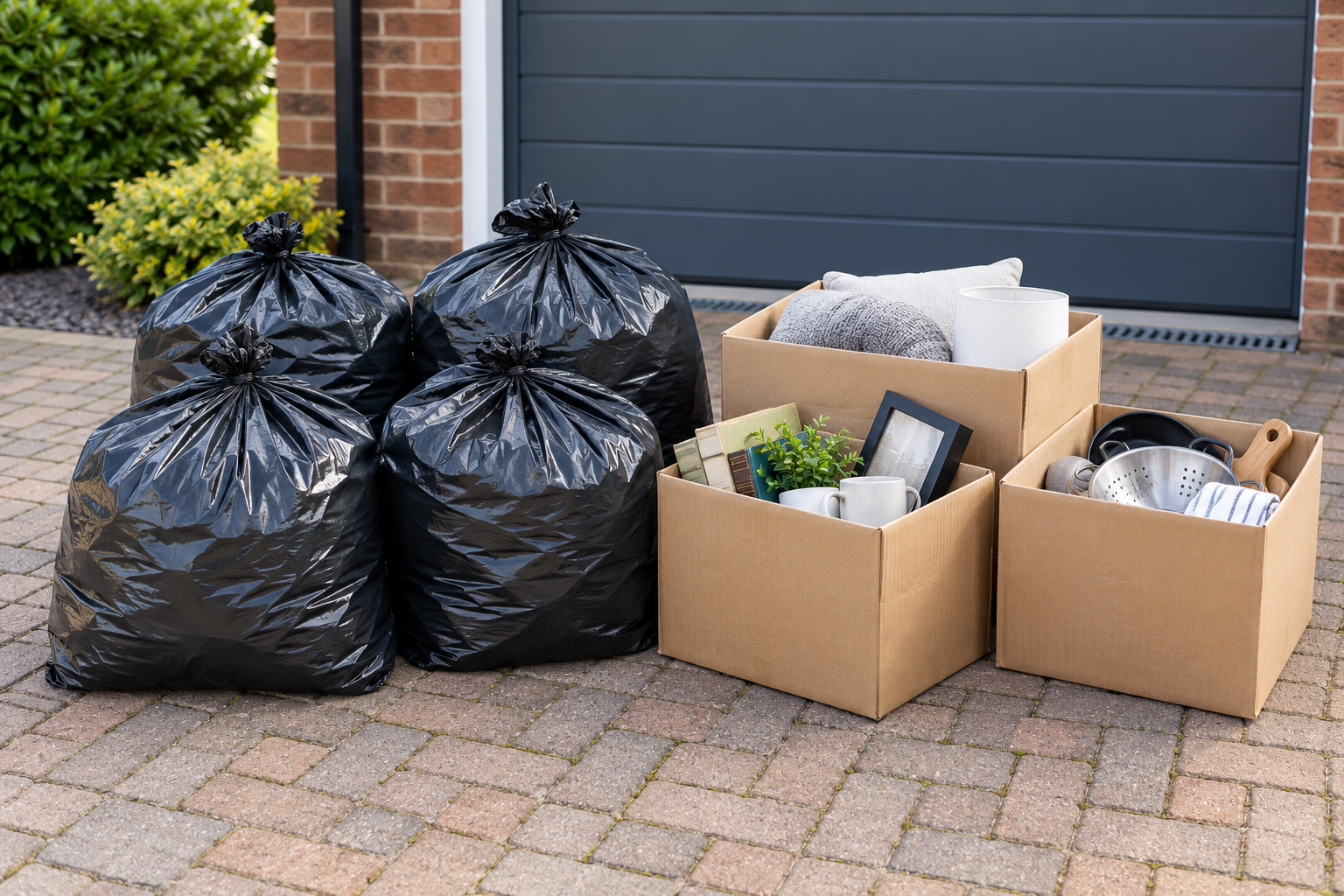
Boxes, bags and stored clutter
Count the containers and describe the contents. Check for retained belongings before anything is removed.
The garage you can no longer park in, the cupboard full of old boxes or the spare room waiting to be used again: stored junk tends to grow quietly. Scrappa helps you arrange junk removal in Nelson by turning the pile into a clear collection list, with access and pricing reviewed before booking.
Count the containers and describe the contents. Check for retained belongings before anything is removed.
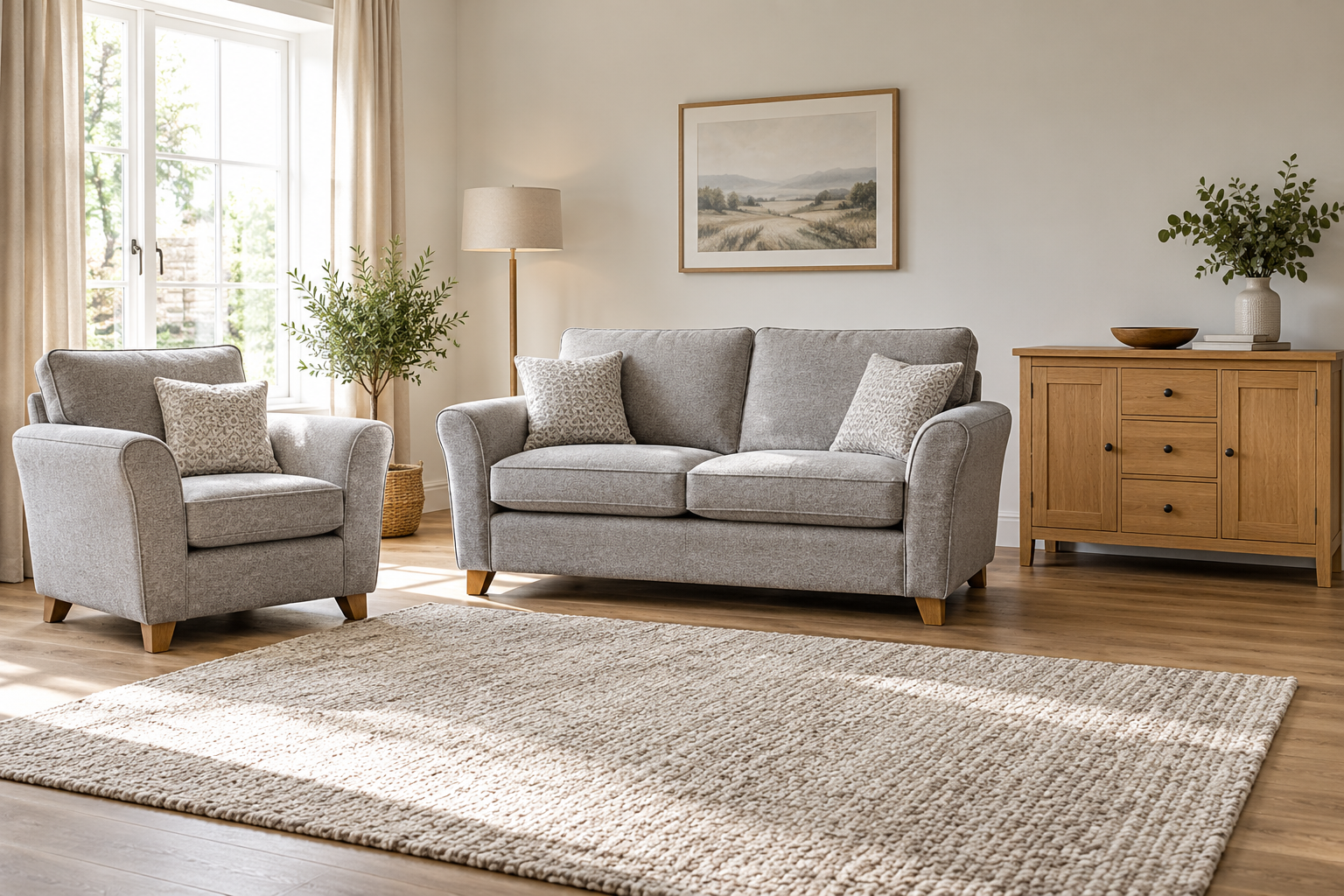
Include old seating, sideboards and other large pieces as named items. Mention damaged or heavy furniture.
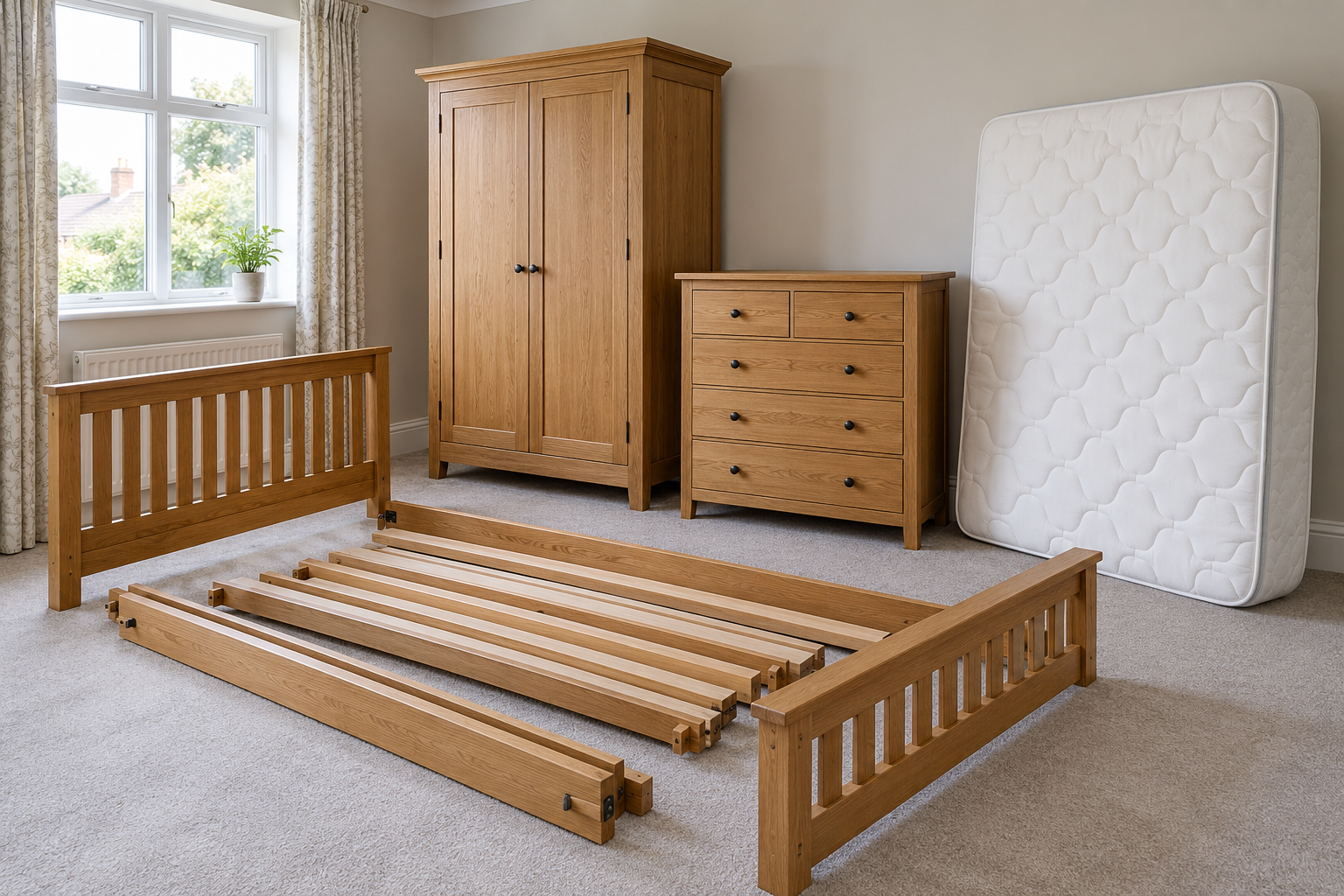
List frames, mattresses and storage units separately, including pieces already dismantled.
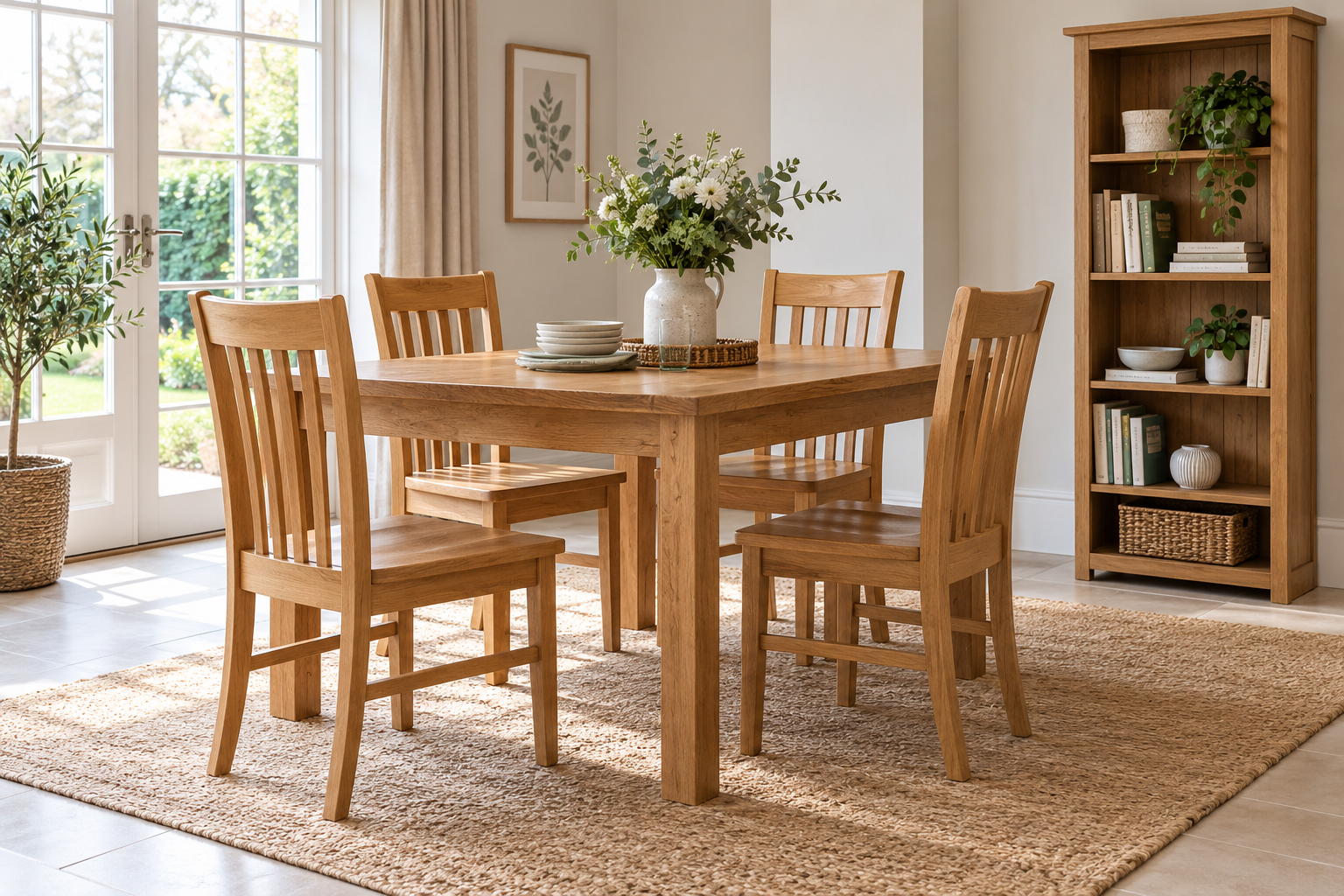
Explain the quantity and size of larger furniture, and whether it needs taking apart.
Stored clutter often hides more clutter. Check behind the first stack of boxes and around shelving before estimating the load. Include every separate pile you want removed, not just the one nearest the door. Take photographs from several positions if the space is crowded. A collection planned from the full area is more useful than a small estimate that grows during loading. If parts of the room are staying, mark their boundary clearly and tell the on-site contact.
Open stored containers and remove documents, valuables and items you still want. Do not assume a box labelled old stuff contains nothing important. Keep retained contents away from the agreed junk pile, especially if other people are sorting the same room. Unknown substances, batteries, sharp objects and unusual materials should not disappear inside a general description. Explain anything needing review before booking. The crew needs a clear removal list rather than instructions to decide which belongings matter.
Old exercise equipment, tool storage, metal objects and heavy furniture can change how a clearance is handled. Give approximate sizes and explain the condition, particularly loose parts or sharp edges. If boxes contain books, tiles, tools or other dense contents, say so. A container count alone does not show the weight. Do not mix heavy renovation material into a light household-junk request without declaring it. Describe electrical items individually rather than assuming they are ordinary loose clutter.
Tell us if the junk is on shelving, behind a vehicle or spread across more than one outbuilding. Explain the door width, threshold and ground surface, along with any steps to the loading point. A shed contents clearance is different from dismantling the shed itself; the same distinction applies to fitted shelving or workbenches fixed in place. If access requires moving retained items first, arrange that or describe the extra work so the collection can be planned accurately.
Clear a usable route to the agreed collection without creating unstable stacks or blocking a shared entrance. Do not climb over piles or try to lift an awkward heavy item alone just to prepare. Identify broken glass, exposed fixings or a damaged unit before the crew handles it. Tell us about stairs and the carry distance to a lawful place for the vehicle to load. The collection needs an honest access description even when the junk itself is easy to identify.
Once you have a collection scope, keep new sorting waste separate. If another cupboard or room is added, contact Scrappa before the visit. A changed quantity, heavier material or different access route can affect the work required. The same applies if some large items have been sold or removed beforehand: update the list rather than leaving the crew to work out what changed. Review the final booking details and full price before confirming payment.

Enter the full postcode and confirm the location of the junk.
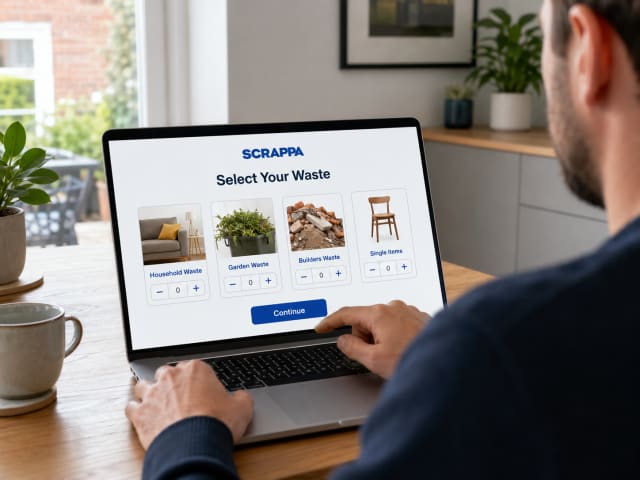
List containers, bulky pieces and dense materials separately.

Include the floor, outbuildings, gates and carry distance.
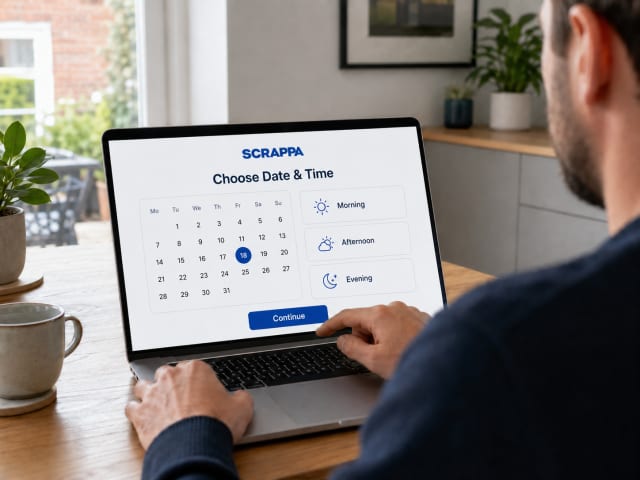
Choose a date when sorting and access arrangements are complete.
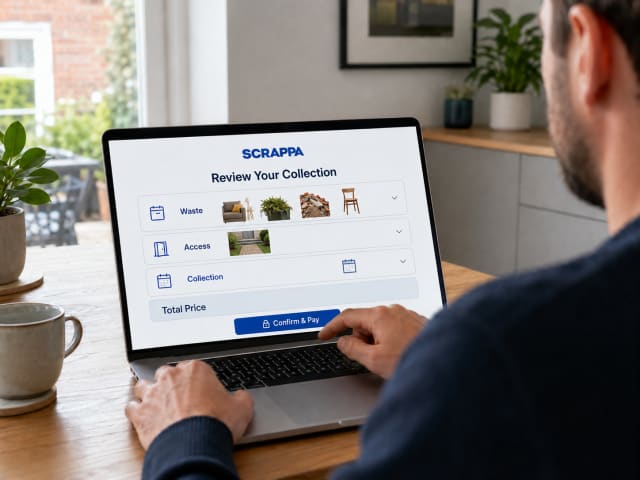
Review the full quote and agreed scope before payment.
Use the correct full BB9 postcode and address, whether the junk is near Carr Road, around Victoria Park or elsewhere in Nelson. For a garage behind the property, provide the access entrance rather than just the front door. Mention narrow passages, shared yards and any restrictions on loading. Local landmarks help locate the area; they do not replace the address, establish permission to stop or guarantee a particular arrival time.
If your junk is already sorted and ready to leave, a loaded collection may be practical. For a gradual project, compare suitable skip hire, accepted materials and space requirements. Separate any items you intend to sell or donate before finalising the collection. Do not rely on every item being reusable, recyclable or accepted by every service. After Scrappa completes the agreed collection, keep your digital waste transfer note with the booking record.
Describe the garage contents and access, including anything hidden behind shelving or retained items. The agreed scope should cover the full list.
Yes, make the removal pile and retained belongings clearly distinguishable. Give the on-site contact the same instructions.
Name the furniture and explain damage, sharp parts and any dismantling required before booking.
Check them first for valuables, records and materials needing separate handling. A box count alone is not a complete waste description.
Do not assume dismantling is part of contents removal. Describe the structure and work required separately for review.
Contact Scrappa before collection. Extra rooms, containers or heavy items need to be assessed rather than assumed included.
Finish your list, enter the collection address and explain the access. Check the available slots and complete quote before confirming.
Start your collection quote