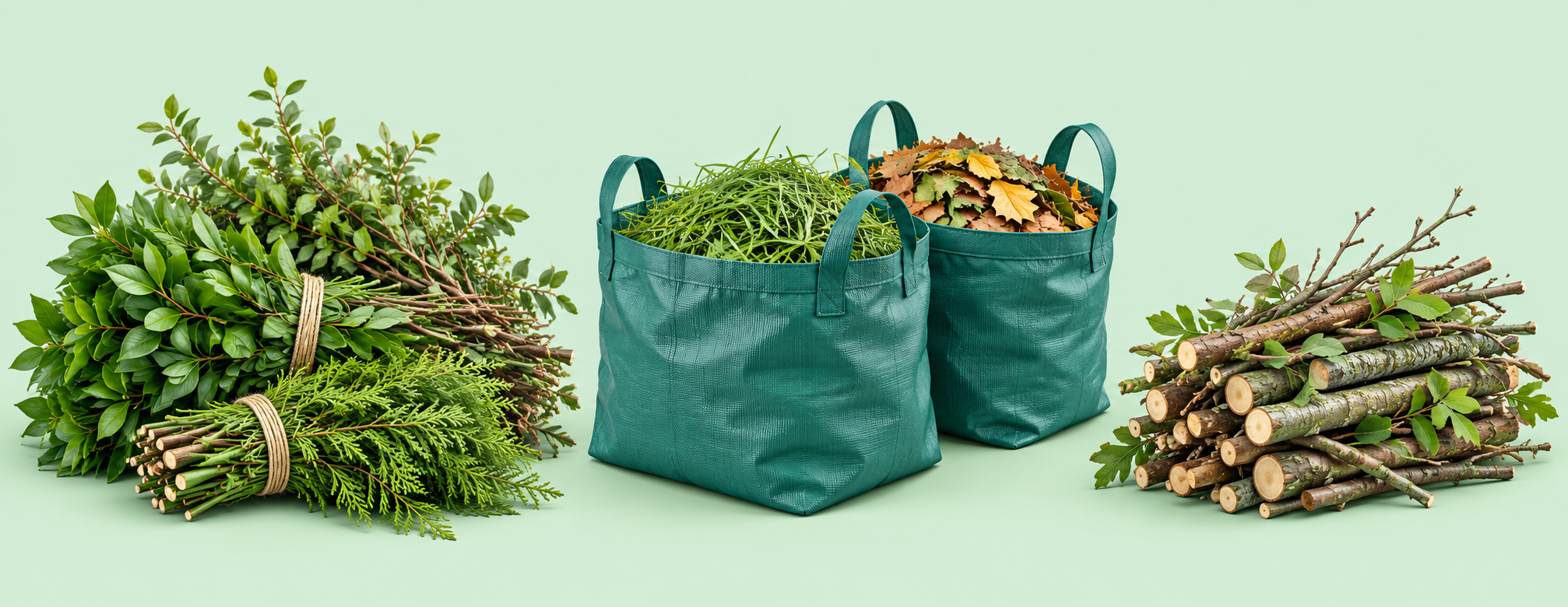
Cuttings, grass, leaves and woody branches
Describe each material and say whether it is loose or bagged. Include branch dimensions and wet bags rather than estimating only the footprint of the pile.

A productive day in the garden can leave a surprisingly awkward pile behind. Arrange garden waste removal in Nelson for the cuttings and materials you have ready, with the quantity and access explained before collection. Identify soil, turf and outdoor extras separately so the request matches the actual job.
Describe each material and say whether it is loose or bagged. Include branch dimensions and wet bags rather than estimating only the footprint of the pile.
Fresh leaves, grass and hedge trimmings are different from soil, turf, rubble and paving. Check the full pile and identify each material before choosing the collection description. A green-looking turf load can contain a substantial weight of soil, while a few bags of stones may weigh more than a large loose heap of leaves. Do not use a light green-waste description for everything found in a garden. Explain mixed contents so the collection can be assessed appropriately.
Give the number and approximate size of bags, and say whether they are full, wet or densely packed. For loose cuttings, photographs from more than one angle can help show the extent. Branch piles are irregular, so a ground footprint does not show how much space they take up when loaded. Include a realistic description rather than choosing a smaller quantity because the pile is difficult to estimate. If pruning continues after booking, update the request before adding more material.
Identify the longest and thickest pieces in the pile. Already-cut branches can be stacked together where it is safe, but avoid putting sharp ends into weak sacks. Do not climb trees, use unfamiliar cutting equipment or undertake risky preparation for a waste collection. Standing trees, attached stumps and roots still in the ground are different from loose waste ready to load. Explain any cutting or dismantling request separately instead of assuming it is included in collection.
Plant pots, broken garden furniture, timber panels, metal objects and old tools are not simply green cuttings. List them separately, along with any electrical garden equipment. A shed contents request also differs from taking down the shed itself. Mention attached panels, heavy planters or fixed structures before booking so the work can be reviewed. Avoid hiding smaller materials beneath the main heap. The collection should reflect the whole list, not only what is easiest to see in a photograph.
A back-garden collection may involve steps, narrow gates, sloping paths or a route through the house. Give the carry distance to a lawful loading point, and say if the ground becomes muddy or slippery. Keep the agreed route accessible without blocking shared passages or fire exits. Arrange access through any locked gate and keep pets away from the loading area. The full postcode locates the property but does not explain how the crew reaches the waste.
Tell us if bags have been outdoors long enough to fill with water or if the contents are very damp. Avoid overfilling and do not assume every large sack can be lifted safely. If a bag is split, explain this rather than moving it in a way that scatters sharp or heavy contents. Keep the collection material identifiable and separate from retained garden supplies. Paint, chemicals, unknown liquids and unusual materials should be disclosed for review, never concealed in green-waste bags.
Review the material types, quantities, access, date and full quote before confirming payment. If you uncover soil under the cuttings, add another garden area or change the access, contact Scrappa in advance. Additional waste and extra work need assessment rather than an assumption that the original booking covers everything. Have the agreed pile ready for the confirmed window and retain the digital waste transfer note after the completed collection.

Enter your full Nelson postcode and exact address.

Give the bag count, loose pile and any heavy or mixed extras.

Add gates, steps, slopes and the carry to the vehicle.

Choose a slot when the pile and access will be ready.

Check the complete breakdown and collection scope before paying.
For a home near Victoria Park, around Carr Road or elsewhere in Nelson, use the exact address and full BB9 postcode. Explain rear entrances and shared passages rather than relying on the front-door location alone. Tell us where a vehicle can lawfully load and any restrictions affecting the route. The illustration uses BB9 as a local example; available dates are assessed for the actual address and load.
Composting may suit a manageable amount of appropriate plant material. An available garden-waste service may suit routine cuttings, subject to its acceptance rules. A loaded one-off collection can help with a completed pile, while a suitable skip may suit an ongoing landscaping project. Check accepted materials and loading arrangements carefully: green cuttings, dense soil and mixed outdoor waste should not be treated as interchangeable.
Describe both quantities and materials. Include large branches and the condition of bags so the handling can be planned.
Declare turf separately because its soil content and weight change the nature of the load.
Do not assume structural dismantling is part of collecting ready-to-load waste. Explain that request separately before booking.
Give the loose-pile details. Avoid putting sharp branches into fragile bags or undertaking unsafe preparation.
Give the gate width, route and material details so access can be reviewed. Do not assume every route is suitable.
Contact Scrappa before increasing the pile. The quantity and quote need to match the final collection.
Describe the whole pile, enter the collection address and explain the access. Review the available slots and full price before booking.
Start your collection quote