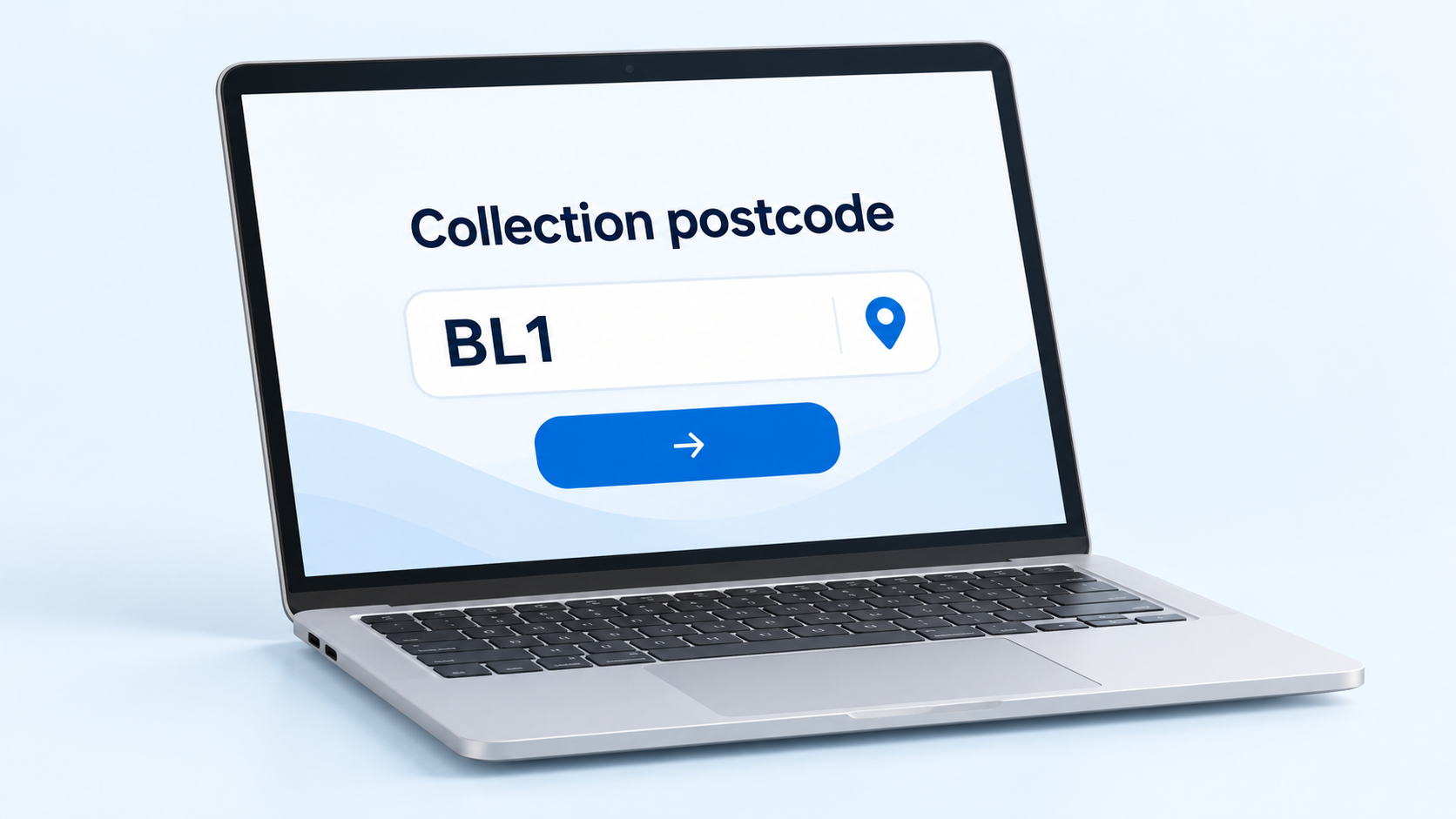
1. Enter the collection address
Use the full postcode and property details. BL1 is the Bolton example shown; enter your own postcode.
SCRAPPA™ · WASTE MANAGEMENT · BOLTON
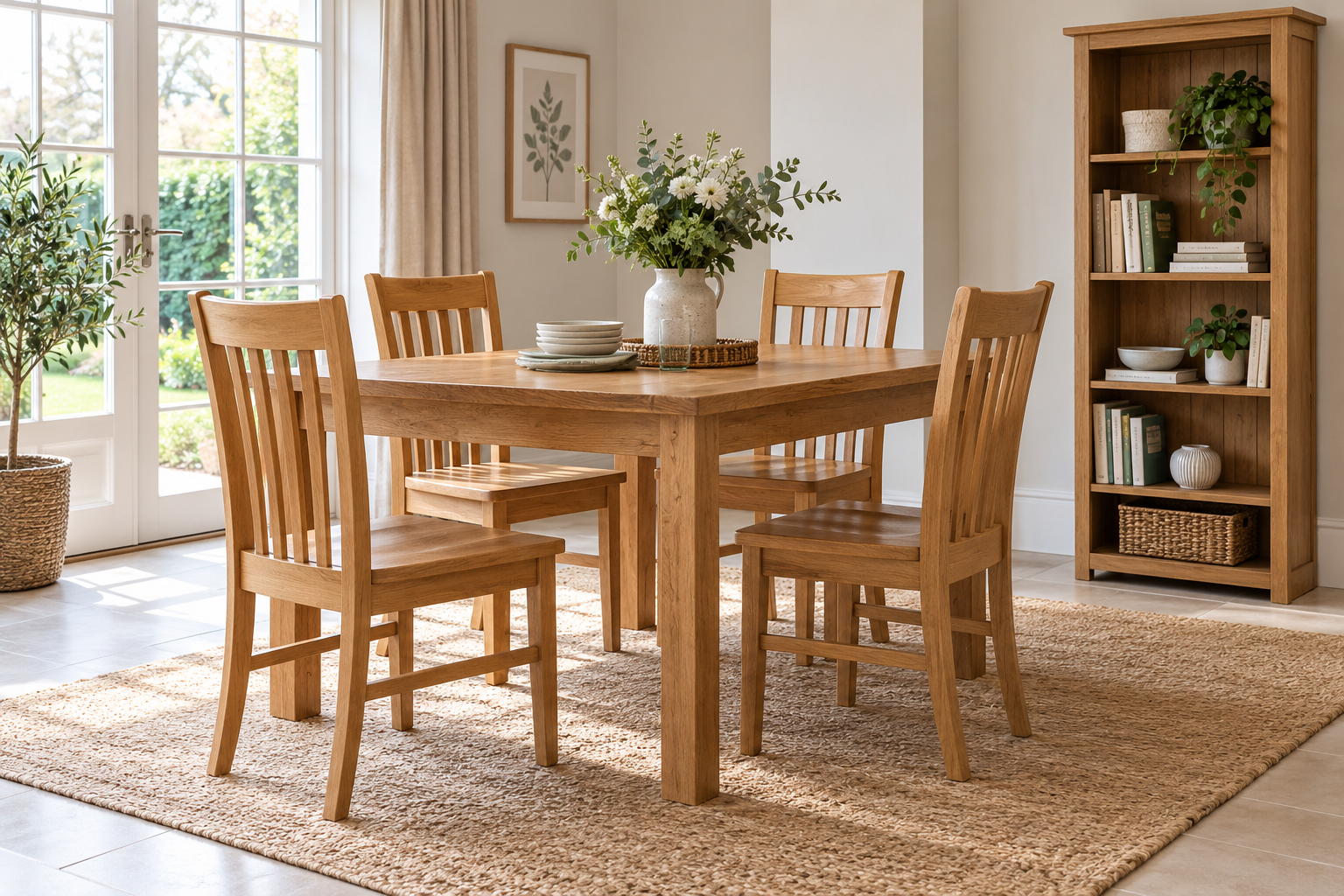
Changing a room should not leave you stuck with the furniture that no longer fits. Scrappa™ arranges furniture removal in Bolton for individual pieces and agreed room clear-outs, with the item list, route out and any dismantling work considered before you confirm.
Start your collection quoteBegin with the collection address. The price comes after you have entered the waste, access requirements and collection choices.
Use the full postcode and property details. BL1 is the Bolton example shown; enter your own postcode.
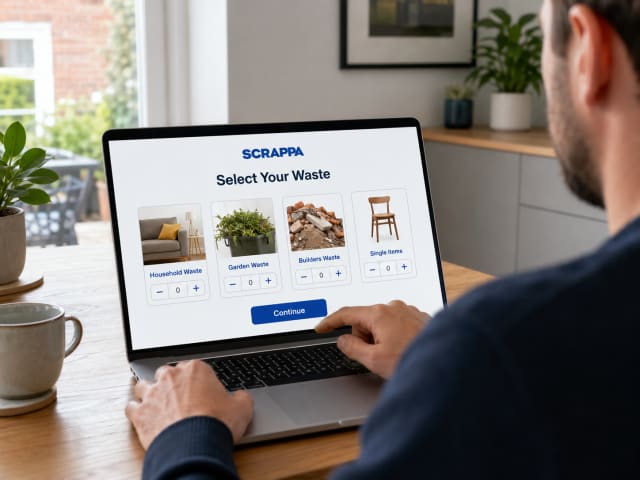
List the complete load, its quantities and any extras that affect handling.

Tell us about floors, stairs, loading distance and requested dismantling.
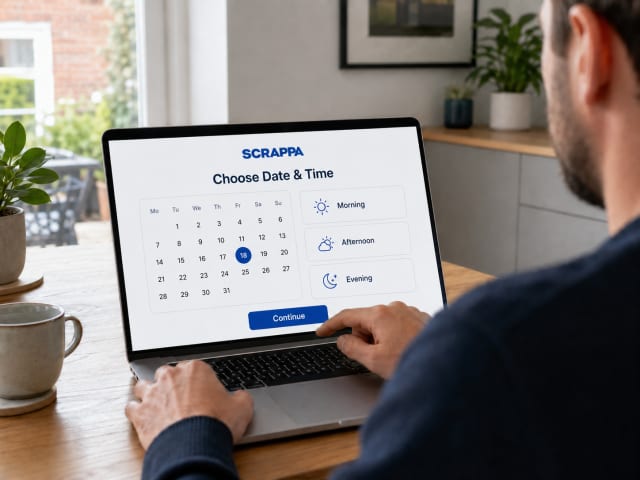
Select from the slots offered for your address and collection requirements.
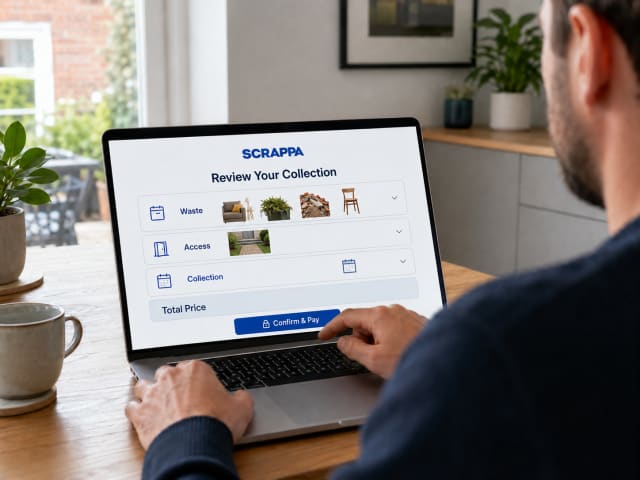
Check the price breakdown and booking details, then confirm and pay securely.
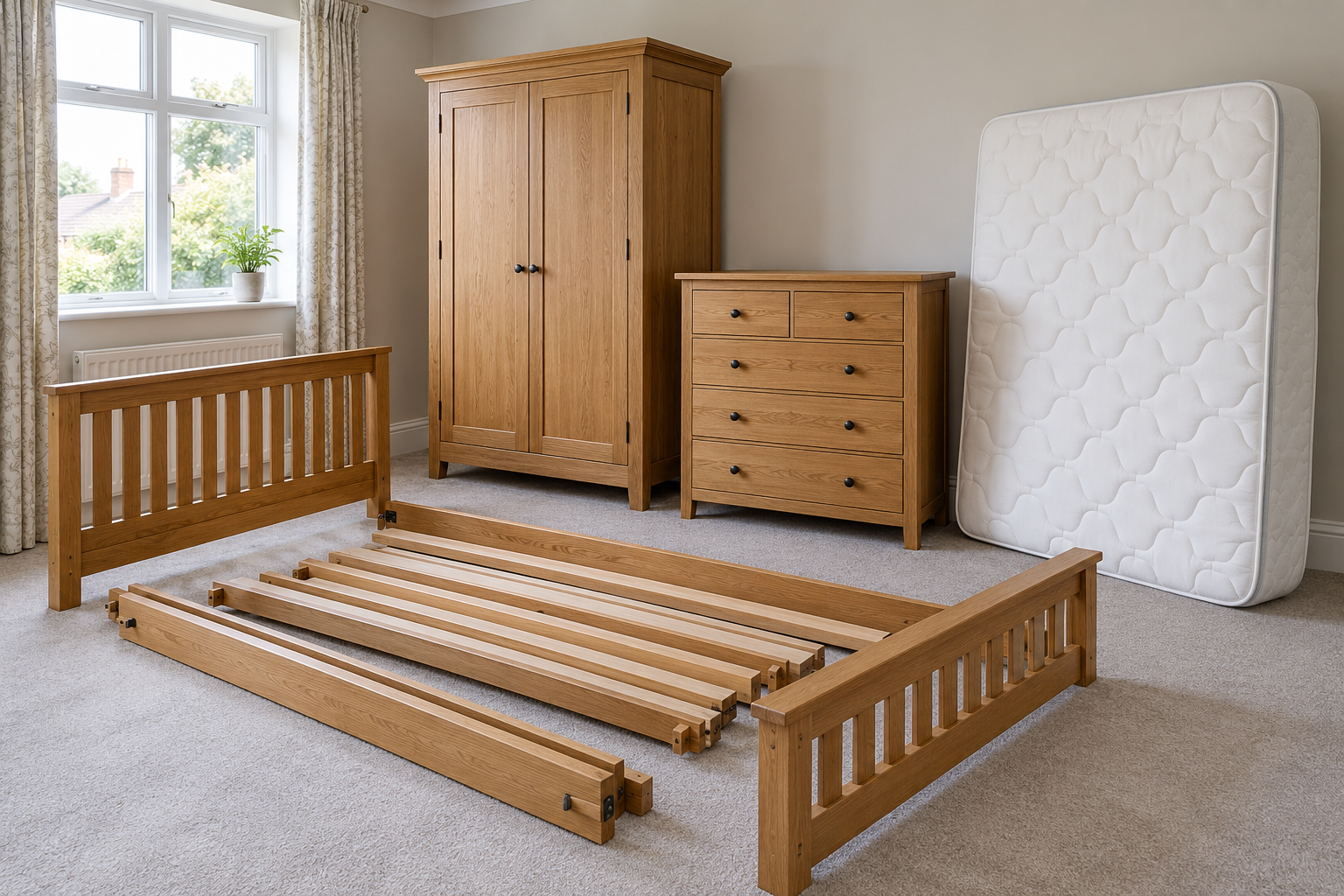
List the frame, base, mattress and storage pieces separately.
Give the table size, material and chair count.
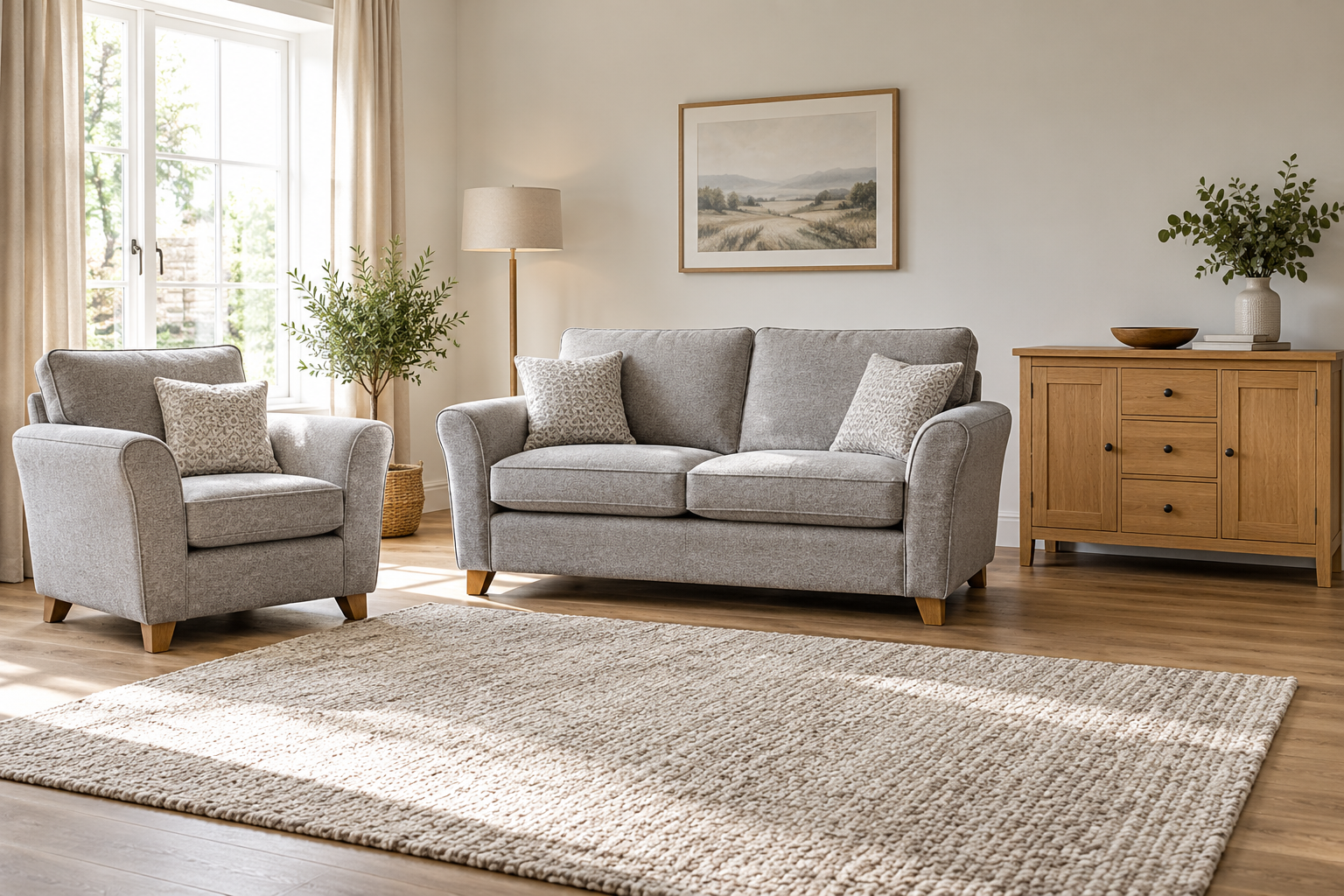
Include sideboards, bookcases, cabinets and seating by type.
Bedroom furniture could mean a bed alone or several wardrobes, drawers and bedside cabinets. Count each item and separate its loose contents from the furniture itself. Identify any pieces staying in the room. If you want matching furniture from another part of the house removed too, include it in the original request.
A wardrobe built inside the bedroom may not leave in one piece. Explain which furniture is already dismantled and which needs work. Request dismantling at booking and say whether the piece is freestanding or fitted. Removing fixed cabinetry, altering walls or carrying out building repairs is not automatically part of furniture removal.
Check the furniture dimensions against doors, landings and stair turns. Include low ceilings and narrow external gates, especially where a side passage is the only exit. Give the floor and lift details for flats, and confirm that the building allows the lift to be used for furniture removal.
Remove clothing, papers and personal belongings from drawers and cabinets before collection. Tell us about glass doors, mirrors, stone tops and loose panels. Do not take a heavy piece apart unsafely or leave unstable sections leaning across a walkway. If preparation is incomplete, explain it in advance so the work can be assessed.
A table near the front door may have a short carrying route; a wardrobe at the back of an upstairs flat may involve much more work. Explain the distance to a safe loading position and any timed building access. Do not assume that a roadside parking space is available or that a collection appointment overrides restrictions.
Furniture in usable condition may be suitable for sale or a donation scheme, subject to the receiving organisation’s requirements. Arrange that route separately before booking waste collection. Collection by Scrappa is for the agreed removal; it does not promise donation of every piece or a fixed recycling outcome.
Label what should remain and give the person meeting the team a copy of the final item list. If another piece is added, or the furniture has moved to a different floor, tell Scrappa before the visit. Keeping the scope current helps match the collection to the actual space, handling and time required.
Your quote is based on the furniture types and quantities, materials, access, requested extras and collection choices. A large solid-wood cabinet and a lightweight flat-pack unit may need different handling even if their dimensions are similar.
For example, describe a dining table with six chairs, a first-floor wardrobe and a separate bed base as individual parts of the request. Add dismantling if needed and explain the carrying route. Review the final breakdown before confirming rather than relying on a price for an incomplete list.
If the inventory or access changes after booking, contact Scrappa before collection. Extra pieces or additional work may need a revised arrangement. Keep the booking confirmation and completed Waste Transfer Note for your records.
Describe everything that needs to go, including awkward items and additional work.
Give the floor, stairs, gate access and carrying distance before collection.
See the booking details and price breakdown before confirming payment.
A Waste Transfer Note is provided after completion for your collection record.
A location name is only the start of planning a collection. Around Bolton town centre and the Queen’s Park area, explain which entrance serves your property and where loading may be possible. For homes near Chorley New Road and Queen’s Park, explain which entrance leads to the contents and whether loading access is on a different street.
For a flat, include the floor, lift size, caretaker arrangements and any booked loading window. For a house, describe side gates, rear yards, steps and separate storage areas. Never reserve a public loading position by obstructing the highway. Availability and the collection plan are checked using your actual address and declared load.
Homeowners, tenants, landlords and business contacts can use the service for an agreed collection. If you are arranging access for someone else, make sure you have authority to remove the items and a reliable contact for the day.
Request the specific item, its dimensions and location. You do not need to describe a whole-room clearance if only one piece is going.
List loose contents separately. Empty storage furniture unless another arrangement has been expressly agreed.
Explain the construction, size and exit route. Request dismantling if it is needed and check the agreed scope before booking.
Give the floor, stairs and lift details so the carrying work can be assessed.
Add every component you want removed. A mattress, base, frame and headboard should be clearly identified.
Describe the item and its connections. Any preparation or specialist work must be agreed; collection does not imply electrical work.
Check suitable reuse organisations before booking waste collection. Their acceptance criteria may differ.
Contact Scrappa in advance with the final inventory so the booking can be reviewed.
A loaded collection can suit a one-off clearance when you want an agreed load carried away in a visit. A skip may suit work producing waste over several days, provided you can load it and arrange suitable placement. Compare the actual material, access, labour and timing rather than assuming one option is always cheaper.
For eligible household items, Bolton Council also has a bulky collection service with its own conditions. Check those directly when comparing options. Scrappa collections are booked against the items and access you declare; specialist or restricted materials need agreement before booking. Do not mix unknown chemicals or suspected asbestos into an ordinary load.
Start with your collection address, describe the whole job and check the available options. If anything is unusual, contact Scrappa before confirming so the collection can be arranged around it.
Start your collection quoteScrappa™ — Smart Waste Made Simple.