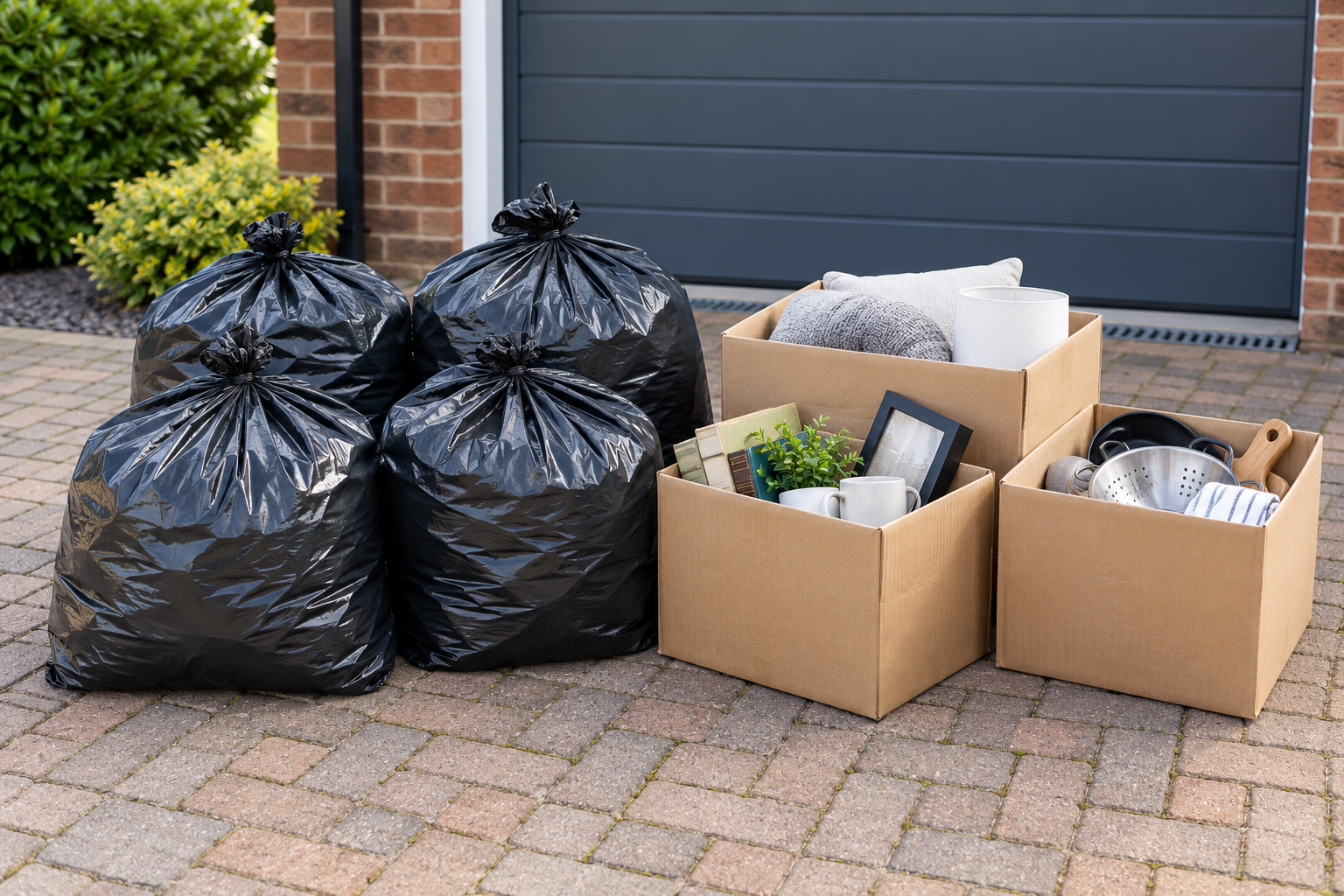
Bagged household rubbish
Tell us the number and approximate size of bags, plus what they contain. Include extra boxes or loose rubbish alongside them rather than only counting the visible front row.
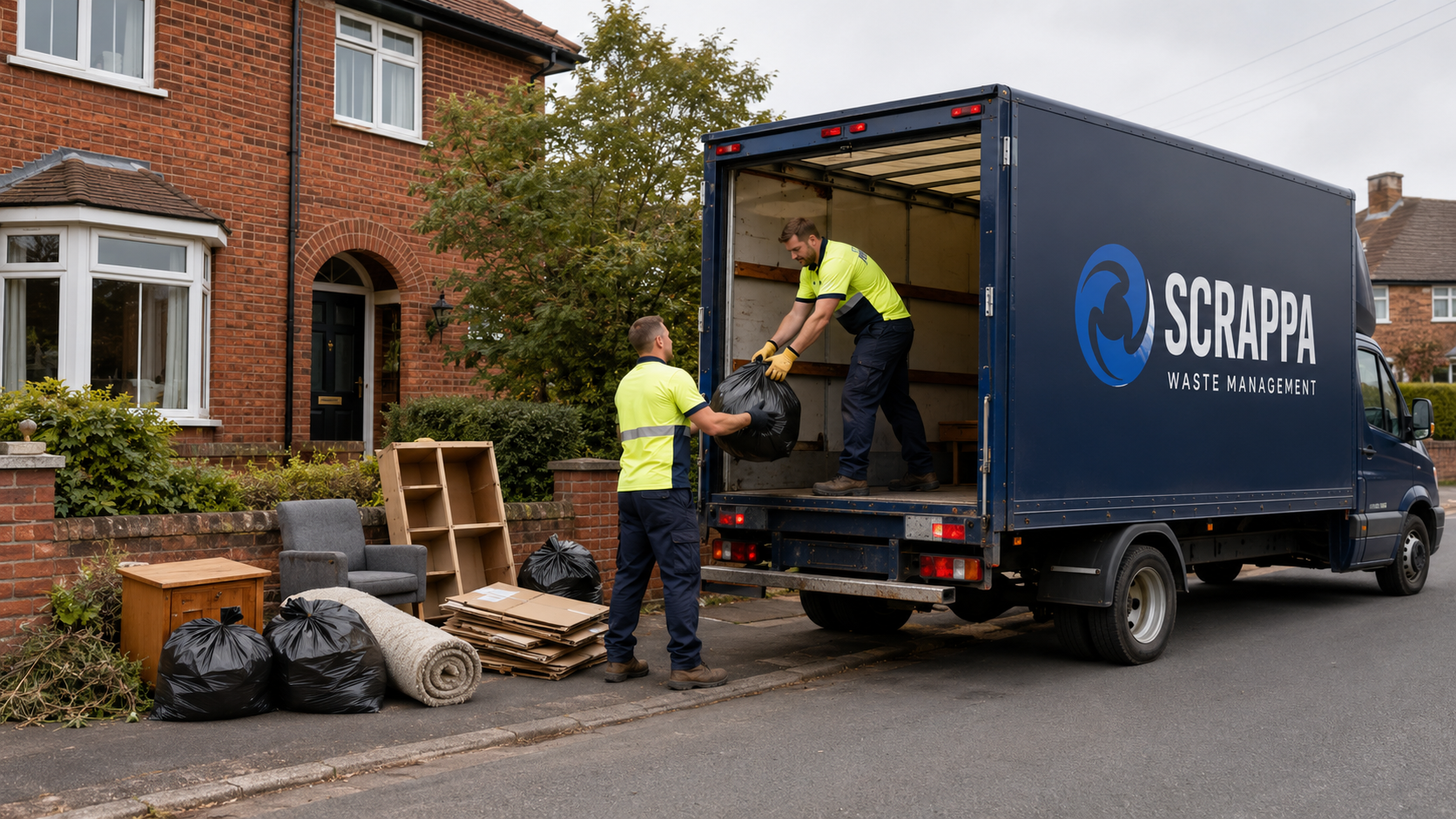
SCRAPPA • LEYLAND COLLECTIONS
Clear the rubbish taking up space in your home, garage or outdoor area. Describe the full pile, tell us about access and review a collection price before you book. Scrappa arranges loading and removal for the waste agreed in your booking.
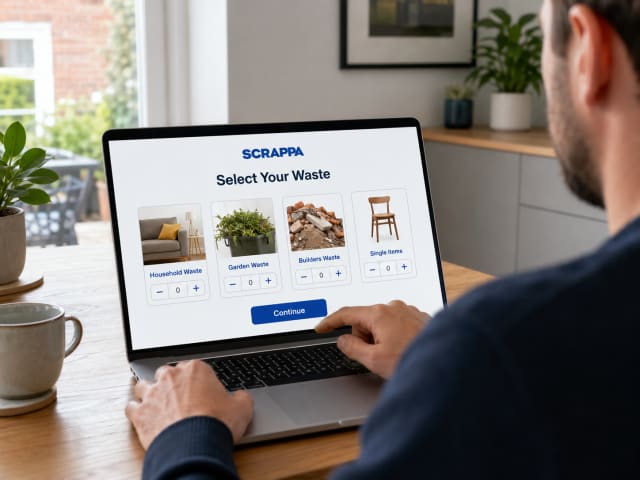
Get your Leyland collection quoteA few bags of light clutter, a sofa with several boxes and wet renovation materials each need a different description. Giving us the contents as well as the approximate size helps us plan an appropriate collection.
Tell us the number and approximate size of bags, plus what they contain. Include extra boxes or loose rubbish alongside them rather than only counting the visible front row.
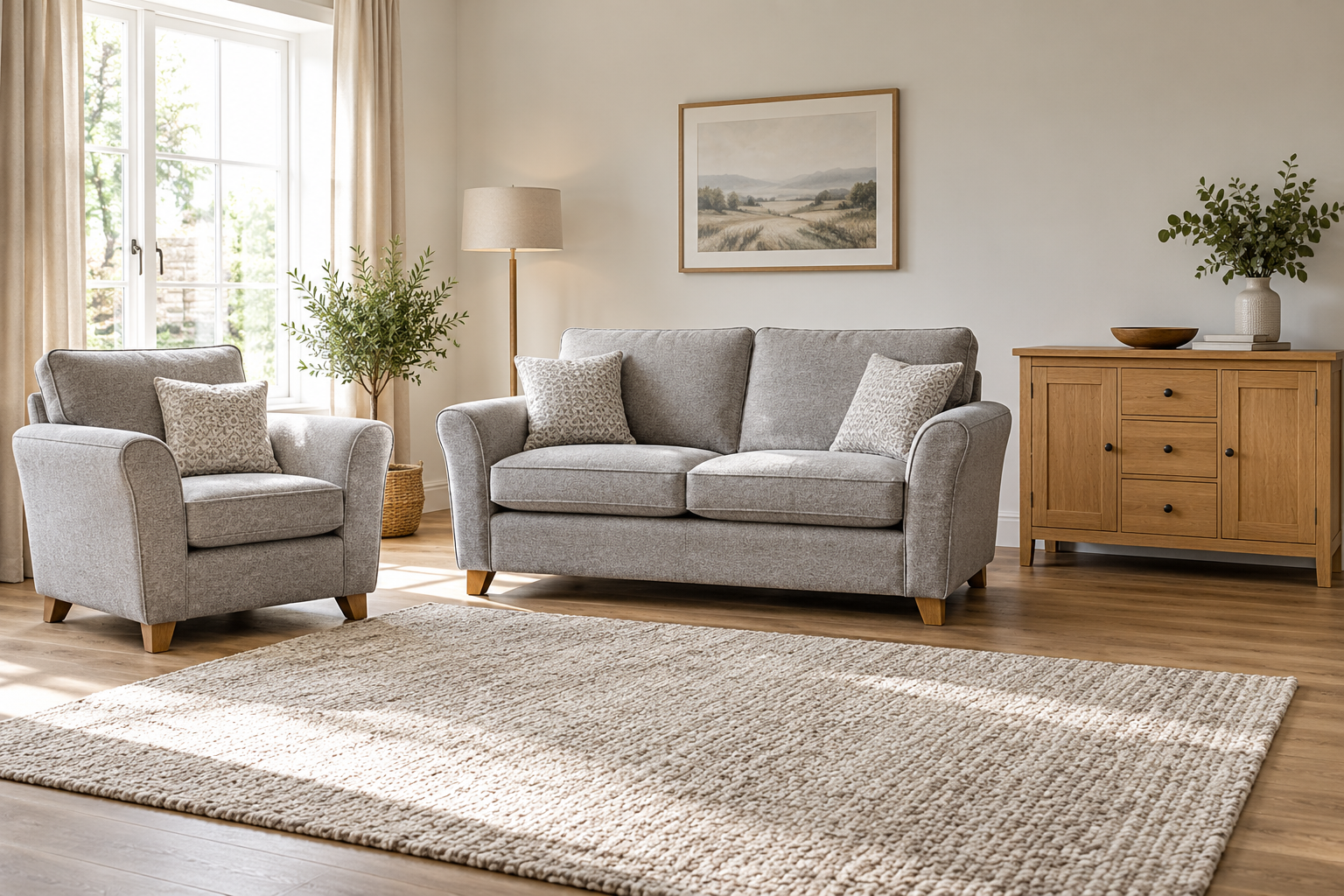
Name chairs, shelving and other large pieces individually. Explain whether anything must be taken apart or carried through a narrow doorway.
Photograph the full area and identify separate materials. Mention soaked items, broken glass or unknown containers before arranging a collection.
Keep timber, plasterboard, tiles and rubble distinguishable. Dense waste and specialist items need acceptance and weight limits confirmed separately.
Add furniture as named items when arranging a mixed collection. Include dimensions and any dismantling needed rather than counting it as a few extra rubbish bags.
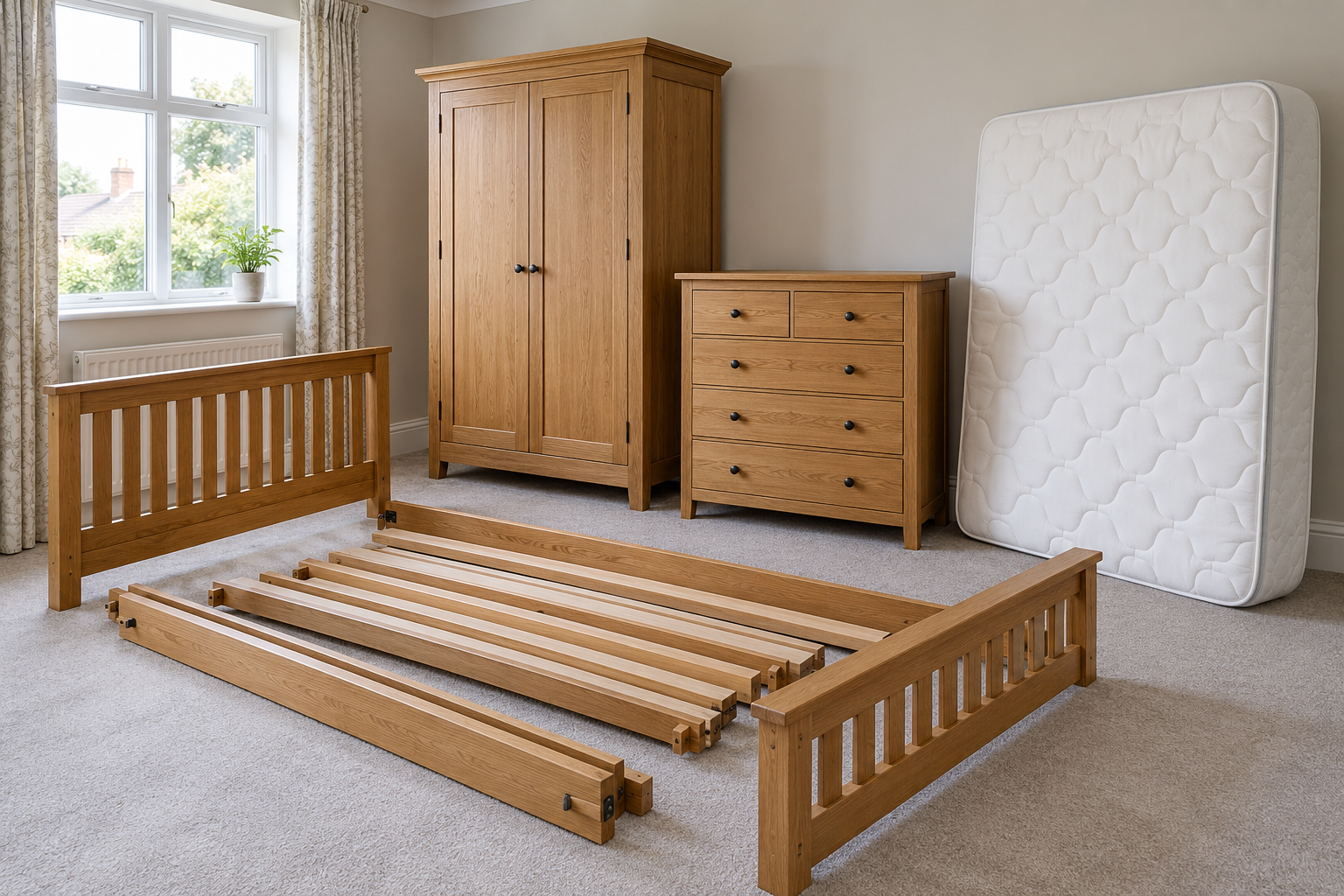
List mattresses, bed frames, wardrobes and drawers separately. Say where they are and whether the larger pieces come apart.
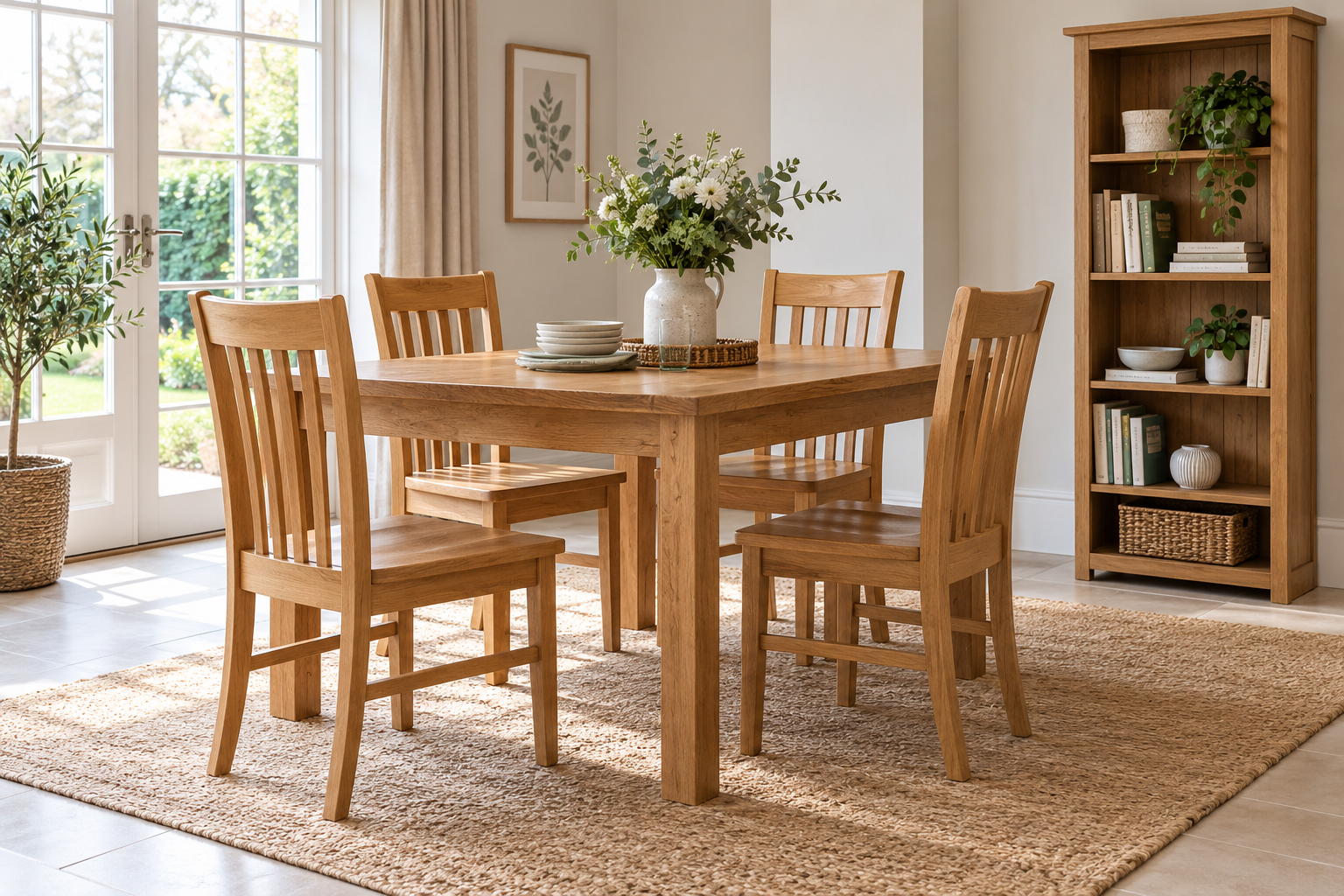
Give the table dimensions and chair count. Empty shelving and tell us if legs or shelves need dismantling before removal.
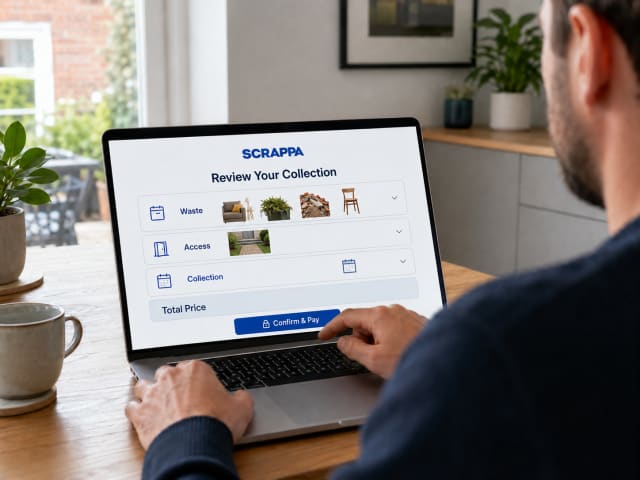
Your collection details determine the price. Check the breakdown, chosen extras and slot before confirming and paying.
Explain stairs, gates and carry distances so the work is assessed. You do not need to assume everything must be moved to the kerb.
Keep your confirmation and digital Waste Transfer Note. Scrappa’s waste carrier registration is CBDU613703.
Check the options offered for your postcode. Same-day requests depend on capacity and must be confirmed.
For collections near Worden Park, the town centre or the wider Leyland area, use the exact address rather than a landmark alone. State whether the waste is in a front room, upstairs flat, rear garden or detached garage, and explain the route to a suitable loading point.
Town-centre addresses around Ecroyd Street, Sumner Street and Churchill Way may involve parking restrictions or shared access. Check arrangements for your property rather than assuming a nearby public car park can be used for loading. Mention access codes, gate keys and a building contact.
Do not place rubbish on a pavement or reserve space using bins. Keep the agreed collection area accessible and tell us if a neighbour’s land or shared passage is involved. Availability is checked by postcode; surrounding addresses do not necessarily have identical collection options.
Walk around the whole collection area and include anything stored behind furniture or inside a shed. A single close-up can make a larger load appear smaller. Give bag counts and item names, and take wider photographs from more than one angle. If you are uncertain about volume, show the pile rather than selecting a smaller load simply to obtain a lower price.
Small bags of rubble can weigh more than large bags of packaging. Mention soil, turf, tiles, wet carpets and waterlogged textiles separately. Household mixed-load allowances are not a substitute for a heavy-material assessment. Tell us about bags already too heavy to lift safely; do not move them to the front yourself just to make collection look easier.
Do not pour liquids together or put chemicals into ordinary rubbish bags. If a container has no readable label, explain what you know and send a photograph. Batteries, gas cylinders, sharps and suspected asbestos need assessment and may need a specialist arrangement. A collection for general rubbish should never be treated as permission to add unidentified hazardous materials.
Keep documents, keys, valuables and reusable possessions away from the collection pile. Mark items that must remain if rubbish is spread through a garage or room. For rented premises, confirm who has authorised removal. If the person meeting the crew differs from the booker, make sure both understand the agreed inventory and any retained items.
Check the narrowest gate and doorway for bulky pieces. Explain tight bends, stairs and changes in ground level. Arrange a working lift if needed and identify any booking requirements with the building manager. Keep children and pets away from the loading route. If dismantling is needed, describe it before booking rather than assuming every item can leave intact.
A pile can grow between the original photographs and collection day. Let us know about additions, changes in material or a new access restriction as soon as possible. Extra waste or work can require a revised booking or price. Agree the scope before loading starts so everyone understands what is included and what needs a separate arrangement.
Retain the confirmation and digital Waste Transfer Note after completion. Ask about unusual items before the collection and keep any agreed handling details with your records. Disposal routes vary by material and condition, so do not assume every item can be donated or recycled. A clear inventory and useful paperwork matter more than a blanket environmental percentage.
A collection for unwanted bags, boxes and agreed bulky pieces when storage areas have become difficult to use.
Clear an agreed rubbish pile before handover while protecting possessions that are moving to the next property.
Arrange authorised removal with an inventory, keyholder and practical access instructions for the property.
Describe workplace clutter and electrical equipment separately. Confidential shredding and secure data destruction are not included.
A rubbish collection suits a defined pile where you want the agreed loading work included and a vehicle to leave after removal. A skip can be useful when waste builds up over several days and there is suitable space to keep it. Compare accepted materials, weight limits, labour and placement arrangements rather than volume alone.
For a few ordinary household bulky items, also check the council’s current collection options. Scrappa is a separate commercial service. Select the arrangement that fits your rubbish, access, deadline and budget without assuming one choice is always cheapest.
Yes, describe the bag count and contents and check the collection options for your postcode. Small piles still need an accurate description, especially where bags contain heavy or unusual materials.
Include the sofa explicitly when booking, with its type and approximate size. Upholstered seating needs separate handling and may affect the price; it should not be added as an undeclared extra.
Tell us where the rubbish is and describe access. Indoor or rear-garden collection can be assessed as part of the job. Do not move heavy objects yourself or obstruct the pavement.
The contents, volume, weight, loading work, access and selected extras affect the quote. Check the complete price breakdown before payment and tell us if the pile changes.
No. Urgent collections depend on postcode, load, material and available capacity. Rely on a confirmed slot rather than assuming that submitting a request reserves a vehicle.
No. Identify hazardous, unknown or specialist items before booking. Acceptance and any special arrangements must be confirmed; standard household rubbish collection does not cover every material.
Prepare your item list, photographs and access details, then start with your postcode. Review the booking so it covers all the rubbish you want removed.
Get your Leyland collection quote