Office Clearance in Burnley
Clear agreed office furniture and workplace contents with the inventory, authorisation and building route planned before booking.

A workplace clearance with a clear scope
Agree what is going, who can authorise it and how the team will reach the office.
An inventory-led quote
Count individual desks, chairs and cabinets, including contents in separate storage rooms.
Building logistics considered
Explain floors, goods lifts, loading bays and access restrictions.
One authorised site contact
Appoint someone who can open the premises and identify the agreed items.
Requirements agreed before booking
Identify dismantling and specialist equipment before reviewing the full quote.
Arrange your Burnley office clearance
Start with the premises and inventory, then coordinate access and availability.

Begin with the collection address
Enter your postcode and contact details so the booking starts with the correct property.

List workplace contents
Count furniture and identify electrical or specialist items separately.

Explain building logistics
Give floor levels, goods lift details, loading bays, permissions and dismantling needs.
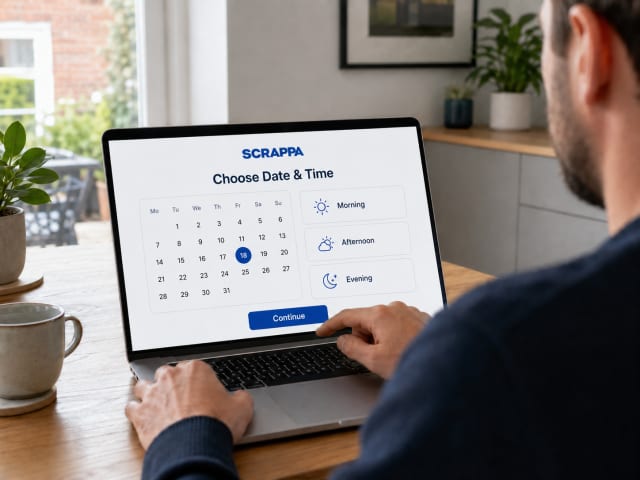
Coordinate an available collection window
Check building access and the keyholder’s availability before selecting a slot.
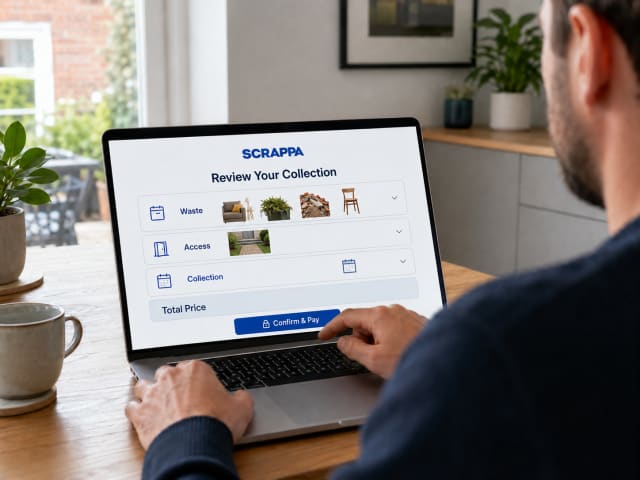
Review the agreed office clearance
Check the inventory, loading requirements and complete price before confirming.
Office clearance for Burnley workplaces
The booking should be authorised by the business or property representative responsible for the contents.
Businesses changing layouts
Remove selected desks and storage while marking the furniture staying.
Businesses moving premises
Separate retained equipment from unwanted workplace contents.
Managing agents and landlords
Provide authority, an agreed inventory and the building access instructions.
Small workplaces
Describe back-office and storage areas with their opening and loading arrangements.
Workplace contents to identify separately
Fixed strip-out, confidential shredding and secure data destruction are not assumed parts of a collection.
Desks, tables and chairs
Count pieces and give dimensions for meeting tables and large desks.
Cabinets and storage units
Empty contents and identify fixed, wall-mounted or unusually heavy units.
Non-confidential office contents
Describe boxes and loose items after removing retained and sensitive records.
Equipment needing assessment
List electrical equipment separately; general collection does not include secure data destruction.
Office collection or a skip for the premises?
Consider building permission, loading labour and acceptance rules for the inventory.
Check before hiring a skip
- ✗Whether the building allows the proposed position and access.
- ✗Who will move office furniture and load it safely.
- ✗Whether the supplier accepts every equipment and material type listed.
Arrange a planned office collection
- ✓Agree the contents and the rooms included in the job.
- ✓Explain goods lifts, stairs and loading arrangements beforehand.
- ✓Review the full inventory and collection quote before confirmation.
Workplace loading logistics in Burnley
Give the real loading entrance, floor and building requirements.
Licensed Waste Operations in Burnley
For premises around Manchester Road, Colne Road or central Burnley, state the lawful vehicle position and the route to office furniture. Include floors, goods lifts, shared entrances and any time restriction or loading-bay arrangement. A site contact should coordinate permissions and access before the collection window.
Arrange permissions, lift availability and loading-bay instructions in advance.
Remove confidential papers and data-bearing devices from general clearance.
Office Clearance coverage in Burnley
Check the complete address and available collection dates. Local reference areas include:
Arrange a Burnley workplace clearance
Prepare an itemised office inventory
Count desks, chairs, cabinets and meeting furniture, giving dimensions for large pieces. Include storage rooms only if they are part of the clearance. Photographs should show the full contents and route, rather than a close-up that misses additional furniture behind the main work area.
Separate retained and sensitive items
Mark furniture staying and remove personal belongings. Keep confidential records and data-bearing devices out of general clearance. This service does not include confidential shredding or an assumed secure data-destruction process, so appropriate arrangements for sensitive material need to be made separately.
Agree authority and the site contact
Name someone who can authorise removal, open the premises and identify the agreed inventory. Coordinate with the owner or managing agent where required. A clear responsible contact avoids conflicting instructions while the collection is taking place.
Explain the Burnley building route
A postal entrance may differ from the practical loading entrance. Give floors, suitable goods lift capacity, stairs and the lawful vehicle stopping point. Include carrying distance, shared gates and any loading-bay reservation or access-time rule affecting the visit.
Prepare cabinets and furniture fittings
Empty drawers and cupboards of retained contents, and flag glass or unstable sections. Identify dismantling needs before booking. Fixed units, wall attachments, service disconnection and building alterations should not be assumed parts of an ordinary workplace waste collection.
Identify equipment and unusual materials
List computers, printers and specialist business equipment separately, including oversized units. Arrange appropriate data handling yourself and declare batteries, chemicals and unknown contents before acceptance is assessed. The inventory needs to describe the actual workplace materials.
Confirm the full clearance plan
Review inventory, preparation, access, available window and price before booking. Give the site contact the final list and keep the route clear. Contact Scrappa if quantities or building arrangements change so the collection can be updated before arrival.
Start your Burnley collection quote with your postcode, add the complete load and access details, then review the full price before confirming.
Office clearance questions for Burnley businesses
Inventory, authority and premises access before collection.
Can you remove a few desks without clearing the entire office?
List the selected contents and quantities. Mark items staying on site so the collection scope is clear.
Is confidential shredding provided?
No. Scrappa does not provide confidential shredding through this service. Arrange appropriate secure handling separately and keep confidential records out of general clearance.
Does equipment collection include secure data destruction?
Do not assume that. Remove or appropriately prepare data-bearing equipment and discuss any electrical collection before booking.
Can furniture be collected from an upper-floor office?
Give floors, goods lift capacity, stairs, loading routes and any building permissions. The job needs to be assessed for the actual access.
Are fitted units or desks dismantled automatically?
No. Identify dismantling needs before booking. Fixed strip-out, service disconnection and building alterations are not assumed parts of collection.
Who needs to be on site?
Provide an authorised contact who can open the premises, identify the agreed inventory and answer access questions during the collection window.
Get your Burnley office-clearance quote
Prepare the furniture inventory and building-access details, then review a suitable collection quote.
Book Your Collection NowOffice Clearance in nearby areas
Need waste cleared in an adjacent town? Our mobile crews operate across neighbouring boroughs.