Rubbish Removal in Burnley
Get household rubbish removed with the complete pile and property access included in your booking details.
A rubbish collection with fewer unknowns
Tell us what is in the pile and where it is stored, then review a collection that matches those details.
Quote for the complete pile
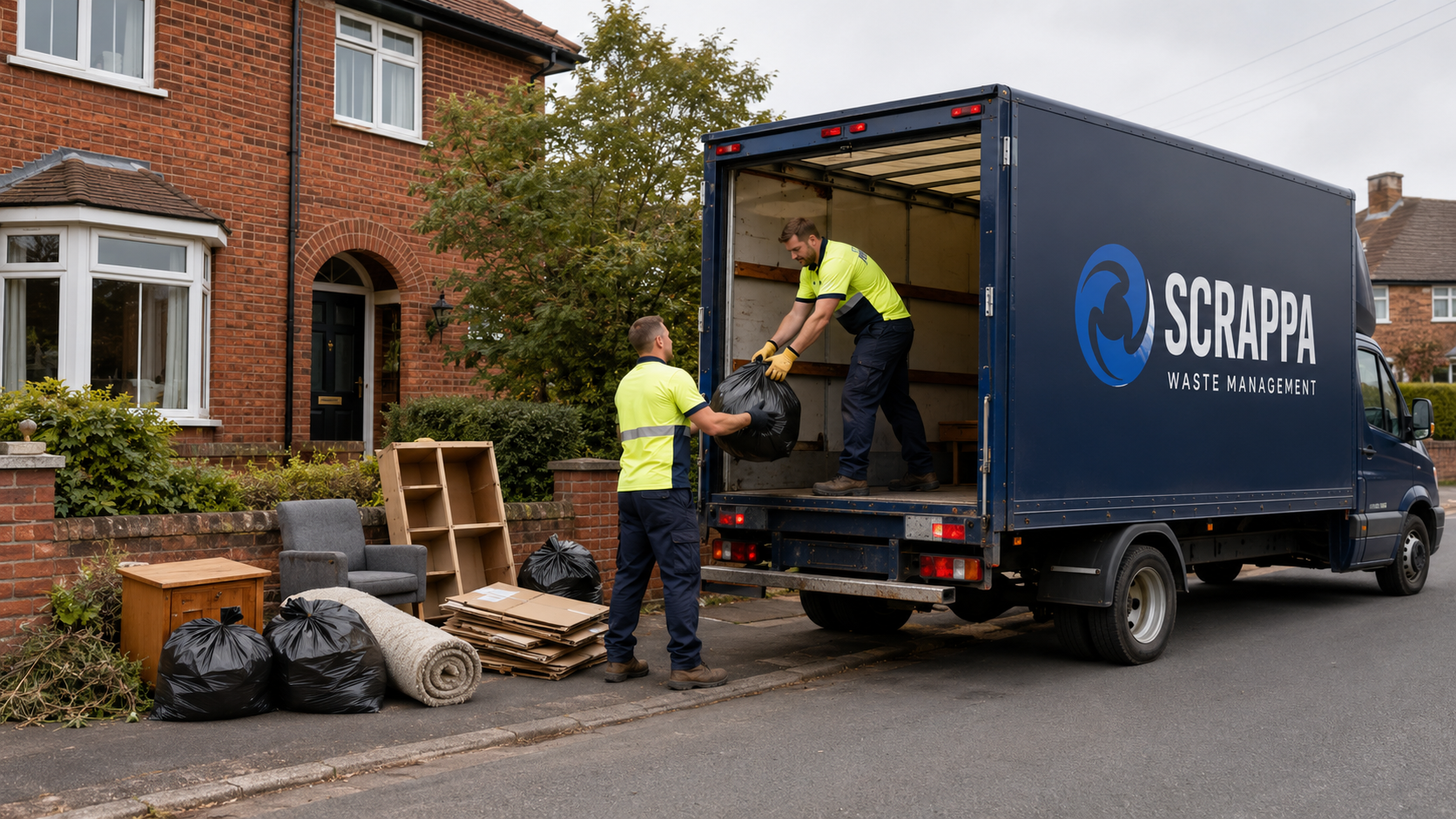
Include loose rubbish and bulky extras as well as the bags in the first photograph.
Loading route considered
Explain locked alley gates, steps and the distance from the rubbish to vehicle access.
Available windows shown
Check the dates offered for your postcode after entering the collection details.
Registered waste service
Arrange the job through Scrappa, a registered upper-tier waste carrier, broker and dealer.
Turn your rubbish list into a booking
Address first, followed by the waste, access, available date and complete price.

Begin with the collection address
Enter your postcode and contact details so the booking starts with the correct property.
Add everything being removed
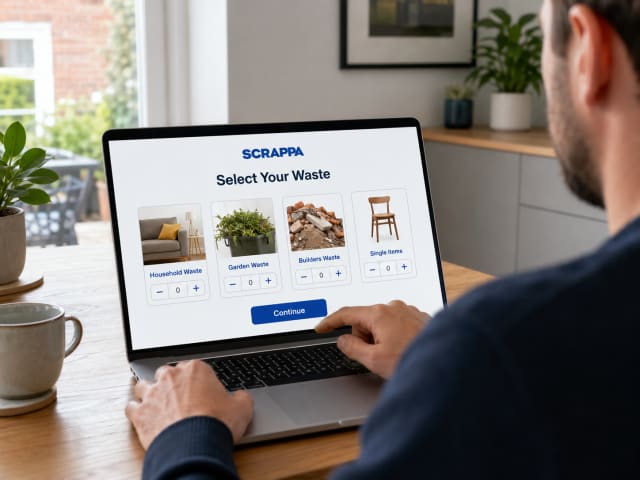
Choose the waste or items and include the full quantity, including extras.

Describe the loading route
Give floors, steps, lifts, parking, carrying distance and any dismantling required.
Choose a collection window
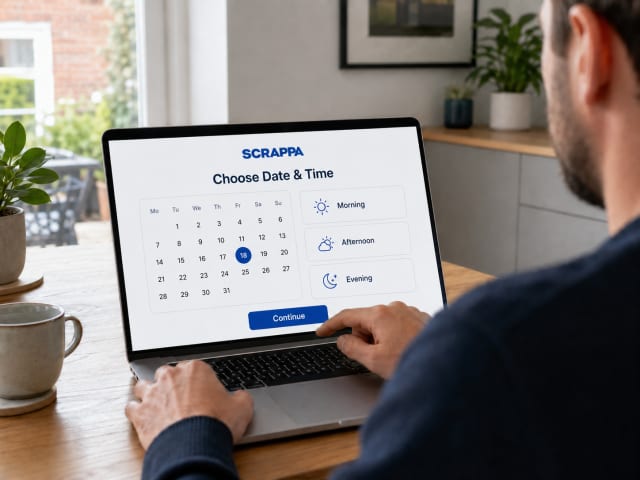
Select a date and time offered for your address and job.
Review the quote before booking
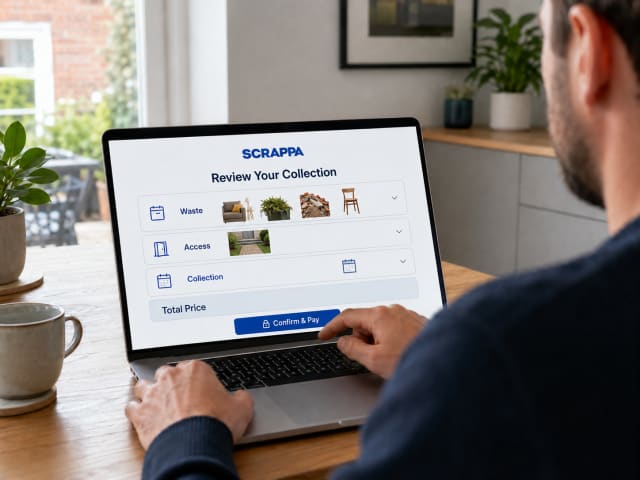
Check the breakdown, item list and access information before confirming.
Describe the rubbish you need removed
Group ordinary household contents together, but identify dense materials and specialist items separately.
Bags of household rubbish
Give bag sizes, quantities and contents. Flag wet or unusually heavy bags.
Loose clear-out items
Include boxes, packaging and loose contents stored behind the visible pile.
Bulky extras
Name each furniture piece, mattress or appliance in addition to the household load.
Materials requiring assessment
Declare soil, rubble, plasterboard, chemicals and unknown substances before booking.
Rubbish collections for Burnley properties
Explain who is arranging removal and how the team will access the agreed load.
Burnley households
Arrange removal of the agreed unwanted contents after separating belongings you are keeping.
Landlords and agents
Provide an authorised removal list, a keyholder and clear access instructions.
People moving or reorganising
Plan the collection around the contents you have finished sorting.
Small businesses
Describe commercial waste and premises access so a suitable collection can be assessed.
Rubbish collection or keeping a skip on site?
The best fit depends on whether your rubbish is ready to go or is still building up during a project.
A skip may fit an ongoing job
- ✗You want to add accepted waste over several days.
- ✗You have an appropriate place for the container.
- ✗You can arrange safe lifting and loading yourself.
A collection may fit a finished clear-out
- ✓The rubbish has been identified and is ready for a booked visit.
- ✓You want the agreed loading assessed as part of the job.
- ✓You need a quote based on the materials and access described.
Rubbish collection access around Burnley
Tell us how the team reaches the waste and where the vehicle can legally load.
Licensed Waste Operations in Burnley
For addresses around Bank Hall, Todmorden Road, Colne Road or Manchester Road, give the full postcode and practical entrance. Include rear passages, steps, gates and any floor above ground level. A nearby Towneley or Thompson Park landmark is only orientation; the exact property and loading route are still needed.
If an alley or yard is locked, arrange the keyholder before the collection window.
Include steps, floors and the distance from the load to vehicle access.
Rubbish Removal coverage in Burnley
Check the complete address and available collection dates. Local reference areas include:
Arrange a Burnley household rubbish collection
Count bags and loose contents together
Check the whole collection area, not just the most visible pile. List bags with their approximate size and contents, then add loose items and bulky extras separately. Say if another room or yard is included, and keep retained belongings clear of the removal load.
Identify contents that change the weight
Wet rubbish, dense renovation material and soil can weigh much more than ordinary household clutter. Declare them before choosing a load option. If the categories do not represent your materials accurately, ask Scrappa to review the description rather than forcing the job into a light-waste booking.
Explain a rear-yard route
For a Burnley property with rear access, state the passage width, steps and gate arrangements. Include whether access is shared and who can open it. The street address alone does not explain how far rubbish must be carried or whether a vehicle can approach the yard.
Give lawful loading details
Around Manchester Road, Colne Road and other busy routes, describe the actual legal stopping point and any restriction affecting the address. Do not assume pavement space or a park car park can be used for loading. Include the distance from that point to the waste.
Prepare safely for the agreed visit
Clear small obstacles and make sharp or broken contents visible. Use manageable bags and avoid unstable piles. Do not attempt unsafe lifting or block neighbours and public routes to move the rubbish nearer the vehicle; describe its real location so loading can be planned.
List specialist extras before confirmation
Name upholstered seating, mattresses and appliances individually. Mention chemicals, batteries, gas bottles and unknown substances before acceptance is checked. These details may affect handling, preparation and price rather than being automatic additions to a bagged-rubbish collection.
Review the whole job before booking
Check the address, full load, access, extras, available date and price breakdown. If more waste appears or the route changes, contact Scrappa before collection. The confirmed quote is based on the details supplied, so added piles or rooms should be agreed.
Start your Burnley collection quote with your postcode, add the complete load and access details, then review the full price before confirming.
Burnley rubbish collection questions
Clear up the load, access and price details before confirming.
How much is rubbish removal in Burnley?
The price depends on waste type, quantity, weight, access and extras. Enter the complete job details to review the breakdown before confirming; do not rely on a generic starting price.
Can you collect from a back yard with a gated alley?
Describe the alley, gate width, steps and carrying distance. Arrange a keyholder where needed and tell us where a vehicle can legally load.
Can I put bricks or soil in ordinary rubbish bags?
Declare heavy materials separately. Their weight is different from ordinary household rubbish, even if the bags look similar.
What if the rubbish is in an upstairs flat?
Give the floor level, lift access, staircase details and route to the vehicle. Loading requirements must reflect the actual property.
Can you take a sofa or fridge with the bags?
Include each specialist or bulky item separately in the booking. A bagged-rubbish quote does not automatically cover additional furniture or appliances.
Can I add more rubbish on the day?
Contact Scrappa before collection to agree any increase in load, loading requirements or price. Do not assume extra piles are included.
Get your Burnley rubbish collection quote
Enter the postcode, describe every part of the load and check the full price before booking.
Book Your Collection NowRubbish Removal in nearby areas
Need waste cleared in an adjacent town? Our mobile crews operate across neighbouring boroughs.