Bulky Waste Collection in Burnley
Arrange removal of large household items with their dimensions, preparation and lifting route considered before booking.
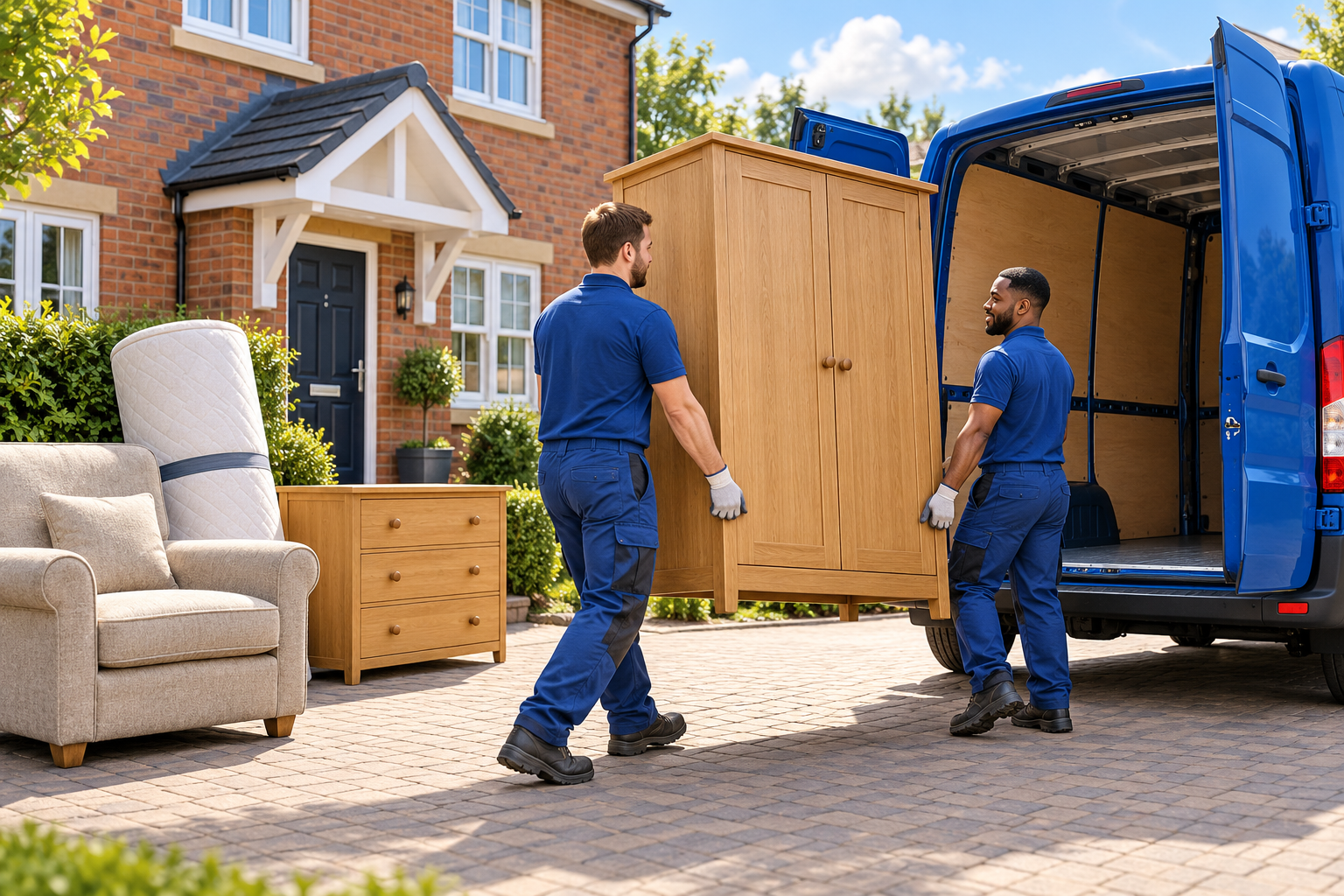
Large items need more than a rough load estimate
Clear dimensions and property details help establish what the collection involves.
Name every bulky piece
Include quantities, types and all separate bed or furniture components.
Measure tight exits
Check doorways, gates and staircase turns rather than only the item width.
Flag heavy mechanisms
Declare recliners, sofa beds and unusually heavy units.
Agree preparation before booking
Identify dismantling and connected appliances so the requirements can be assessed.
Bulky household items to list separately
The correct item description matters as much as its overall size.
Wardrobes and storage units
Give measurements and explain whether dismantling is needed.
Sofas and upholstered seating
Distinguish standard, corner, reclining and sofa-bed types.
Beds and mattresses
List frames, bases, headboards and mattresses as separate components.
Large appliances
State the appliance type, size and preparation or disconnection arrangements.
Arrange a large-item collection in Burnley
From the property address to an item-by-item quote.

Begin with the collection address
Enter your postcode and contact details so the booking starts with the correct property.
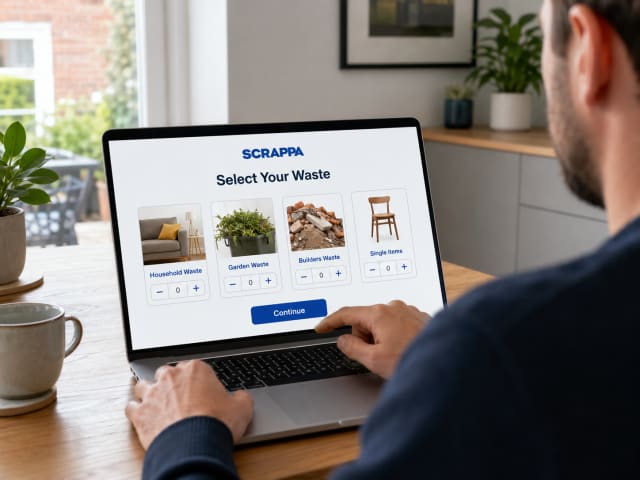
List the large items
Give item types, quantities and approximate dimensions.

Check lifting and exit details
Explain floors, narrow turns, carrying distance and any dismantling.
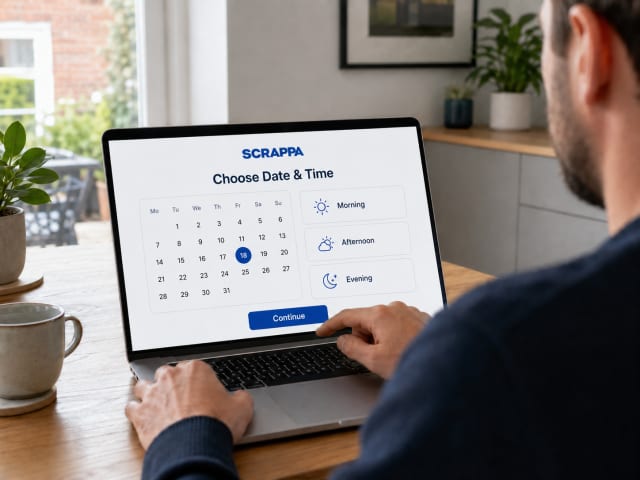
Choose a collection window
Select a date and time offered for your address and job.
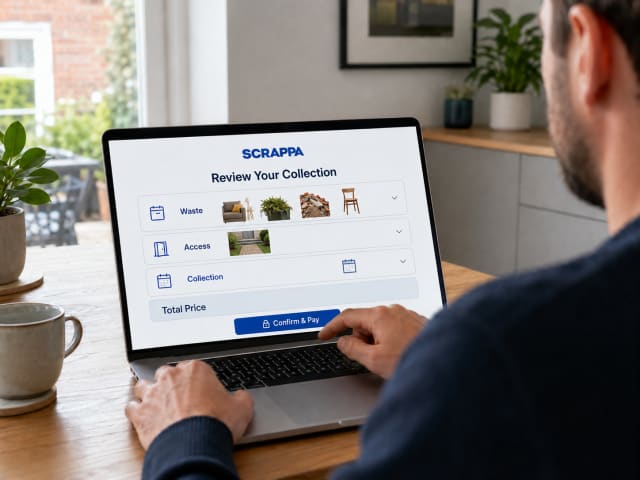
Review the quote before booking
Check the breakdown, item list and access information before confirming.
Bulky collections for changing Burnley spaces
Arrange removal of the agreed pieces after making clear what is staying.
Burnley households
Arrange removal of the agreed unwanted contents after separating belongings you are keeping.
Landlords and agents
Provide an authorised removal list, a keyholder and clear access instructions.
People moving or reorganising
Plan the collection around the contents you have finished sorting.
Small businesses
Describe commercial waste and premises access so a suitable collection can be assessed.
Large-item collection compared with a skip
Consider who will lift the items and whether the supplier accepts each material.
Check a skip’s suitability
- ✗Large assembled furniture can occupy space inefficiently.
- ✗You need to organise safe lifting and loading yourself.
- ✗Upholstered seating, mattresses and appliances may have specific acceptance rules.
Plan a bulky collection
- ✓Describe each item and its room location in advance.
- ✓Agree any dismantling and awkward access before arrival.
- ✓Review a quote for the listed pieces and loading requirements.
Large-item access at Burnley properties
Check the whole route, including door turns and the legal loading point.
Licensed Waste Operations in Burnley
Around Todmorden Road, Colne Road, Manchester Road and Bank Hall, describe the floor and exit used by each bulky item. Mention narrow doors, staircases, rear passages and suitable lifts. Give gate arrangements and carrying distance rather than assuming the street address establishes vehicle access.
Check every doorway and turn the bulky item must pass through.
If an assembled unit cannot leave intact, discuss the work before booking.
Bulky Waste Collection coverage in Burnley
Check the complete address and available collection dates. Local reference areas include:
Before booking bulky waste collection in Burnley
Name the items accurately
Count each wardrobe, sofa, bed part and appliance. Give approximate dimensions for awkward pieces and identify recliners or sofa-bed mechanisms. A general description of furniture does not show the handling requirements or vehicle space needed for the actual collection.
Check every tight point on the exit
Measure doorways, staircase turns and gates. Explain where a unit was assembled in the room and may need dismantling to leave. Discuss preparation before booking rather than assuming a crew will work out an unquoted solution when the piece reaches a narrow doorway.
Describe weight as well as size
Glass, stone, solid timber and internal mechanisms can make an item much heavier than it looks. Flag these features in writing. Dense rubble and soil are different materials and should not be booked under a household bulky-item description just because their pile is small.
Give the Burnley loading route
Provide the full address, floor and practical entrance. Explain any rear access, shared passage, locked gate or distance to a lawful stopping point. For flats, include suitable lift capacity and building entry arrangements before choosing a collection window.
Prepare contents and specialist pieces
Empty drawers and storage furniture. Keep upholstery intact, and arrange suitable preparation and disconnection for appliances. Name each mattress separately from the frame or base. These details help the quote cover the job without assuming specialist work is automatic.
Show every piece included
Use photographs that cover the entire item list, including another room or outbuilding where relevant. Separate retained belongings and identify detachable sections that use existing fittings. Matching chairs, footstools and additional bases need to be listed rather than assumed.
Review the complete large-item quote
Check item types, quantities, dimensions, access, dismantling, date and full price. Contact Scrappa if another large piece is added later. The collection scope and loading requirements should remain consistent with the details on which the quote was based.
Start your Burnley collection quote with your postcode, add the complete load and access details, then review the full price before confirming.
Bulky waste questions in Burnley
Access, dimensions and preparation for large items.
What counts as a bulky item?
Large household pieces such as furniture, beds, mattresses and appliances need individual descriptions. Specify unusually heavy or specialist items rather than relying on a general bulky-waste label.
Can you collect from an upstairs flat?
Give the floor, stairs, suitable lift availability and the route to vehicle loading. The job must be assessed for those actual conditions.
Is dismantling a wardrobe included?
Only where it has been agreed. Describe the wardrobe and access before booking so any dismantling work and price can be included.
Should I carry the item outside first?
Describe its real location. Do not attempt unsafe lifting yourself or obstruct shared entrances; the collection should be arranged for the agreed loading route.
Is a sofa bed the same booking as a standard sofa?
No. Identify the bed mechanism, size and access. Reclining and sofa-bed furniture can require different handling.
Does bulky waste include bags of rubble?
Declare rubble and other dense materials separately. Their weight and material type need a suitable assessment rather than a household bulky-item description.
Get a quote for your bulky Burnley items
Add every piece, check access and review the complete price before confirming.
Book Your Collection NowBulky Waste Collection in nearby areas
Need waste cleared in an adjacent town? Our mobile crews operate across neighbouring boroughs.