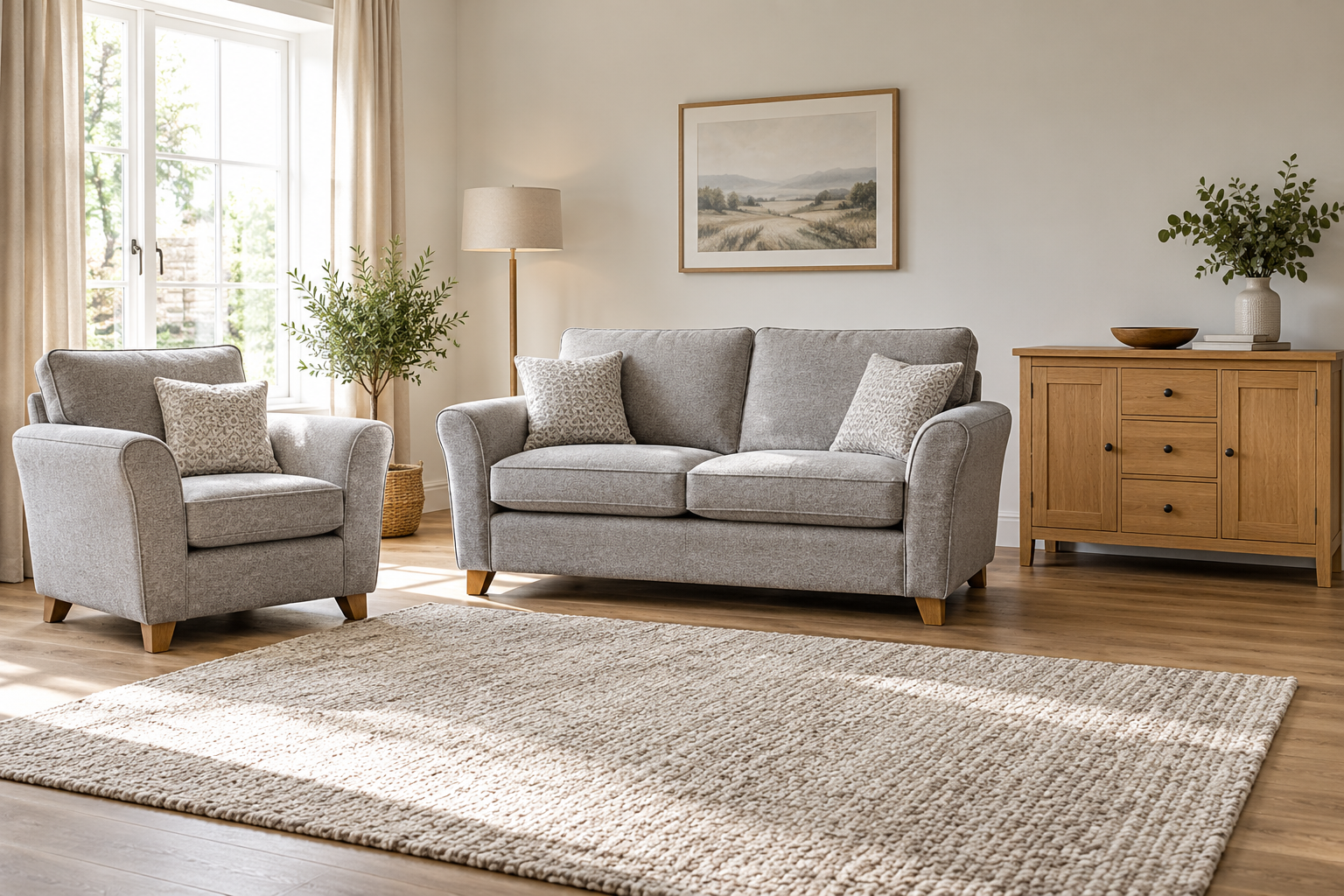
Household contents and furniture
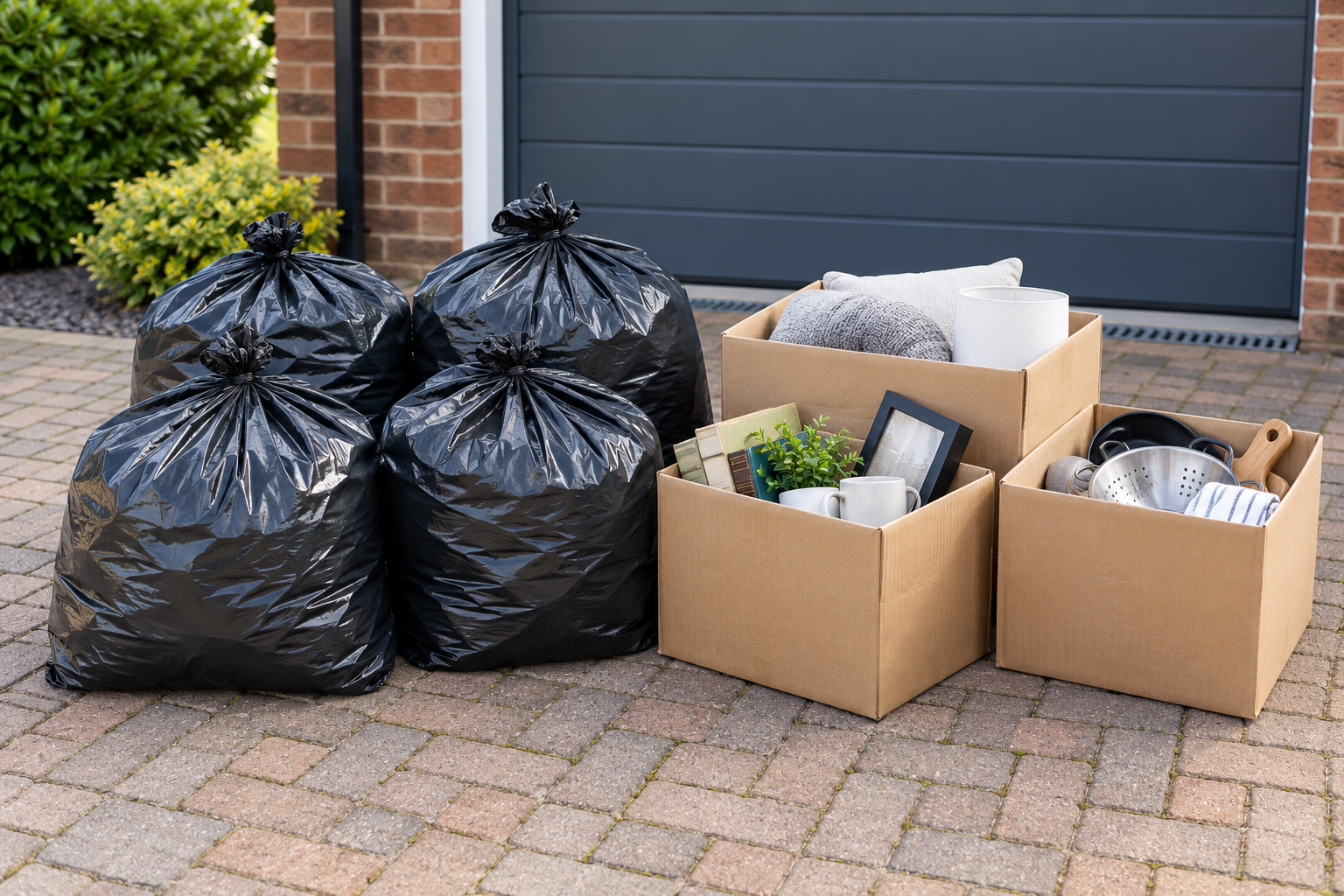
Describe bags, boxes and separate furniture by type and quantity. Include sofas, mattresses or other specialist items explicitly.
SCRAPPA™ WASTE MANAGEMENT · CLITHEROE
From household clutter to a business clear-out, a useful waste collection starts with the right description. Scrappa helps you arrange waste removal in Clitheroe with the materials, quantity and access explained before you confirm the quote.
Choose the waste category or individual items that match the job. Tell us about heavy materials, specialist items and loading work rather than treating every pile as the same kind of waste.
Start your collection quoteDescribe bags, boxes and separate furniture by type and quantity. Include sofas, mattresses or other specialist items explicitly.

Keep green cuttings distinct from soil, turf and rubble. Explain loose or bagged material and the route from the garden.
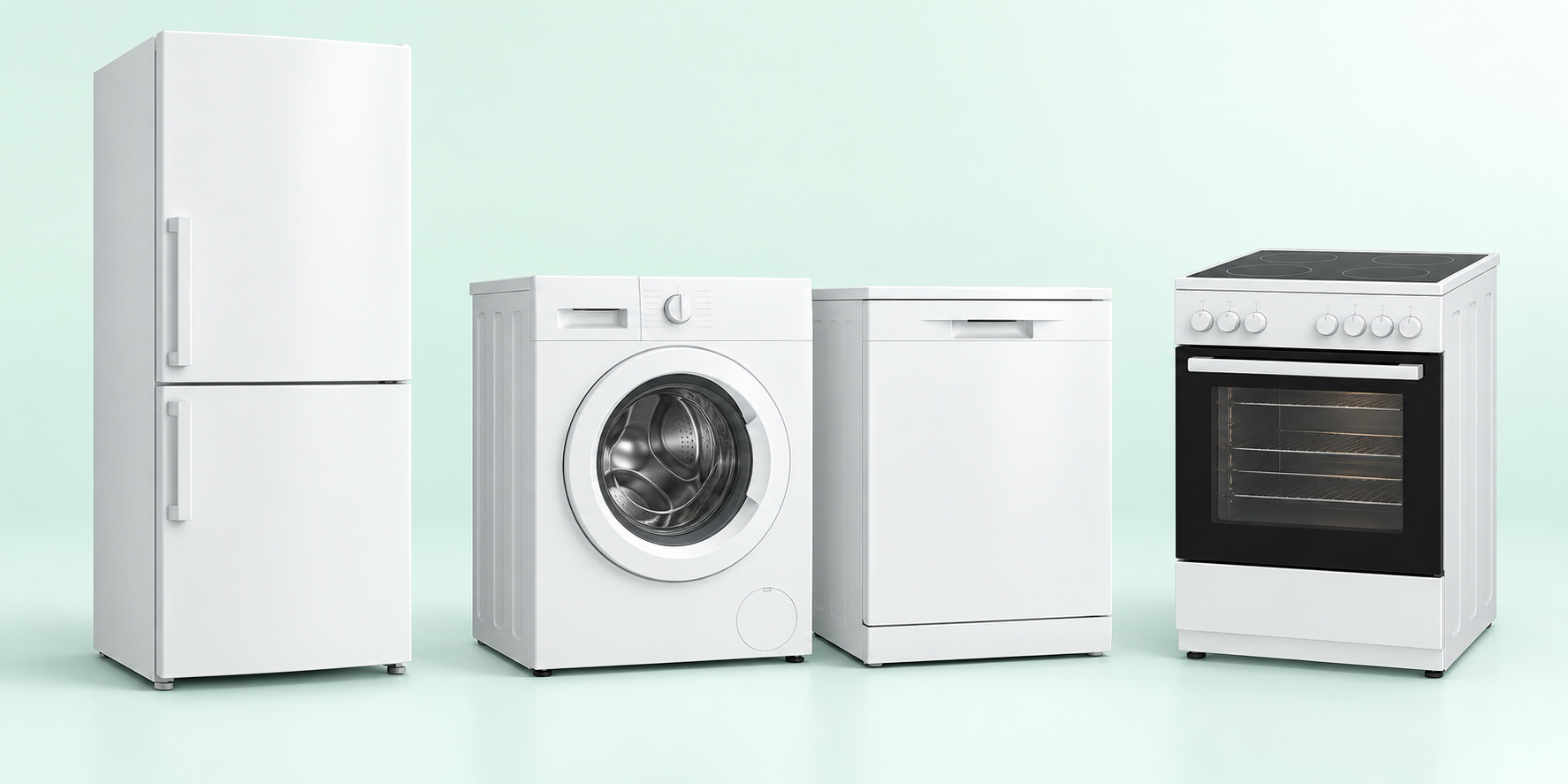
List appliance types separately and explain whether they are disconnected and ready for removal.
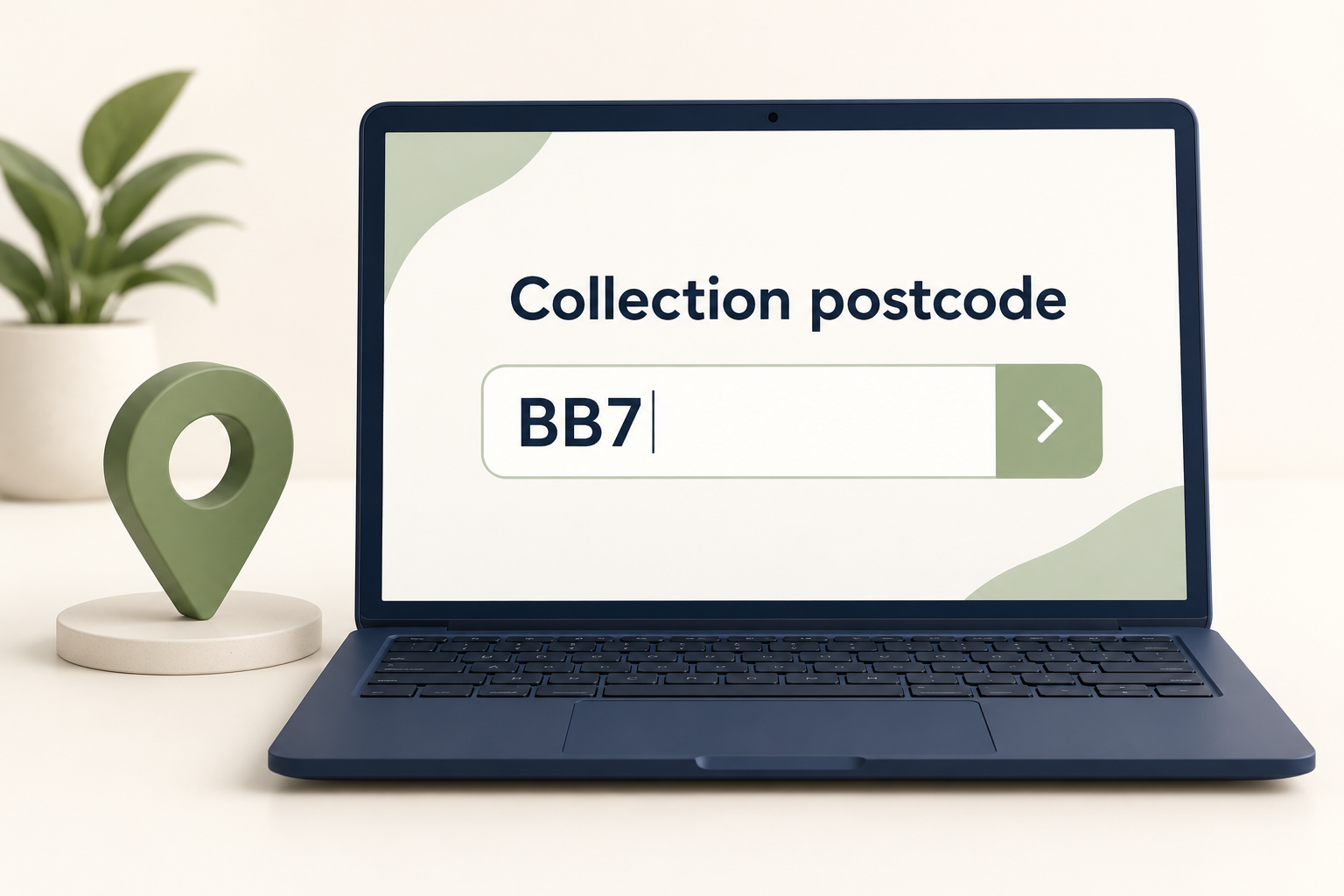
Start with the exact collection address in Clitheroe. BB7 is a local example prefix.
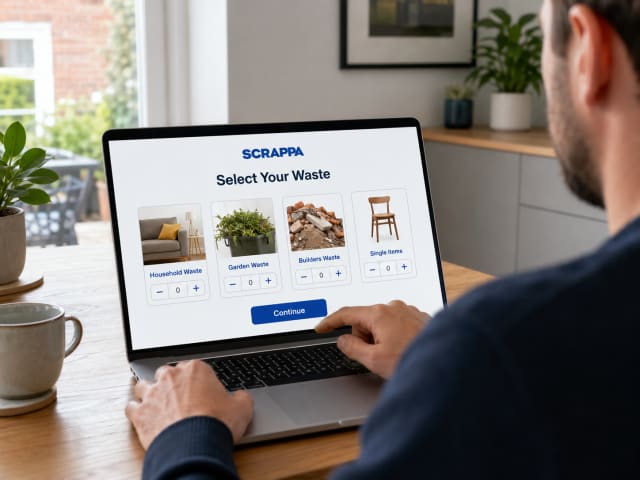
Add the categories or individual items, quantities and relevant collection extras.

Explain floors, carrying distance, dismantling and any additional work needed.
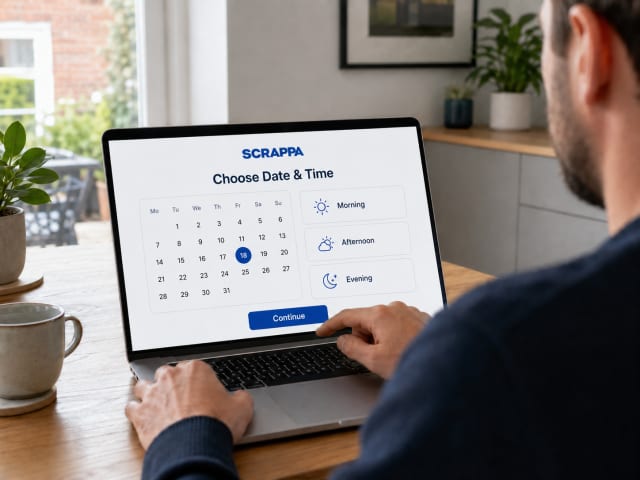
Choose a date and time window offered for your address and collection.
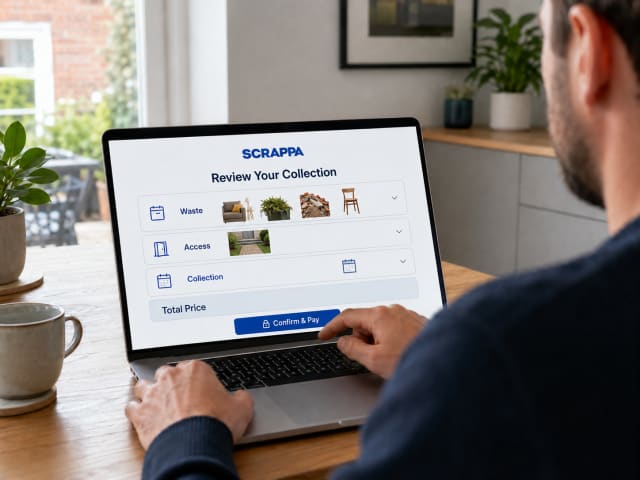
Check the breakdown and complete scope before paying and confirming.
Household clutter, green waste and dense renovation material are different loads. Tell us what is actually being removed and keep mixed categories visible. Photographs can help explain a pile but cannot show the contents of sealed bags, so add that information to the booking.
Count bags, boxes and individual bulky items, and show the full collection area. Check behind furniture and in outbuildings before deciding the inventory is complete. More waste discovered after booking may change the vehicle capacity, loading work or collection arrangement.
A light bulky load can occupy more space, while soil, tiles, rubble and wet materials can be heavy in a much smaller pile. Describe dense material separately rather than selecting a household load by appearance alone. The quote should reflect the material and limits that apply.
State the floor or outdoor location for each collection point. Include stairs, lifts, gates, shared passages and the distance from a safe loading position. A driveway pile and a rear garden reached through a house need different carrying arrangements.
Tell us about upholstered seating, mattresses, fridges, electrical equipment and materials needing special handling. Paint, chemicals, cylinders, batteries and unidentified containers should be discussed separately before booking. Do not hide them within a general mixed load or assume every type is accepted.
Describe dismantling, additional loading time or any remaining technical disconnection. Collection does not automatically include building work, digging, demolition or secure destruction. If the load changes, contact us before the visit and confirm the revised scope before extra waste is loaded.
Review the quote breakdown and booking information before payment. Have an authorised person ready to identify the agreed items and provide access. Keep your invoice and waste transfer paperwork after completion, and retain the contact details associated with your booking for any follow-up.
A loaded collection can suit an agreed pile that is ready to leave and a job where carrying help is useful. A skip may fit a project producing material over several days, provided the position, accepted materials and weight limits are suitable.
Council services can be another option for eligible household waste or selected bulky items. Check their current scope and placement conditions. Compare the full job, including loading work and specialist items, rather than assuming one option is always cheapest.
Clitheroe’s older centre includes Castle Street, Church Street, Wellgate and Lowergate. If the waste must pass through an archway, shared passage or upper-floor entrance, explain that route and identify a safe loading position rather than assuming the vehicle can stop at the front.
For an address near Castle Hill or outside the central streets, use the full BB7 postcode and add the property’s own access details. Include gates, private-drive restrictions or a long carry. A landmark or postcode prefix alone does not confirm vehicle access or availability.
Start by separating the load into useful groups: ordinary household contents, furniture, appliances, green cuttings and any heavy or specialist materials. Do not use one mixed-waste description to hide several different collection requirements. A clear inventory lets the collection be assessed for the actual items rather than an optimistic pile size.
Give bag counts and approximate pile dimensions, and explain what is inside containers. Soil, rubble, wet textiles, books and metal can reach weight limits before they fill the available space. Identify dense materials separately and ask for advice if contents are unknown. Keep suspected asbestos, chemicals and unidentified liquids out of an ordinary collection request.
Describe where the waste is and how it can be carried to a safe loading point. Include the floor, stairs, lift access, locked gates and approximate carrying distance. If furniture requires dismantling, declare it before confirming. A nearby landmark does not replace the exact property entrance and the practical loading arrangements.
Review the booking scope and price breakdown after entering the collection details and available date choices. If the pile grows, materials change or access becomes more difficult, contact Scrappa before the visit. Keep retained belongings away from the collection and make an informed keyholder available where needed. The completed Waste Transfer Note provides a record of the collection.
Describe every material and separate item accurately. Specialist or dense waste should not be hidden within the load.
Explain the business collection type, materials and premises access so the suitable options can be considered.
Review the final quote breakdown and booking details before payment and confirmation.
Describe the location and route so the carrying work and suitable access can be agreed.
Check the current slots for your address. Same-day collection depends on capacity and confirmation.
It follows an appropriate authorised waste route for the material. Treatment varies; no universal recycling or donation outcome is promised.
Prepare the full material list and access details, then check your quote and available collection windows online.
Start your collection quoteNearby services: Waste Removal in Blackburn and Waste Removal in Burnley.