
Business owners and office managers
Coordinate a move, furniture replacement or workspace clear-out using an authorised inventory and a named contact.
SCRAPPA · SMART WASTE MADE SIMPLE

Create usable space for a move, refurbishment or smaller office footprint with an organised Salford office clearance. Scrappa can assess unwanted office furniture and declared equipment, with loading planned around your building. Start with an authorised inventory, full postcode and access requirements so the collection covers the right work.
Coordinate a move, furniture replacement or workspace clear-out using an authorised inventory and a named contact.

Arrange removal of agreed office contents at a managed property. Confirm ownership, entry arrangements and the handover timetable.
Count desks, chairs, filing cabinets, shelving and other items by type. Separate equipment, packaging and general waste in the description. Photographs help show the scale of the job, but an item list prevents furniture in the background being mistaken for part of the clearance.
Identify what must remain in use and label it clearly for your staff. For shared premises, obtain the necessary authorisation from the business or building manager. A collection team cannot resolve ownership disputes or decide which records, equipment or fixtures a business should dispose of.
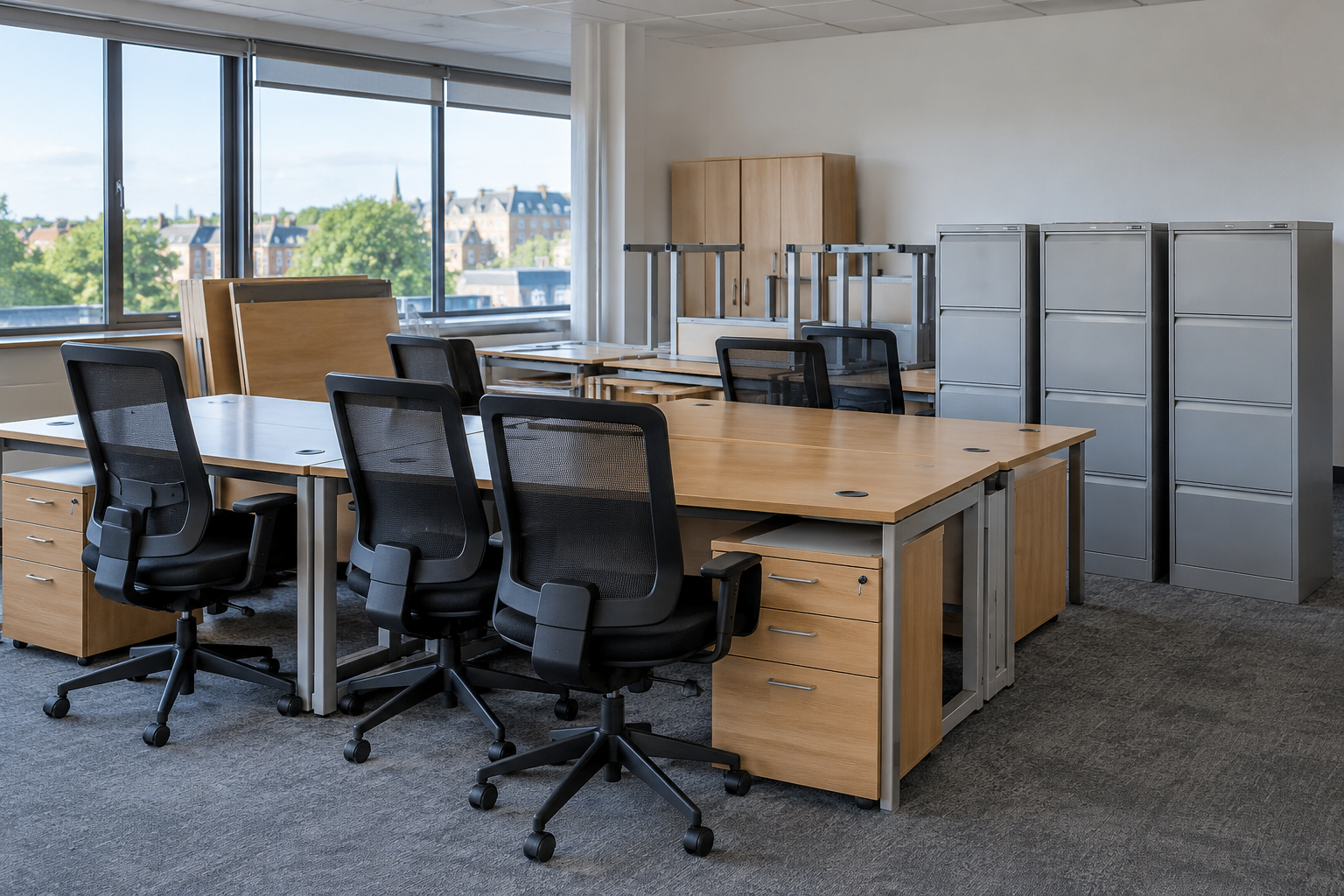
Tell us whether desks are assembled, cabinets are empty and large tables can fit through the exit. Explain whether dismantling is required, already completed or uncertain. With modular workstations, photographs of the layout and connections help assess the work without assuming every unit comes apart in the same way.
List computers, screens, printers and other electrical equipment separately. Securely remove information, accounts and confidential material through your own appropriate process before collection. Office clearance does not automatically provide data erasure, certified destruction or confidential shredding; arrange these services separately if needed.
Confirm the loading bay, goods lift, security entry and any permitted working hours. In offices around Salford Quays or Ordsall, a booked bay or lift can be central to the collection plan. Give the actual dimensions and restrictions rather than assuming the lift will accommodate the largest desk.
Describe stairs, the floor and the distance from the work area to the vehicle. Ask who will unlock doors and escort the team where required. If the building needs documents or advance approval, raise that before the appointment so access does not depend on an unresolved reception check.
Plan which area will be cleared and how staff will continue to use the building safely. Separate items that are ready from items still awaiting authorisation or data handling. If other contractors are present, coordinate the route and collection timing with the person managing the premises.
Enter the full Salford postcode to see the available booking options. Nearby businesses may have different access and scheduling needs even within the same development. Do not assume an after-hours collection, fixed arrival time or specialist lifting equipment is included unless confirmed.
The quote reflects the items or waste load, location, slot, loading requirements and any selected dismantling work. Large quantities of furniture, heavy cabinets or long internal carries should be described before booking. Empty cabinets rather than using them to hide additional waste.
For example, a small office might have six desks, six chairs, two empty cabinets and several screens. Provide those counts, describe whether the desks are assembled, list the electrical items separately and explain the goods-lift and loading-bay arrangements. This makes the enquiry useful without implying a fixed price or that data destruction is part of collection.
Have an authorised contact confirm the items on arrival and keep a copy of the agreed scope. Remove personal effects and confidential documents before the visit. If the business has changed its disposal decisions, update Scrappa rather than relying on informal instructions from different staff members.
Retain the booking confirmation and waste transfer documentation with your business records. The collection covers the agreed removal work; it is not a promise of cleaning, repairs or a fully refurbished office. Check any separate handover requirements with your landlord or facilities team.
Plan the work around the furniture and waste you actually need removed.
Review the booking cost and selected access or dismantling options.
Describe building entry, goods lifts, loading space and the carry distance.
Keep your confirmation and digital waste transfer documentation together.
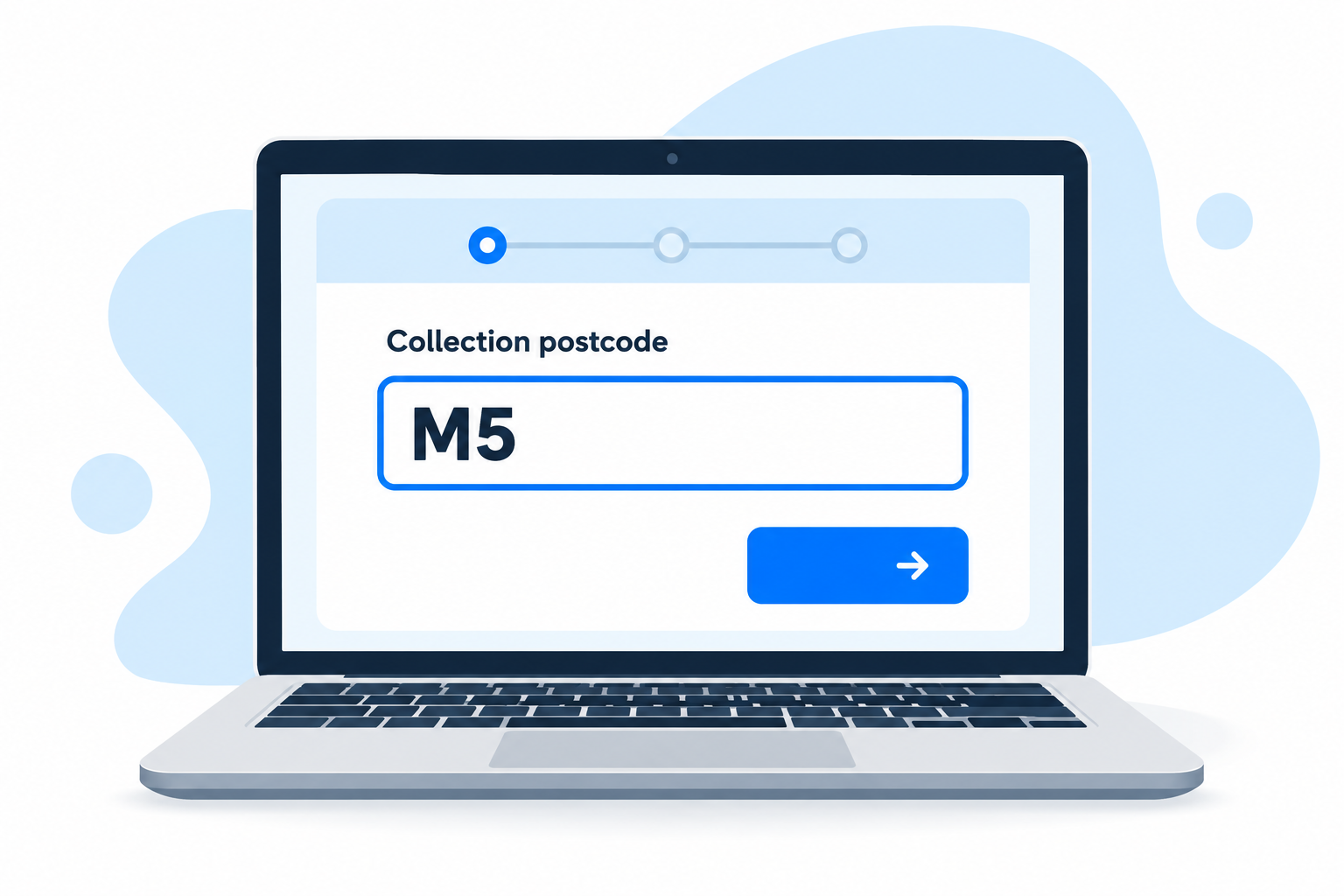
Use the office address to check collection options. The M5 illustration shows part of Salford; enter your own complete postcode.

Include counts, approximate sizes and any electrical equipment. Explain the waste produced by your business accurately.
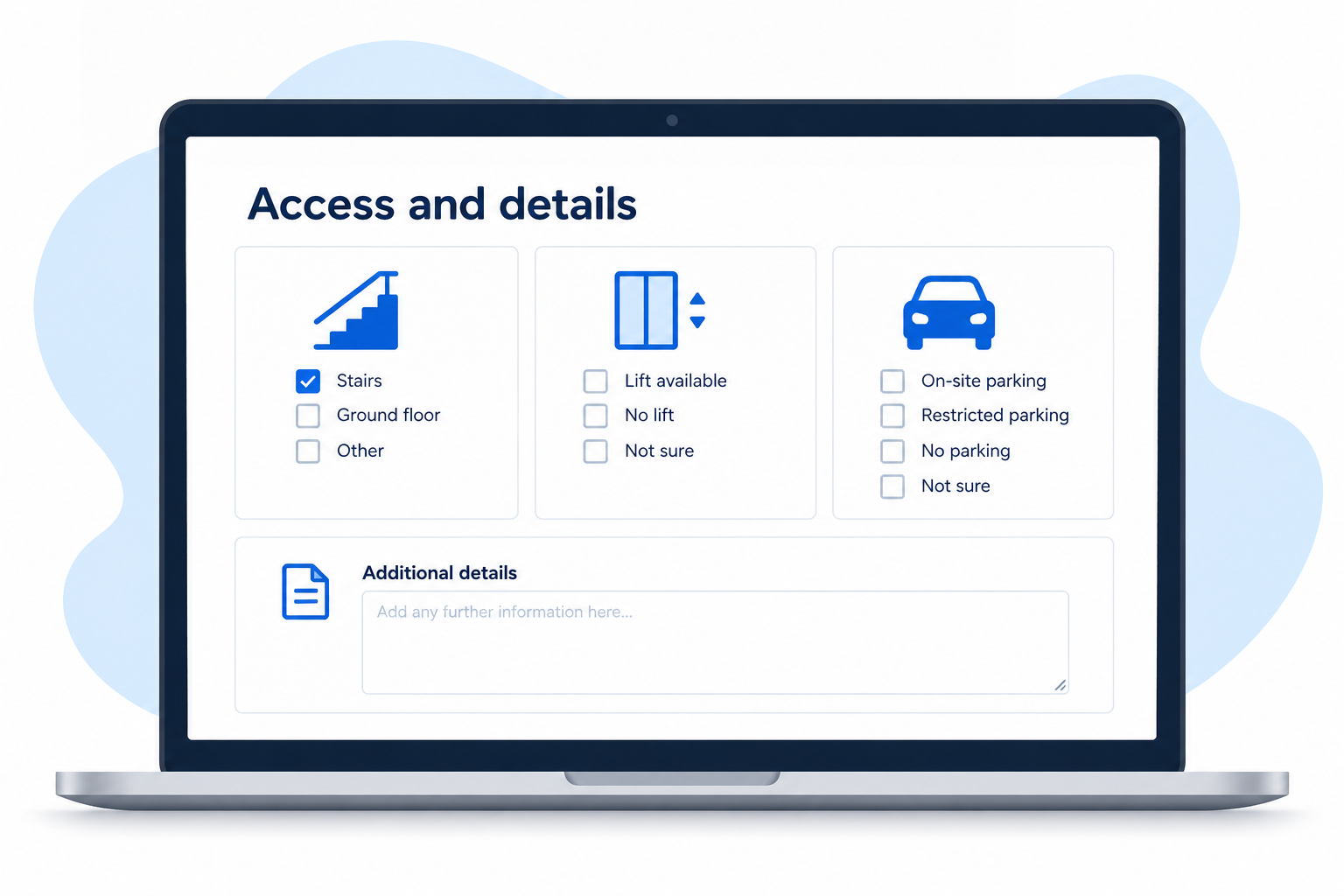
Describe the floor, goods lift, parking distance and assembled furniture. Select Not sure if assessment is needed and supply photos using your confirmation link.
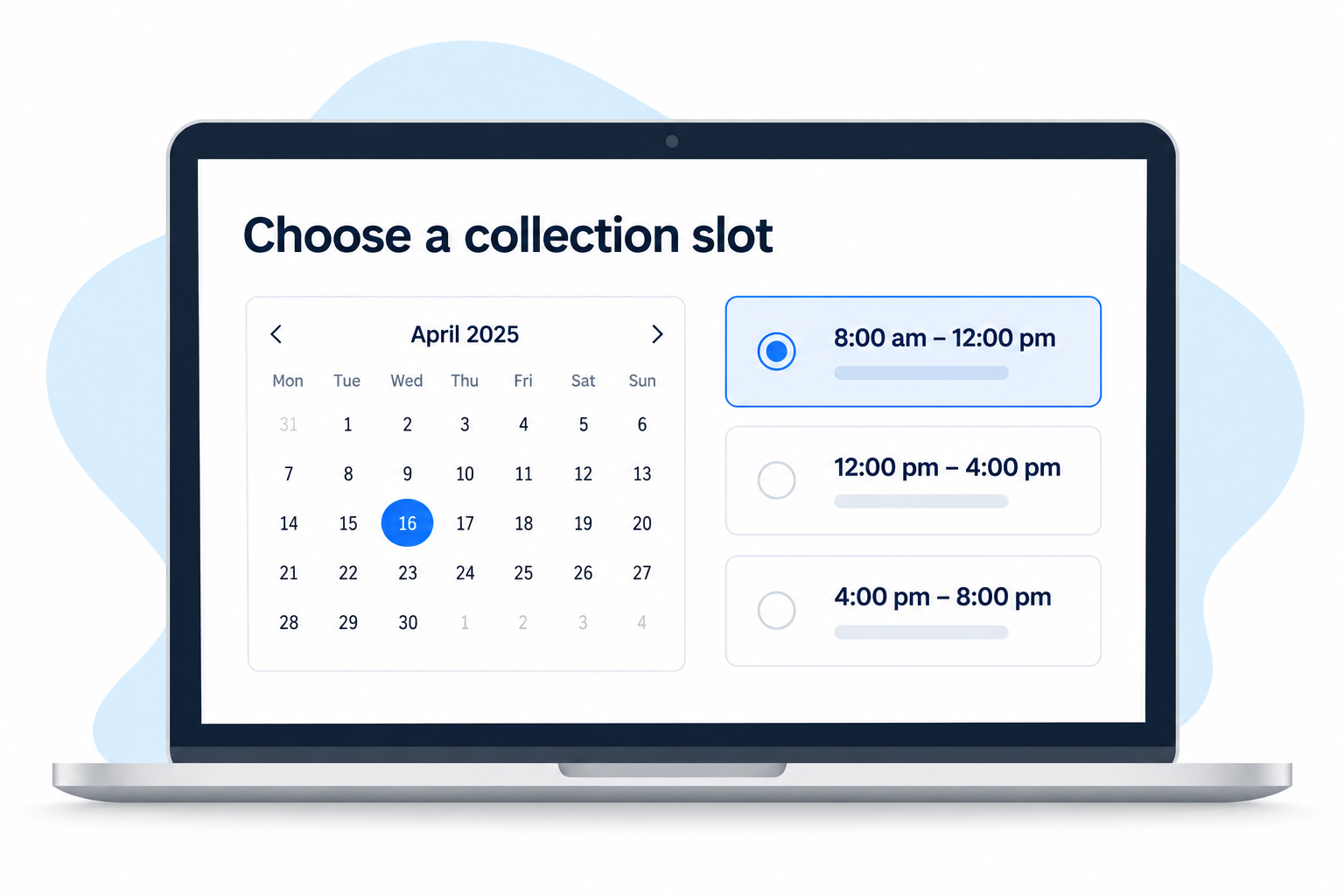
Coordinate an offered collection window with your building manager and any loading-bay booking. Timing depends on availability.
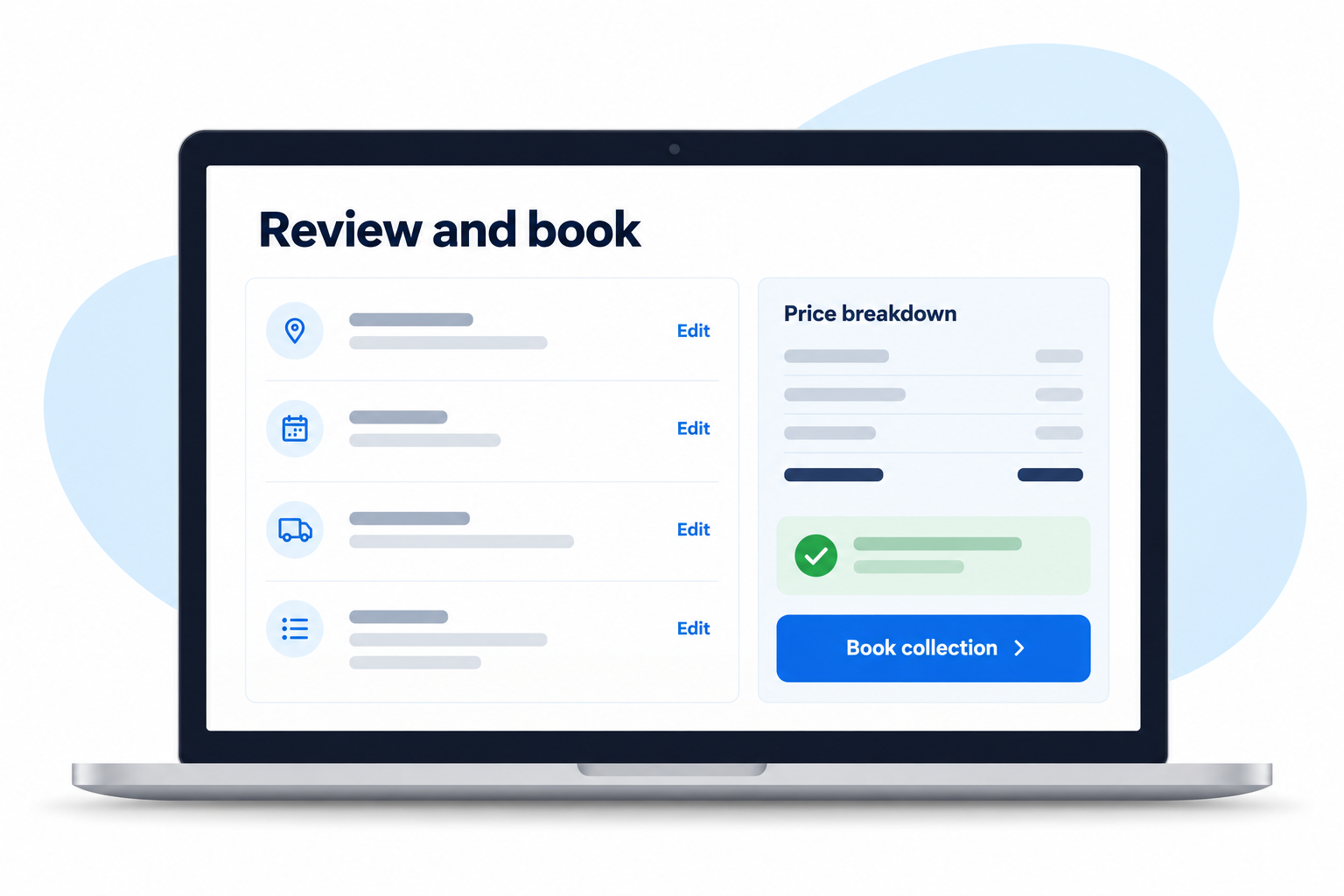
Check the address, inventory, price breakdown and selected requirements before payment. Keep your booking confirmation.
Choose the approach that fits your project. A collection can suit a defined inventory at an agreed stage of a move. A skip may suit suitable materials produced over a longer refurbishment. Check the whole job and accepted materials rather than comparing headline prices alone.
If furniture is still usable, consider reuse before disposal. Confirm acceptance with the receiving organisation and protect company information before passing on equipment. Do not assume a household disposal option accepts business waste.
Yes. Describe the furniture, equipment and waste, then check the available collection options for the full postcode.
Declare the dismantling requirement during booking. If uncertain, provide photographs for assessment rather than assuming it is included.
List electrical equipment separately and confirm suitability. Complete any necessary information-security work before collection.
No. Arrange confidential document destruction separately and remove sensitive records before the clearance.
Do not assume data erasure or certified destruction is included. Arrange an appropriate specialist service if your organisation requires it.
Give the permitted times and booking requirements before confirming collection so a suitable arrangement can be assessed.
The service covers the agreed waste and item removal. Cleaning, repairs and reinstatement are separate work unless expressly agreed.
Retain the agreed inventory, booking confirmation and waste transfer documentation with your organisation’s collection records.
Read customers’ own accounts of using Scrappa. These reviews cover the wider service and are not presented as testimonials from Salford office-clearance customers specifically.
Prepare your inventory, confirm the building arrangements and enter the full postcode to check availability. For a mixed clearance, see our Salford furniture removal and appliance removal in Salford pages. If you have a short deadline, check same-day waste removal in Salford. Availability depends on your full postcode and the work required.