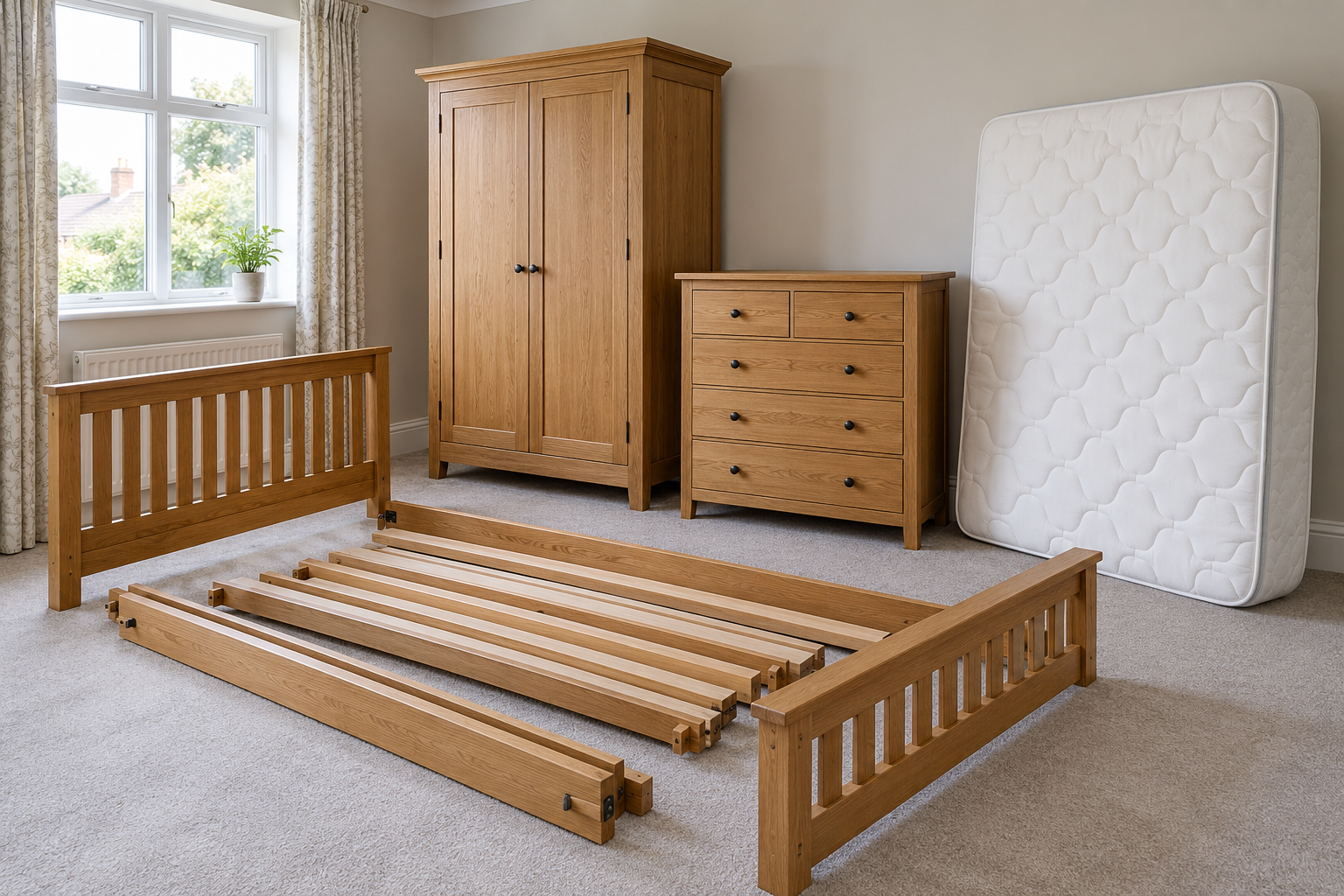
Bedrooms
List beds, mattresses, wardrobes and drawers separately. Include stored contents and say whether furniture is assembled. Check drawers and bedside cabinets for personal belongings before marking them for removal.
SCRAPPA · SALFORD
Clearing a home is easier when the decisions are made before the collection begins. Whether you are emptying a few rooms, preparing a rental property or helping a family member sort belongings, Scrappa can plan a Salford house clearance around an agreed inventory. Explain what is going, what must stay and how the team can reach each room. You can arrange a partial clearance without describing the whole property as empty.
List beds, mattresses, wardrobes and drawers separately. Include stored contents and say whether furniture is assembled. Check drawers and bedside cabinets for personal belongings before marking them for removal.

Record sofas, armchairs, television units and shelving. Distinguish seating from other furniture because upholstery affects disposal arrangements. Let us know about heavy recliners or a sofa bed.

Count tables, chairs, desks and bookcases. A full bookcase can contain considerable weight: make clear whether its contents need removing or whether you will empty it beforehand.

Include the bags and boxes collected during sorting. Say what is inside and show the whole quantity, including items in hall cupboards, utility rooms and separate storage areas.
Walk through the property and write a room-by-room list. Note which rooms are included and whether the loft, cellar, garage or garden is outside the scope. A house clearance can mean very different things to different people. An inventory and a few photographs give everyone a practical reference and help distinguish removal from cleaning, repairs or dismantling work.
Check pockets, drawers, cupboards and the backs of furniture before collection day. Put passports, financial papers, photographs, jewellery and medication somewhere separate from the clearance area. Do not rely on an unlabelled box beside the rubbish to signal that it must stay. Where several relatives are involved, agree the keep-and-remove decisions before the team arrives.
The person booking should have the right to arrange removal of the contents. For a tenancy, estate or jointly managed property, resolve permissions before booking rather than asking the collection team to decide ownership at the door. If an agent or relative will attend, give them the final inventory and make sure they can identify retained belongings.
Tell us about large wardrobes, bed frames and wall-attached units. State whether items are already dismantled or whether you need dismantling included in the plan. Collection does not automatically include removing fitted kitchens, disconnecting gas equipment or carrying out electrical work. Arrange any required specialist disconnection before collection and keep components together where safe.
Arrange keys, alarm access and a contact who can answer questions. If you cannot attend, agree access and authorisation in advance rather than simply leaving a door open. For flats, explain the floor, stairs, lift dimensions and loading point. Shared corridors and exits need to remain clear throughout; a collection should not obstruct other residents.
Allow time after removal to inspect the rooms and deal with any cleaning or repairs separately. If an estate agent or landlord needs an empty property by a deadline, book an available appointment that leaves a sensible margin. Tell us about changes to the inventory before arrival. Keep the completion documents with the property records rather than assuming a photograph replaces them.
A Salford house clearance may involve a family home, a terrace with rear access or an apartment near the Quays. Plan around the actual property rather than assuming “house clearance” always means a ground-floor house. Include any internal stairs, communal access and the distance to the loading position.
For apartments, check the building’s delivery arrangements, concierge hours and whether the lift needs reserving. For terraced homes, explain whether items come through the house, a side gate or a rear passage. Keep shared routes clear and do not leave waste on the pavement while waiting.
A nearby road or landmark does not confirm that a van can load outside your entrance. Provide the actual loading point and any restrictions you know about. Tell us promptly if a parking bay, entry code or lift arrangement changes after booking. Availability is checked against the full address.
A partial or whole-home job can be planned from a clear inventory, with kept belongings separated before loading. You can explain sensitive circumstances and keyholder arrangements without having to rush decisions on collection day.
Tell us the floor, stairs, lift arrangements and distance to the loading point. We can plan the collection around the actual work involved. Safe access matters just as much as the number of items.
Scrappa is a registered waste carrier, registration CBDU613703. Keep your confirmation, invoice and waste transfer documentation after collection so you have a record of who removed your waste.
Start with your address, describe the load and access, then check available appointments and the price breakdown before confirming. Clarify any unusual detail before booking.
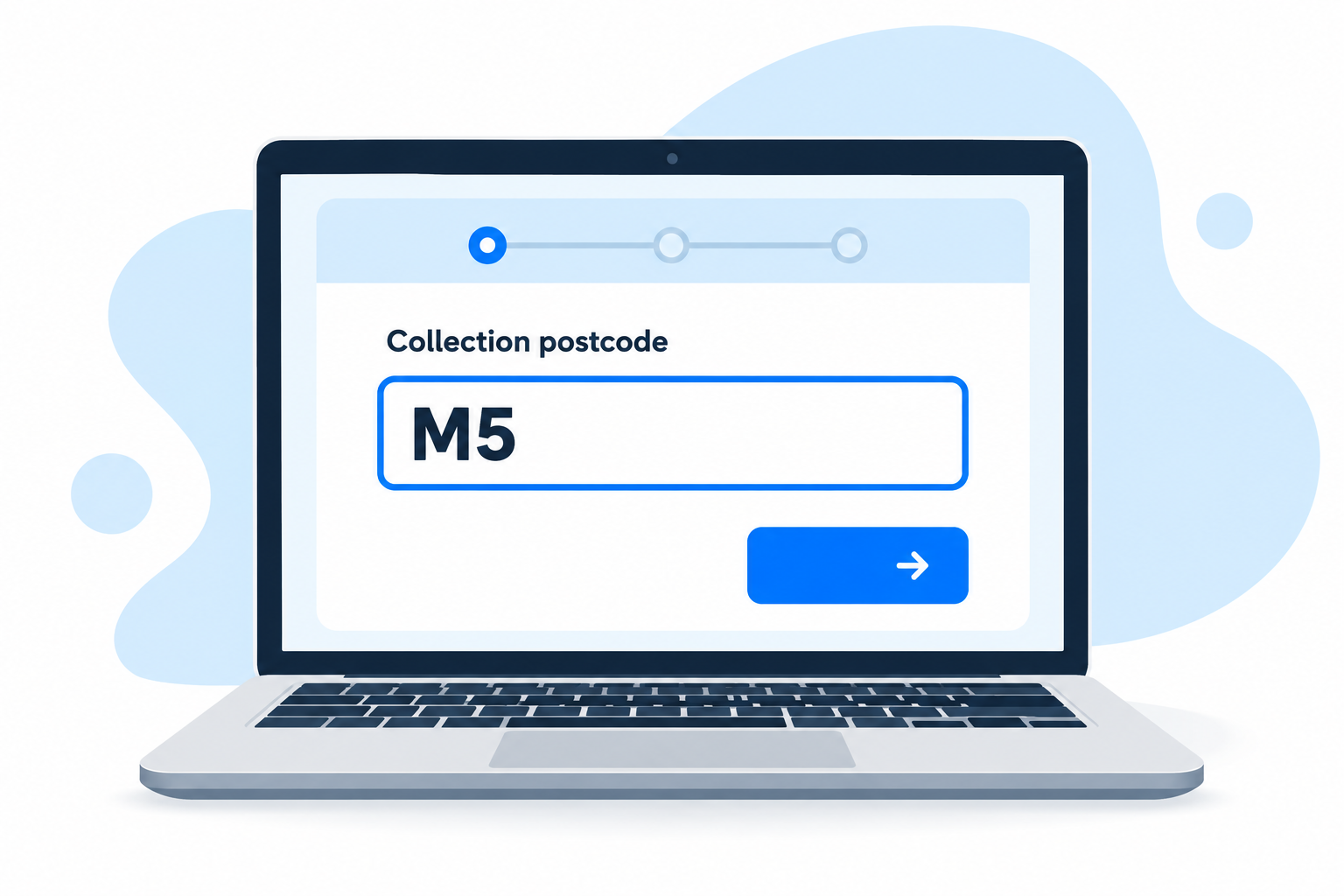
Begin with your full collection address. M5 is a Salford example; enter your own complete postcode so availability can be checked for the actual property.

List each room’s contents, quantities and large items. Separate furniture, mattresses, electrical equipment and bagged contents in the description.
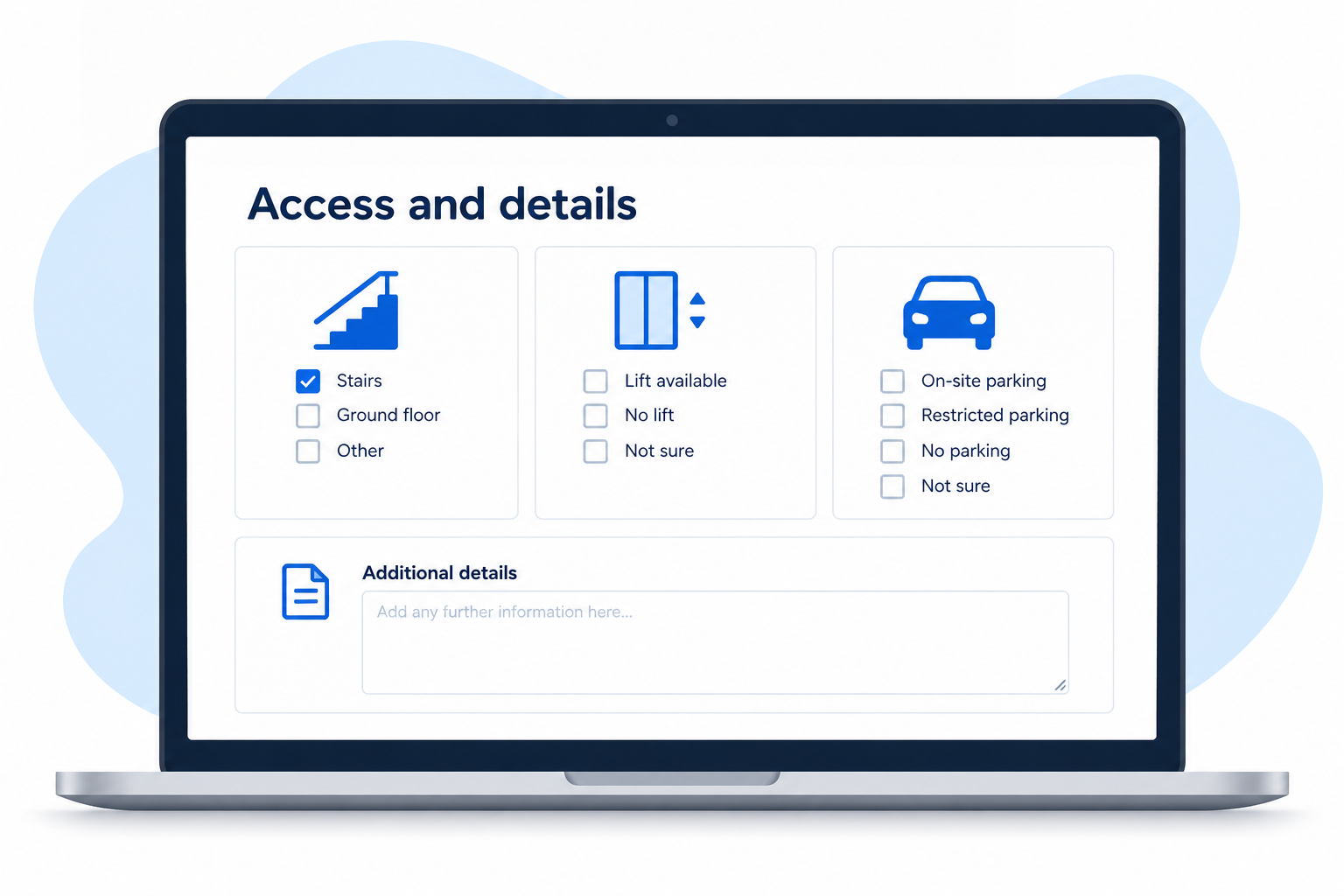
Add stairs, lifts, collection points, parking and preparation requirements. Clear photographs help show bulky items and the route through the property.
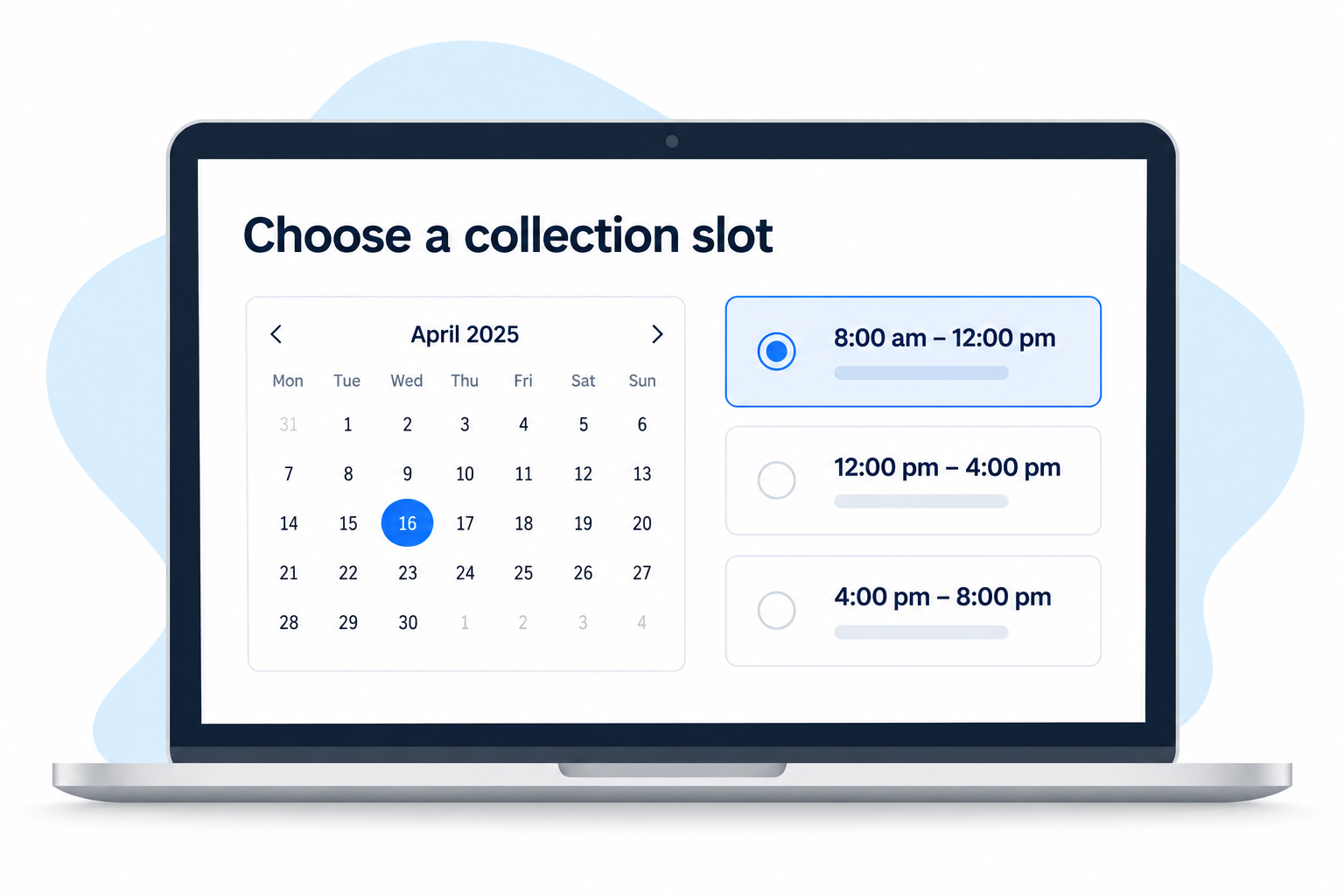
Select from the appointment windows offered for your address. Arrange keys, a site contact and any building access before choosing a date.

Read the full breakdown after entering the details. Check the listed items and access before paying, then keep the booking confirmation.
The cost reflects the contents, volume, weight, access, loading time and any agreed additional work. A property’s bedroom count alone is not a reliable quote: two similar houses can contain very different amounts of furniture and stored possessions. Show the items and all relevant spaces before confirming.
For example, removing a bed and wardrobe from one bedroom is a partial clearance. Emptying that room plus cupboards of books, a sofa and garage contents is a larger, mixed job. Describe these separately so you can compare a quote for the actual inventory rather than a vague “two-bedroom house” estimate.
Donation or reuse may suit usable items if an organisation accepts them and can collect within your timescale. Council bulky collections can suit eligible household items subject to their conditions. A managed clearance can be useful where several rooms, carrying and an agreed handover need coordinating. No collection automatically guarantees that every item can be donated or recycled.
Yes, describe it as a partial clearance and list only the contents being removed. Clearly separate anything you want to keep.
Explain the circumstances and who can authorise removal. Agree the inventory and retained belongings before collection so family decisions are respected.
Removal and cleaning are different tasks. Do not assume carpet cleaning, deep cleaning, decorating or repairs are included in the collection.
Describe the furniture and request any needed dismantling before booking. It must be assessed and included rather than assumed on arrival.
Agree keyholder and access arrangements in advance, including a contact who can answer questions and authorise the listed removal.
List them individually and ensure disconnection is arranged where needed. Collection is not a substitute for a qualified gas or electrical professional.
Tell us before arrival if you add any space or contents. Loft access and additional items can change the work and price.
Outcomes depend on condition, materials and available authorised treatment routes. Do not assume a universal recycling or donation outcome.
Create a room-by-room list, separate what you are keeping and enter the address to start planning your house clearance.
Compare nearby coverage: Bolton waste removal and Bury waste removal. Enter the actual collection address to check availability.