Junk Removal in Chorley
Make usable space again with collection of the unwanted clutter you have selected and prepared for removal.
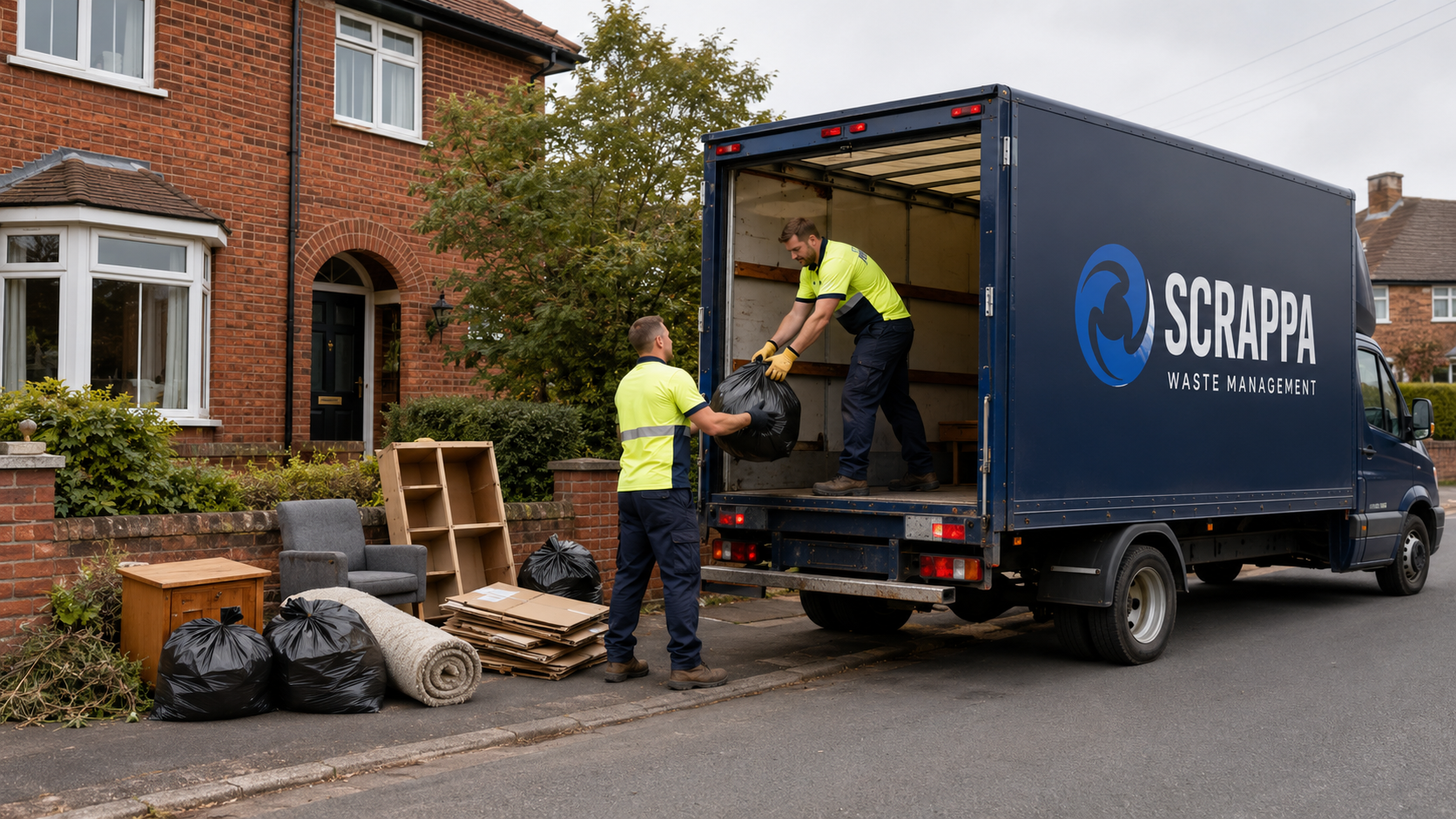
Make the junk pile easier to assess
A complete inventory is more useful than a rough description of the space it occupies.
Every part of the pile counted
Include contents behind the front row and anything stored in another corner.
Unwanted pieces clearly marked
Keep retained belongings apart from the collection load.
Garage and rear access considered
Mention gates, stairs, long passages and legal vehicle access.
Price checked before confirmation
Review a quote for the actual load and loading arrangements.
From stored clutter to a collection
Give the property details, complete junk list and access before reviewing availability.

Begin with the collection address
Enter your postcode and contact details so the booking starts with the correct property.
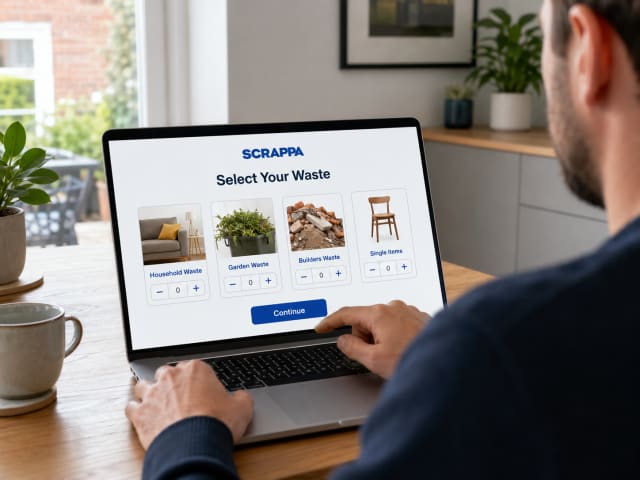
Add everything being removed
Choose the waste or items and include the full quantity, including extras.

Describe the loading route
Give floors, steps, lifts, parking, carrying distance and any dismantling required.
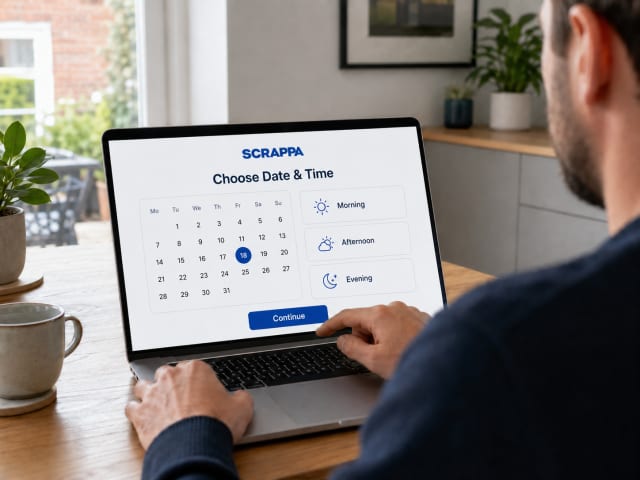
Choose a collection window
Select a date and time offered for your address and job.
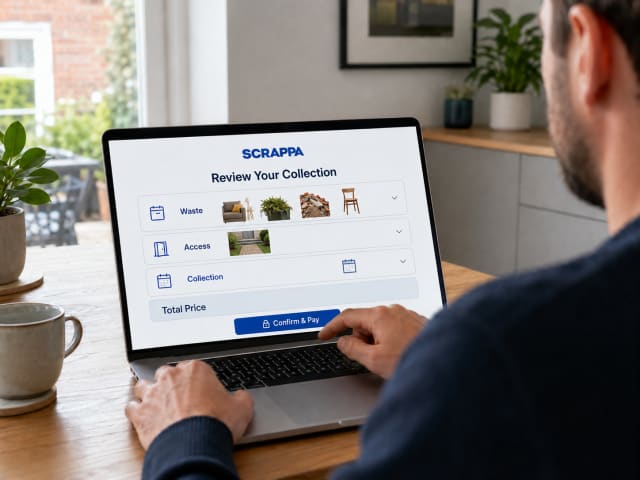
Review the quote before booking
Check the breakdown, item list and access information before confirming.
Junk loads that need a clear description
Identify the contents rather than describing everything as miscellaneous rubbish.
Boxes and stored clutter
List loose household contents and the approximate quantity of bags or boxes.
Unwanted large pieces
Name furniture individually and explain its size and room location.
Garage and shed contents
Describe the stored items and flag chemicals, batteries or unknown containers.
Specialist or heavy extras
Declare appliances, mattresses, soil and rubble separately for assessment.
Space back for Chorley homes and premises
For contents ready to remove after the belongings you are keeping have been separated.
Chorley households
Arrange removal of the agreed unwanted contents after separating belongings you are keeping.
Landlords and agents
Provide an authorised removal list, a keyholder and clear access instructions.
People moving or reorganising
Plan the collection around the contents you have finished sorting.
Small businesses
Describe commercial waste and premises access so a suitable collection can be assessed.
Junk collection or a skip for your clear-out?
Think about how much sorting remains and who will load the unwanted contents.
A skip may fit an ongoing job
- ✗You want to add accepted waste over several days.
- ✗You have an appropriate place for the container.
- ✗You can arrange safe lifting and loading yourself.
A collection may fit a finished clear-out
- ✓The rubbish has been identified and is ready for a booked visit.
- ✓You want the agreed loading assessed as part of the job.
- ✓You need a quote based on the materials and access described.
Junk collection from Chorley storage spaces
Tell us whether the load is behind the property, upstairs or in an outbuilding.
Licensed Waste Operations in Chorley
For a garage or storage area around Astley Village, Park Road or Southport Road, describe vehicle access, gate widths and steps. Town-centre premises should give the practical loading entrance and restrictions. A property postcode does not show whether the junk is beside the road or at the end of a long rear passage.
Mark what stays and make sure the collection pile is unambiguous.
Tell us about chemicals, batteries and unidentified containers before booking.
Junk Removal coverage in Chorley
Check the complete address and available collection dates. Local reference areas include:
Junk removal questions in Chorley
Make the load and access clear before the collection is agreed.
Can you clear the junk from my garage?
Describe the complete contents to remove, including anything out of sight. Add the entrance, gate access and loading route, and identify chemicals or unknown materials before booking.
Is sorting the garage included?
Do not assume packing or sorting is included. Decide what is being removed and discuss any additional preparation work before confirming.
How do I estimate a cluttered room?
List furniture, bags and loose contents and provide photographs of the whole area. Include hidden contents and ask Scrappa if the online options do not reflect the job.
Can you take tools and old electrical items?
Describe them individually, including batteries or specialist equipment. Acceptance and any different handling need to be checked for the actual items.
What if the garage access is a narrow passage?
Give its width, length, steps and any locked gates. Include the distance to legal vehicle loading rather than assuming the garage door is accessible from the road.
Can I add a second junk pile after booking?
Contact Scrappa first to agree the extra scope and any revised price or loading requirements. The original quote is based on the described load.
Get a Chorley clutter collection ready
Choose the space to reclaim
Start with the area you want to use again and separate what is staying. Mark retained furniture and tools clearly. The removal pile should be unambiguous before booking, especially if useful belongings and unwanted contents share the same garage or cupboard.
Describe more than the front of the pile
Look behind bulky pieces and beneath stored furniture. Count bags and boxes, name large items and show the whole area in photographs. Explain contents in a second room or shed if they are part of the request rather than assuming a single image captures everything.
Look for materials that change the job
A garage can contain paint, batteries, chemicals and unidentified containers as well as ordinary clutter. List these before acceptance is assessed. Dense rubble, soil and wet waste should also be declared separately, because a small-looking pile can still be a heavy collection.
Explain the Chorley loading route
A driveway collection near Astley Village and an upper-floor storage room near the town centre need different arrangements. Give the floor, entrance, gates and carrying distance. State where a vehicle can legally load rather than assuming the nearest car park or pavement is suitable.
Allow for preparation work
Decide what is going before the collection window. If packing, sorting or dismantling is needed, discuss it in advance instead of treating it as an automatic part of junk removal. Keep unstable stacks and sharp contents visible and do not attempt unsafe heavy lifting yourself.
Include bulky extras by name
A sofa, mattress or old appliance behind the bags should have its own description. Tell Scrappa about mechanisms, condition or connections that affect handling. These details help avoid a quote for light clutter being mistaken for a larger mixed collection.
Confirm the load once sorting is finished
Review quantity, materials, access, available slot and full price. If more junk appears afterwards, contact Scrappa to agree any change. A quote for one garage pile should not be treated as clearance of every storage area at the property.
Start your Chorley collection quote with your postcode, add the complete load and access details, then review the full price before confirming.
Make useful space in your Chorley property
List the junk, explain the access and review a complete collection quote before booking.
Book Your Collection NowJunk Removal in nearby areas
Need waste cleared in an adjacent town? Our mobile crews operate across neighbouring boroughs.