Bulky Waste Collection in Blackpool
Make room without wrestling large items into your car. Arrange collection of unwanted furniture, mattresses and appliances with the item details and access agreed before booking.
Large items, properly planned
A useful collection quote accounts for the object and the route out of the building.
Item-by-item scope
List the quantity and type of every large item so the collection matches the job.
Access considered
Give floors, lifts, doorway sizes and carry distances before confirming.
Loading arranged
The quoted service can include the agreed removal route and loading requirements.
Price reviewed first
Check the breakdown and collection details before completing the booking.
Which bulky items need collecting?
Name each item separately. Extra pieces, unusual sizes and heavy mechanisms can change the collection requirements.
Sofas and armchairs
State the seat count, corner sections, recliner mechanisms and whether it is a sofa bed.
Mattresses and bed parts
List mattresses, divan bases, frames and headboards separately with their sizes.
Large furniture
Wardrobes, tables, cabinets and desks need quantities, approximate dimensions and dismantling details.
Household appliances
Identify fridges, freezers and washing machines; describe integrated units and arrange safe disconnection.
Arrange your Blackpool bulky collection
Start with the address, then tell us what needs moving before reviewing your final price.

Enter the collection address
Start with your postcode and the property where the items are waiting.
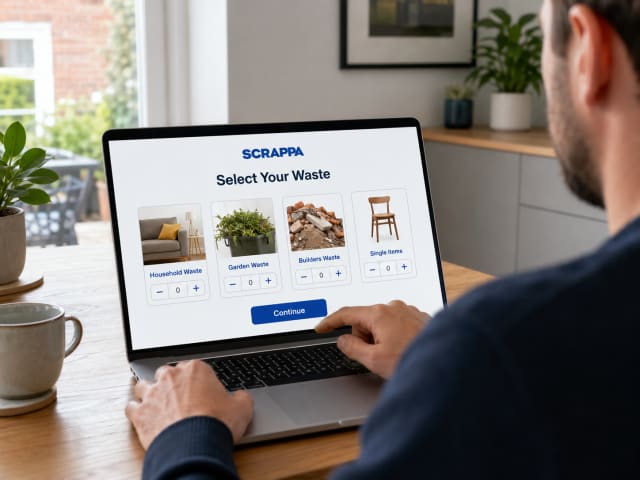
List each large item
Add quantities, dimensions and extras such as separate bed bases or furniture sections.

Explain access and preparation
Tell us about stairs, lifts, carry distances and any dismantling you need.
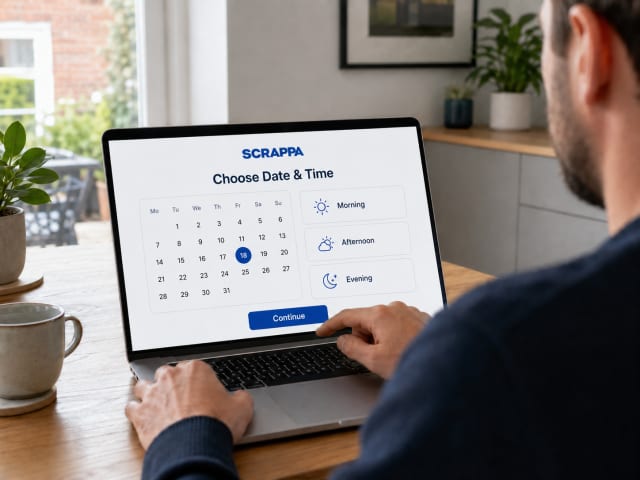
Choose a collection option
Provide the remaining details and select from the dates and times available.
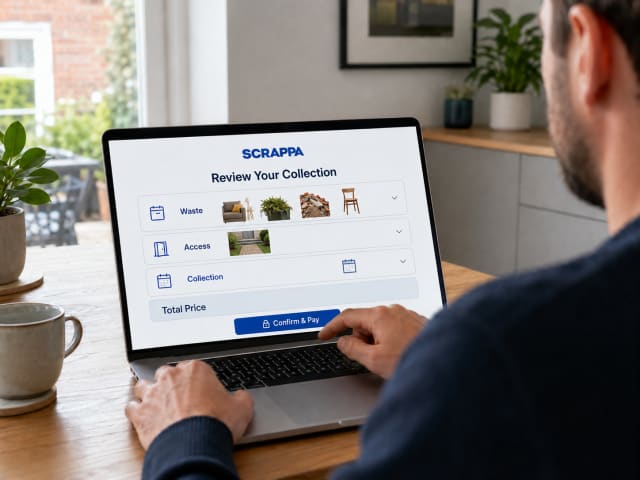
Review the full price
Check the item list, access information and price breakdown before confirming.
Space for your next move
Practical collections for people replacing large items or preparing a property for its next use.
Replacing furniture at home
Plan collection around the old item’s removal route and the arrival of its replacement.
Tenancy changes
Landlords and agents should identify the items authorised for disposal and arrange access with a keyholder.
Flat residents
Tell us the floor, stair layout and lift restrictions so the removal can be assessed accurately.
Guest accommodation
For a room refresh, list each furniture or bed item and explain reception access and guest-area restrictions.
A bulky collection or a skip?
Choose around the material and the job. A few large household items have different needs from an ongoing renovation.
When a skip may suit
- ✗An ongoing project produces waste over several days.
- ✗You have suitable space and can arrange any required placement permission.
- ✗You can load accepted materials yourself and check the provider’s restrictions.
When a Scrappa collection may suit
- ✓You have a defined list of large items ready for removal.
- ✓You need loading from a disclosed room, floor or agreed collection point.
- ✓You prefer a booked collection without keeping a container at the property.
Plan the removal before moving the furniture
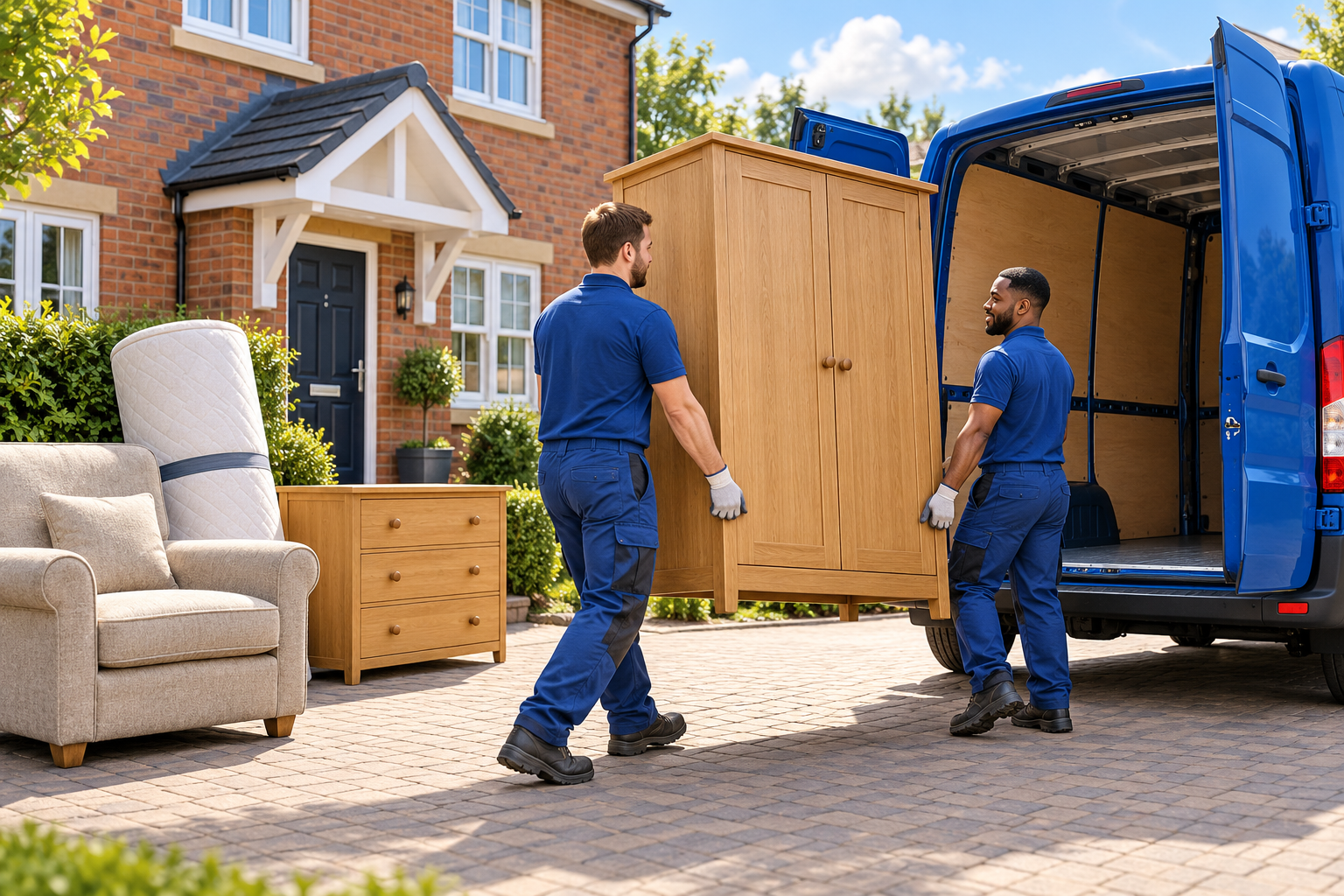
Start with a complete item list
One wardrobe and a fridge is a different job from a room full of furniture. Record each item and its quantity, including detached doors, bed drawers and separate mattress bases. For a corner sofa, say how many sections it has; for a table, include the approximate length. Photos can help explain awkward shapes when requested, but the booking still needs an accurate item list.
Measure the route, not just the object
Check door openings, landings and tight turns before collection day. A tall cabinet may fit the bedroom door but struggle at the stairwell. Tell us whether the item is upstairs, whether the lift is available for removals and how far the crew will carry it to the vehicle. If the route looks uncertain, ask for assessment before moving anything.
Arrange dismantling in advance
A wardrobe that was assembled inside a room may need taking apart to leave it. Specify dismantling when booking, name the item and explain its construction where possible. The required work and any charge must be agreed; do not rely on the crew having time for extra work on arrival. Empty drawers and cupboards and keep the fittings together if you dismantle furniture yourself.
Account for Blackpool building access
For a flat, guesthouse or shared property, identify the correct entrance and arrange a person who can open it. Near the town centre or promenade, the closest lawful loading point may be away from the front door. In Layton and Marton, rear access can also change the carry route. Give property-specific information rather than assuming a map pin shows where a collection vehicle can stop.
Keep specialist items clear in the quote
Fridges, freezers, upholstered seating and mattresses can have different disposal requirements. Declare them by type rather than hiding them within a general furniture description. Do not cut upholstery off seating or dismantle refrigeration components. Unknown chemicals, asbestos, gas bottles and heavy construction materials require separate advice and must not be added without agreement.
Prepare a safe collection day
Remove personal belongings from furniture and appliances. Keep children and pets away from the loading route, unlock agreed gates and make sure the keyholder is available. Leave shared corridors and fire exits unobstructed. Only move an item yourself if you can do so safely; describe its current position instead of dragging it to the pavement.
Review the scope before confirming
Your collection details should match the items waiting, their location and the work needed. Check the final price breakdown and available time options. If you add items or discover a different access route, tell Scrappa before collection so any change can be assessed. Start your Blackpool collection quote with your postcode.
Blackpool collections: the access details that matter
Tell us the entrance and loading route, particularly for flats, shared buildings and premises near busy visitor areas.
Licensed Waste Operations in Blackpool
Blackpool properties can have very different collection routes: a front room in Layton, an upstairs flat near the town centre or an item reached through a rear gate in Marton. Give the full address, floor, lift dimensions where relevant and approximate carry distance. If the building has a service entrance, concierge or a reserved loading area, explain how the crew can use it. A landmark helps identify the area but does not replace the collection address. We need lawful, safe loading access; do not assume that a promenade or town-centre location permits stopping outside.
Describe parking restrictions and any building permission needed before the collection is booked.
Stairs, narrow turns, locked gates and dismantling needs should be included in the booking details.
Blackpool areas and collection addresses
Enter your exact postcode to check your address. Local examples include:
Before you book a bulky collection
Answers about item lists, upstairs access, preparation and your collection quote.
What counts as bulky waste?
Large individual items such as wardrobes, sofas, mattresses, tables and appliances. Describe each object rather than booking only “a pile of rubbish”. Soil, rubble and other heavy loose materials need different assessment.
Can you collect from an upstairs Blackpool flat?
Tell us the floor, stairs, lift size and any building restrictions. Collection depends on a safe removal route and the access included in the booking; an upstairs item is not automatically priced like a ground-floor collection.
Is furniture dismantling included?
Do not assume it is included. Identify the furniture and request dismantling before booking so the work and any additional charge can be agreed.
How is the bulky collection price worked out?
It depends on the listed items and quantities, relevant disposal requirements, access, loading work and collection options. Review the final breakdown before confirming; additional items or changed conditions may need a revised price.
How should I prepare an appliance?
Empty it and arrange safe disconnection before collection. Gas or hardwired electrical connections need an appropriately qualified person. Mention integrated units and any water connections in advance.
Do I need to put everything on the pavement?
Do not obstruct the pavement or move heavy items unsafely. State where the items are and agree a safe collection point or indoor removal route. Keep shared corridors and fire exits clear.
Ready to reclaim the space?
Start with your Blackpool postcode, add the bulky items and access details, then review the price and available collection options.
Book Your Collection NowMore collection locations
Need waste cleared in an adjacent town? Our mobile crews operate across neighbouring boroughs.