Office Clearance in Preston
Clear agreed office furniture and workplace contents with the inventory, site access and collection requirements planned in advance.

A workplace clearance with a clear scope
Agree what is going, who can authorise it and how the team will reach the office.
An inventory-led quote
Count individual desks, chairs and cabinets, including contents in separate storage rooms.
Building logistics considered
Explain floors, goods lifts, loading bays and access restrictions.
One authorised site contact
Appoint someone who can open the premises and identify the agreed items.
Requirements agreed before booking
Identify dismantling and specialist equipment before reviewing the full quote.
Arrange your Preston office clearance
Start with the premises and inventory, then coordinate access and availability.

Begin with the collection address
Enter your postcode and contact details so the booking starts with the correct property.

List workplace contents
Count furniture and identify electrical or specialist items separately.

Explain building logistics
Give floor levels, goods lift details, loading bays, permissions and dismantling needs.
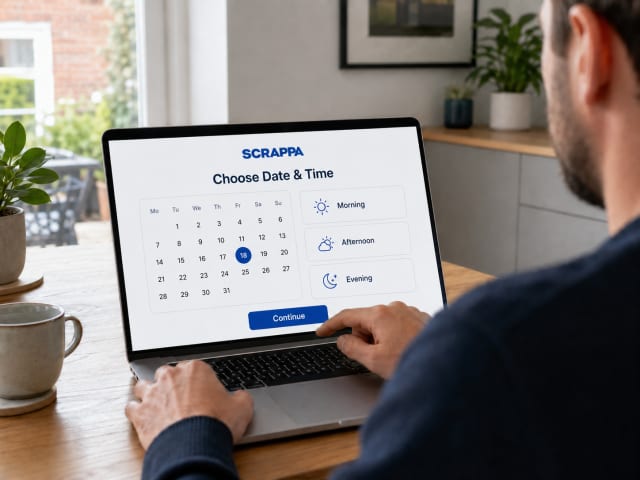
Coordinate an available collection window
Check building access and the keyholder’s availability before selecting a slot.
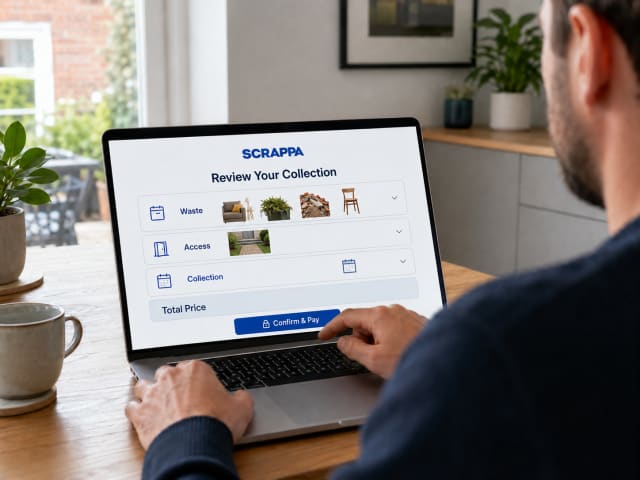
Review the agreed office clearance
Check the inventory, loading requirements and complete price before confirming.
Office clearance for Preston workplaces
The booking should be authorised by the business or property representative responsible for the contents.
Businesses changing layouts
Remove selected desks and storage while marking the furniture staying.
Businesses moving premises
Separate retained equipment from unwanted workplace contents.
Managing agents and landlords
Provide authority, an agreed inventory and the building access instructions.
Small workplaces
Describe back-office and storage areas with their opening and loading arrangements.
Workplace contents to identify separately
Fixed strip-out, confidential shredding and secure data destruction are not assumed parts of a collection.
Desks, tables and chairs
Count pieces and give dimensions for meeting tables and large desks.
Cabinets and storage units
Empty contents and identify fixed, wall-mounted or unusually heavy units.
Non-confidential office contents
Describe boxes and loose items after removing retained and sensitive records.
Equipment needing assessment
List electrical equipment separately; general collection does not include secure data destruction.
Office collection or a skip for the premises?
Consider building permission, loading labour and acceptance rules for the inventory.
Check before hiring a skip
- ✗Whether the building allows the proposed position and access.
- ✗Who will move office furniture and load it safely.
- ✗Whether the supplier accepts every equipment and material type listed.
Arrange a planned office collection
- ✓Agree the contents and the rooms included in the job.
- ✓Explain goods lifts, stairs and loading arrangements beforehand.
- ✓Review the full inventory and collection quote before confirmation.
Building and loading logistics for Preston premises
Give the practical loading entrance and site rules rather than only the postal address.
Licensed Waste Operations in Preston
For a Preston city-centre office or premises along the wider PR1 and PR2 area, tell us the legal loading point, floor level and route to the furniture. Include goods lift arrangements, shared entrances and time restrictions. A site contact should confirm permission and any loading-bay reservation needed before the booked window.
Arrange permissions, lift availability and loading-bay instructions in advance.
Remove confidential papers and data-bearing devices from general clearance.
Office Clearance coverage in Preston
Enter the complete address to check availability. Preston reference areas include:
Planning an office clearance in Preston
Create a workplace inventory
Count desks, chairs, cabinets and other furniture separately. Give dimensions for meeting tables and large storage units, and include contents in additional rooms only where they are part of the job. Several photographs should show the complete inventory, not just the front of one office.
Mark retained and sensitive contents
Separate furniture staying on site and remove personal possessions. Keep confidential records, customer paperwork and data-bearing devices out of general clearance. Scrappa’s office clearance service does not provide confidential shredding or an assumed secure data-destruction process.
Check authority and building permissions
Confirm who can authorise removal and appoint a responsible site contact. Ask the building manager about lift use, working hours and access requirements where relevant. A collection should not depend on the crew obtaining permission after arriving at the premises.
Describe the Preston loading entrance
A city-centre postal address may have a different rear loading route. Give the legal vehicle position, floor levels, suitable goods lift and carrying distance. Explain shared entrances, gates and any loading-bay reservation or time limit affecting the visit.
Prepare cabinets and furniture
Empty drawers and storage units, remove retained documents and flag glass or unstable sections. Tell Scrappa about furniture requiring dismantling before booking. Do not assume fixed units, wall attachments or building alterations form part of a standard waste collection.
Declare equipment and special materials
List computers, printers and other electrical equipment separately, including oversized commercial units. Arrange appropriate handling of sensitive data yourself. Identify batteries, chemicals and unknown materials before acceptance and suitable handling are assessed.
Confirm the inventory and collection arrangements
Review the full contents, preparation, access, available window and price. Make sure the site contact has the final removal list. If the workplace inventory or building access changes, contact Scrappa before the collection to agree the update.
Start your Preston collection quote with your postcode and review the full price after entering the items and access details.
Office clearance questions for Preston businesses
Inventory, authority and premises access before collection.
Can you remove a few desks without clearing the entire office?
List the selected contents and quantities. Mark items staying on site so the collection scope is clear.
Is confidential shredding provided?
No. Scrappa does not provide confidential shredding through this service. Arrange appropriate secure handling separately and keep confidential records out of general clearance.
Does equipment collection include secure data destruction?
Do not assume that. Remove or appropriately prepare data-bearing equipment and discuss any electrical collection before booking.
Can furniture be collected from an upper-floor office?
Give floors, goods lift capacity, stairs, loading routes and any building permissions. The job needs to be assessed for the actual access.
Are fitted units or desks dismantled automatically?
No. Identify dismantling needs before booking. Fixed strip-out, service disconnection and building alterations are not assumed parts of collection.
Who needs to be on site?
Provide an authorised contact who can open the premises, identify the agreed inventory and answer access questions during the collection window.
Get your Preston office-clearance quote
Prepare the furniture inventory and building-access details, then review a suitable collection quote.
Book Your Collection NowOffice Clearance in nearby areas
Need waste cleared in an adjacent town? Our mobile crews operate across neighbouring boroughs.